


The morning of January 6, 2021, will forever be etched in the annals of American history as a day of unbridled chaos and violence, as thousands of supporters of President Donald Trump descended upon the United States Capitol Building in a brazen attempt to disrupt the certification of the 2020 presidential election.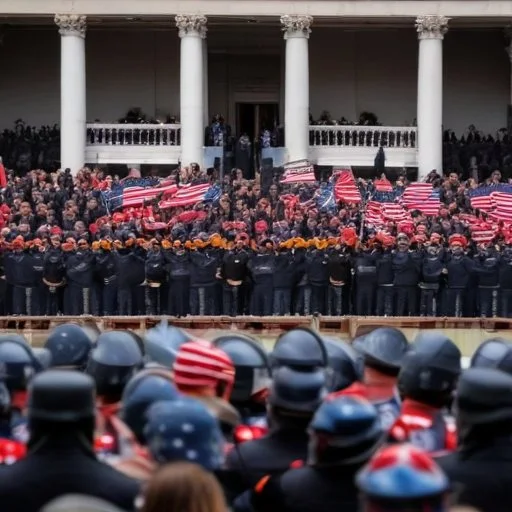
This unprecedented assault on the heart of American democracy left five people dead, including a police officer, and forced the evacuation of the U.S. Congress, as lawmakers and staff were rushed to safety.
The seeds of the storming of the Capitol were sown in the months leading up to the event, as President Trump repeatedly disputed the legitimacy of the 2020 presidential election, claiming without evidence that widespread voter fraud had occurred.
This narrative resonated with a significant portion of his base, who felt disfranchised and disillusioned with the political establishment. The convergence of these sentiments with the electoral process created a combustible mixture that finally ignited on that fateful day.
9:30 a.m.: Thousands of Trump supporters gather outside the Capitol Building, many of whom had traveled from across the country to show their support for the President.
12:00 p.m.: The rioters breach the perimeter fences and storm the Capitol Building, with some attempting to break into the Senate Chamber.
1:00 p.m.: Lawmakers and staff are evacuated to a secure location as the situation spirals out of control.
3:00 p.m.: Ashli Babbitt is shot and killed by police while attempting to breach the Capitol Building.
5:00 p.m.: The National Guard is deployed to quell the violence and restore order.
8:00 p.m.: The Capitol Building is finally secured, with the toll of the day's events slowly beginning to sink in.
The storming of the Capitol Building sent shockwaves around the world, leaving many stunned and questioning the stability of the American political system.
The event sparked widespread condemnation from across the political spectrum, with many calling for President Trump's immediate resignation or impeachment.
The incident also highlighted the deep-seated divisions within American society, exposing the fault lines of political polarization and social unrest.
The storming of the Capitol Building was a manifestation of the toxic political climate that has come to define modern America.
The event was also a stark reminder of the profound impact of social media on the dissemination of information and the shaping of public opinion.
Ultimately, the siege of the Capitol Building served as a mirror to American society, reflecting the darker aspects of its collective psyche.
The storming of the Capitol Building has sparked intense debate about the role of the President, the accountability of elected officials, and the responsibility of social media platforms in shaping public discourse.
The event has also raised uncomfortable questions about race, privilege, and the unequal application of justice in America.
As the nation struggles to come to terms with the magnitude of the event, one thing is clear – the storming of the Capitol Building has left an indelible mark on American history and its people's collective consciousness.
Amidst the chaos and destruction, there were countless acts of bravery, selflessness, and compassion that shone like beacons of hope.
From the U.S. Capitol Police who risked their lives to protect the lawmakers and staff, to the ordinary citizens who reached out to offer comfort and support to those affected, the storming of the Capitol Building also revealed the resilience and humanity of the American people.
As the nation begins to heal and rebuild, it is these inspirational stories that will serve as a catalyst for change, reminding us that even in the darkest of times, there is always hope for a brighter tomorrow.
One of the key figures involved in the storming of the Capitol Building was Ashli Babbitt, a 35-year-old Air Force veteran who was shot and killed by police while attempting to breach the Capitol Building. Babbitt's life was marked by a sense of disillusionment and frustration, having served in the military for over a decade before being honorably discharged. Her radicalization was swift and profound, driven by a deep-seated distrust of the government and a belief in conspiracy theories.
Another figure who played a significant role in the events of January 6 was Mike Pence, the then-Vice President of the United States. Pence's refusal to overturn the election results was seen as a betrayal by many Trump supporters, who viewed him as a turncoat.
,
The storming of the Capitol Building had a profound impact on American culture, exposing the fault lines of political polarization and social unrest. The event sparked a national conversation about the role of social media in shaping public opinion and the dissemination of information.
The siege of the Capitol Building also highlighted the deep-seated divisions within American society, with many calling for accountability and justice in the aftermath of the event.
,The storming of the Capitol Building was a stark reminder of the toxic political climate that has come to define modern America. The event sparked widespread condemnation from across the political spectrum, with many calling for President Trump's immediate resignation or impeachment.
The incident also raised important questions about the role of the President and the accountability of elected officials, with many arguing that Trump's rhetoric and actions had incited the violence.
,
The storming of the Capitol Building was not an isolated incident, but rather part of a long history of political violence and unrest in the United States. From the Boston Massacre to the Civil Rights Movement, American history is replete with examples of protest and violence.
One of the most significant precedents for the storming of the Capitol Building was the 1932 Bonus March, in which thousands of World War I veterans marched on Washington to demand payment of a bonus promised to them.
,The storming of the Capitol Building had significant geopolitical implications, with many around the world watching in horror as the symbols of American democracy were attacked. The event sparked a wave of condemnation from world leaders, with many expressing concern about the stability of the American political system.
The incident also highlighted the vulnerability of democratic institutions to extremist ideologies and violence, sparking a global conversation about the need for greater cooperation and coordination to combat these threats.