


On August 30, 1945, General Douglas MacArthur, the Supreme Commander of the Allied Forces, landed at Atsugi Air Force Base, marking the beginning of Japan's occupation and the dawn of a new era for the war-torn nation. This pivotal event signaled the start of a massive reconstruction effort, tasked with demilitarizing and democratizing a country ravaged by the devastating effects of World War II.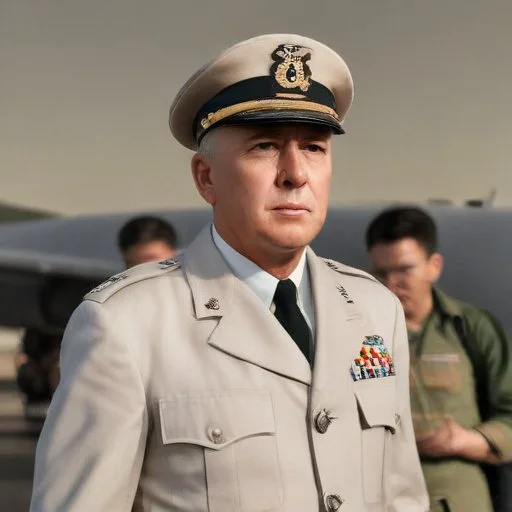
In the aftermath of Japan's formal surrender on August 15, 1945, the Allied Powers, led by the United States, sought to establish a presence on Japanese soil to ensure a smooth transition to peace. The occupation, code-named Operation Blacklist, was designed to dismantle Japan's military, promote democratic reforms, and rebuild the nation's economy.
General Douglas MacArthur, a decorated war hero and seasoned military strategist, was chosen to lead the Allied occupation. His extensive experience in the Pacific Theater, combined with his reputation as a shrewd diplomat, made him the ideal candidate to navigate the complex task of rebuilding Japan.
As MacArthur disembarked from the C54 transport plane, he was greeted by a sea of unfamiliar faces, including Lieutenant General Robert Eichelberger, commander of the U.S. Eighth Army, and Japanese officials. The general's confident stride and imposing presence set the tone for the occupation, conveying the Allied commitment to Japan's reconstruction.
The occupation, led by MacArthur, oversaw a transformative period in Japanese history, characterized by:
The occupation had a profound impact on Japanese culture, as the country began to adopt Western values and practices. MacArthur's presence helped to popularize American-style baseball, and the general himself was known to have introduced the game to Japanese children.
While MacArthur's leadership was widely praised, the occupation was not without controversy. Critics accused the Allies of imposing Western values on Japanese society, and some Japanese citizens resented the presence of foreign forces on their soil.
"It is my earnest hope, and indeed the hope of all mankind, that from this solemn occasion a better world shall emerge out of the blood and carnage of the past." - General Douglas MacArthur, September 2, 1945
General MacArthur's landing at Atsugi Air Force Base marked the beginning of a new chapter in Japanese history, one that would be shaped by the country's commitment to peace, democracy, and reconstruction. As the general's footsteps echoed across the airbase, he set in motion a transformative period that would have a lasting impact on Japan and the world.
General Douglas MacArthur's illustrious military career spanned over five decades, during which he played a pivotal role in several major conflicts, including World War I, World War II, and the Korean War. His extensive experience in the Pacific Theater, combined with his reputation as a shrewd diplomat, made him the ideal candidate to lead the Allied occupation of Japan.
Born on January 26, 1880, in Little Rock, Arkansas, MacArthur graduated from the United States Military Academy at West Point in 1903. He was known for his strong leadership skills, which earned him numerous accolades, including the Medal of Honor. MacArthur's personal life was marked by tragedy, including the loss of his mother and the dissolution of his marriage to Louise Cromwell Brooks.

In the aftermath of World War II, General Douglas MacArthur's presence in Japan not only marked the beginning of the occupation but also introduced the country to American culture. One of the most enduring legacies of MacArthur's cultural diplomacy is the popularization of baseball in Japan.
MacArthur, an avid baseball fan, recognized the sport's potential to bring people together and foster goodwill between the occupied and occupiers. He encouraged Japanese children to take up the game, and even donated baseball equipment to schools and communities. Today, baseball is one of Japan's most popular sports, with the country producing some of the world's top players.
The Allied occupation, led by General Douglas MacArthur, not only demilitarized Japan but also set in motion a comprehensive program of economic reforms. The goal was to revitalize Japan's war-torn economy and create a stable, prosperous nation.
MacArthur's economic strategy focused on promoting industrial growth, increasing productivity, and encouraging foreign investment. The occupation's policies led to the establishment of key industries, such as textiles, steel, and automotive manufacturing, which formed the backbone of Japan's post-war economy.
The occupation's economic reforms had a profound impact on Japan, transforming the country into a major economic power. By the 1960s, Japan's economy had grown dramatically, earning it the nickname the "Economic Miracle."

The Allied occupation of Japan, led by General Douglas MacArthur, was a complex political undertaking that required careful balancing of power and interests. MacArthur's leadership style and political acumen played a crucial role in shaping the occupation's political dynamics.
MacArthur adopted a pragmatic approach, working closely with Japanese officials to ensure a smooth transition to democracy. He recognized the importance of building trust with the Japanese people and fostering cooperation between the occupied and occupiers.
The occupation's political reforms had a lasting impact on Japan, establishing a democratic system of government and promoting individual liberties and human rights. MacArthur's leadership helped to lay the foundations for Japan's post-war political development.
In the months leading up to Japan's formal surrender, the Allied Powers engaged in extensive planning and preparation for the occupation. General Douglas MacArthur, as the designated Supreme Commander of the Allied Forces, played a key role in shaping the occupation's strategy and goals.
MacArthur worked closely with other Allied leaders, including General Dwight D. Eisenhower, to develop a comprehensive plan for the occupation. The operation, code-named Blacklist, involved the coordinated efforts of multiple branches of the military, as well as civilian agencies.
The Allies faced significant logistical challenges in preparing for the occupation, including the transportation of troops and equipment, the establishment of supply lines, and the provision of humanitarian aid to the Japanese population.