


In a decision that would shake the very foundations of American democracy, the Supreme Court of the United States ruled on March 6, 1857, that African Americans, whether free or enslaved, were not citizens of the United States and had no right to sue in court. This landmark verdict, known as Dred Scott v. Sandford, would go on to cement racial segregation and entrench the institution of slavery, sparking a firestorm of controversy that would fuel the abolitionist movement and set the stage for the American Civil War.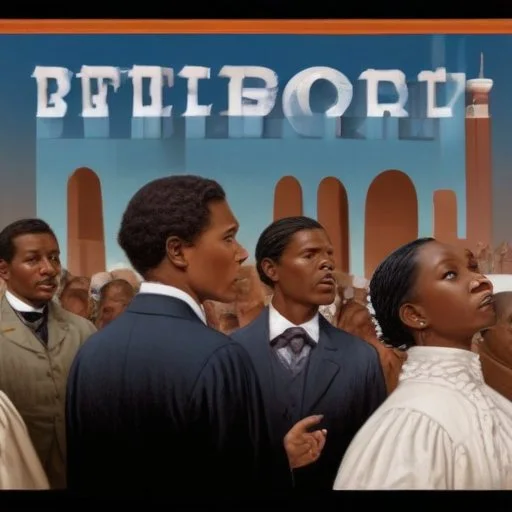
At the heart of this tumultuous case was Dred Scott, a slave born around 1800 in Southampton County, Virginia. Scott was owned by John Emerson, a surgeon in the United States Army, who took him to various military posts in the Midwest. Scott eventually settled in St. Louis, Missouri, where he married Harriet Robinson, another slave. In 1846, Scott petitioned for his freedom, citing that he had lived in territories where slavery was illegal, making him a free man. This bold move would set in motion a legal battle that would change the course of American history.
Scott's case was initially dismissed by the Missouri state court, but he persisted, appealing to the United States Circuit Court in St. Louis. There, his case was heard by Judge Robert W. Wells, who ruled in favor of Scott, stating that he was a free man. However, this decision was later overturned by the Missouri Supreme Court, which led Scott to appeal to the United States Supreme Court.
On March 6, 1857, Chief Justice Roger Taney delivered the majority opinion, stating that African Americans, whether free or enslaved, were not citizens of the United States and had no right to sue in court. Taney's argument was based on the notion that the Constitution did not confer citizenship on black people, and that the framers of the Constitution had never intended for them to have equal rights. This flawed reasoning would be met with fierce opposition from abolitionists and would ultimately contribute to the demise of the institution of slavery.
The Dred Scott decision sent shockwaves across the nation, eliciting strong reactions from both pro-slavery and anti-slavery factions. Abolitionists, like Frederick Douglass, were outraged, while pro-slavery advocates saw the ruling as a validation of their views. The decision also had significant implications for the 1858 Illinois Senate campaign, where Abraham Lincoln and Stephen Douglas debated the issue of slavery and its expansion into new territories.
The Dred Scott case remains a dark stain on the American judicial system, a testament to the nation's ongoing struggle with racial inequality. However, it also paved the way for the eventual abolition of slavery and the long road to civil rights. As we reflect on this pivotal moment in American history, we are reminded that the pursuit of justice and equality is an ongoing journey, one that requires continued vigilance and activism.
Dred Scott's Early Life: A Story of Resilience
Although little is known about Dred Scott's early life, historians have pieced together a narrative that highlights his resilience and determination. Born into slavery around 1800 in Southampton County, Virginia, Scott was likely descended from African slaves brought to the Americas during the transatlantic slave trade. He was owned by John Emerson, a surgeon in the United States Army, who took him to various military posts in the Midwest.
Scott's experiences during this time were likely marked by hardship and uncertainty. However, it was during this period that he met and married Harriet Robinson, another slave. Together, they would go on to challenge the institution of slavery and fight for their freedom.
Despite the lack of documentation, Scott's early life serves as a testament to the strength and courage of enslaved people during the antebellum era.

The Political Fallout of Dred Scott
The Dred Scott decision had far-reaching political implications, exacerbating the already deepening divide between pro-slavery and anti-slavery factions in the United States. The ruling not only emboldened pro-slavery advocates but also galvanized the abolitionist movement, which saw the decision as a clarion call to action.
In the 1858 Illinois Senate campaign, Abraham Lincoln and Stephen Douglas debated the issue of slavery and its expansion into new territories. Lincoln's eloquent arguments against the spread of slavery helped establish him as a rising star in the newly formed Republican Party.
The Dred Scott decision also led to the formation of the Radical Republicans, a faction that sought to abolish slavery and ensure equal rights for African Americans. This political fallout would ultimately contribute to the secession of Southern states and the outbreak of the American Civil War.
The Cultural Significance of Dred Scott
The Dred Scott decision had a profound impact on American culture, symbolizing the country's entrenched racial divide. The ruling reinforced the notion that African Americans were inferior to white people, perpetuating a system of racial segregation and discrimination.
In the decades following the decision, African American writers, artists, and intellectuals responded with a surge of creative output, critiquing the racism and injustice perpetuated by the ruling. From Frederick Douglass's scathing orations to the poetry of Frances Ellen Watkins Harper, African American cultural producers used their work to challenge the status quo and advocate for racial equality.
Today, the Dred Scott decision remains a powerful symbol of the ongoing struggle for racial justice in the United States, with its legacy continuing to influence American art, literature, and politics.

The Geopolitical Context of Dred Scott
The Dred Scott decision was not an isolated event, but rather part of a broader geopolitical landscape that shaped the course of American history. The 1846-1848 Mexican-American War had recently concluded, resulting in the United States gaining control of a vast amount of new territory, including present-day California, Nevada, Utah, Arizona, New Mexico, Texas, and parts of Colorado, Kansas, Oklahoma, and Wyoming.
This rapid expansion of United States territory raised pressing questions about the spread of slavery and the balance of power between pro-slavery and anti-slavery factions. The Dred Scott decision was a pivotal moment in this struggle, as it essentially declared that slavery could exist in any territory, sparking outrage among abolitionists and fueling the growing tensions that would eventually lead to the American Civil War.
Historians' Views on Dred Scott
Historians have long debated the significance and implications of the Dred Scott decision. Some have viewed the ruling as a catastrophic mistake, one that further entrenched the institution of slavery and pushed the country toward war.
Others have seen the decision as a catalyst for the abolitionist movement, arguing that it galvanized anti-slavery activists and paved the way for the eventual abolition of slavery.
Recent scholarship has also highlighted the role of the Dred Scott decision in shaping modern American politics, with some historians arguing that it laid the groundwork for the civil rights movement of the 1950s and 1960s.