


The village of Moiwana, nestled deep in the Surinamese jungle, will forever be remembered as the site of one of the most heinous atrocities committed during the Suriname Guerrilla War. On a fateful day in 1986, the Surinamese military unleashed a brutal attack on the unsuspecting villagers, claiming the lives of at least 39 innocent civilians, mostly women and children, and leaving countless others traumatized.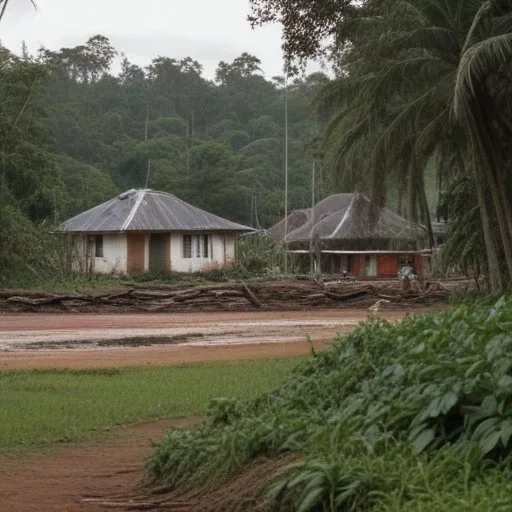
The Suriname Guerrilla War, which spanned from 1986 to 1992, was a brutal conflict between the Surinamese government and a group of rebels known as the Jungle Commando, led by Ronnie Brunswijk. The war was fought in the midst of a raging political crisis, as Suriname struggled to transition from a colonial territory to an independent nation.
On November 29, 1986, the Surinamese military, determined to crush the Jungle Commando, launched a surprise attack on the sleepy village of Moiwana. The villagers, caught off guard, were subjected to a barrage of gunfire and artillery shells, leaving them with little chance of escape. The attackers showed no mercy, targeting women and children with reckless abandon.
The Moiwana massacre sent shockwaves throughout Suriname and the international community. The attack left the village in ruins, with many homes destroyed and crops ravaged. The survivors, forced to flee their homes, were left to pick up the pieces and mourn the loss of their loved ones. The attack also sparked widespread outrage and condemnation, with human rights organizations and foreign governments calling for accountability.
In the years following the massacre, survivors and human rights organizations fought tirelessly for justice. In 2005, the Inter-American Court of Human Rights ruled that the Surinamese government was responsible for the massacre and ordered reparations to be paid to the victims' families. However, despite numerous investigations and court rulings, those responsible for the massacre have yet to be held fully accountable.
The Moiwana massacre serves as a painful reminder of the devastating consequences of conflict and the importance of protecting human rights. The tragedy has also sparked a surge in activism and advocacy for justice and accountability in Suriname. Today, the village of Moiwana stands as a symbol of resilience and a testament to the strength of the human spirit in the face of unspeakable tragedy.
As we reflect on the Moiwana massacre, we honor the memories of the innocent lives lost and celebrate the courage of those who survived. May their stories serve as a beacon of hope, inspiring future generations to strive for peace, justice, and human rights for all.
The Jungle Commando, led by Ronnie Brunswijk, was a rebel group that emerged in the early 1980s, aiming to overthrow the Surinamese government. The group was largely composed of Maroons, descendants of African slaves who had escaped to the Surinamese jungle centuries ago. The Jungle Commando's rebellion was fueled by grievances against the government's neglect of the Maroon community and its marginalization from the country's political and economic processes.
The Surinamese military, led by Dési Bouterse, responded to the Jungle Commando's rebellion with brutal force, leading to a protracted conflict that would last for six years. The conflict displaced thousands of civilians, destroyed entire villages, and left the country's infrastructure in shambles.
The Jungle Commando's rebellion was a manifestation of the deep-seated social and economic inequalities that plagued Suriname, and its eventual defeat marked a turning point in the country's history, as the government was forced to confront the consequences of its actions and work towards reconciliation.
Ronnie Brunswijk, the leader of the Jungle Commando, is a complex figure, shrouded in mystery and controversy. Born in 1961 in Moiwana, Brunswijk grew up in a family of Maroon descent and was deeply influenced by the struggles of his community.
Brunswijk's leadership of the Jungle Commando was marked by a mix of charisma and brutality, earning him both admiration and fear from his followers. Despite being referred to as a "guerrilla leader," Brunswijk's motivations and goals remain unclear, with some viewing him as a champion of Maroon rights and others seeing him as a power-hungry opportunist.
Brunswijk's legacy continues to divide opinions in Suriname, with some hailing him as a hero and others condemning him as a terrorist.
Suriname's Guiana Shield, a vast region of rainforest and savannas, has long been a coveted prize for colonial powers and corrupt governments. The country's journey to independence was marked by centuries of exploitation, slavery, and neglect.
In the post-colonial era, Suriname struggled to find its footing, torn between its Dutch colonial past and its aspirations for self-determination. The Moiwana massacre was a brutal reminder of the country's fragility and its susceptibility to external influences.
The Suriname Guerrilla War was a symptom of the country's deeper structural problems, including corruption, nepotism, and a lack of transparency, which continue to plague the country to this day.
The Moiwana massacre has had a profound impact on Suriname's cultural landscape, leaving an indelible mark on the country's art, literature, and music. The tragedy has inspired numerous works of fiction and non-fiction, including novels, poems, and songs that reflect on the horrors of the event.
In the aftermath of the massacre, the village of Moiwana became a symbol of resilience and resistance, inspiring a new generation of Surinamese artists and activists to explore themes of identity, trauma, and social justice.
The cultural legacy of Moiwana serves as a testament to the power of art to process trauma and promote healing.
The Moiwana massacre was a stark reminder of the Surinamese government's willingness to disregard human rights and the rule of law. The attack was carried out with impunity, with those responsible enjoying protection from the highest echelons of power.
The aftermath of the massacre saw a concerted effort by the government to cover up the atrocity, intimidate witnesses, and silence whistleblowers. The lack of accountability for the massacre has contributed to a culture of impunity in Suriname, where those in power feel above the law.
The politics of impunity continue to haunt Suriname, undermining trust in institutions and perpetuating a cycle of violence and corruption.