


In 1988, a watershed moment shook the foundations of Canadian politics when Svend Robinson, a member of the House of Commons, courageously declared his sexual orientation, becoming the first openly gay parliamentarian in the country's history.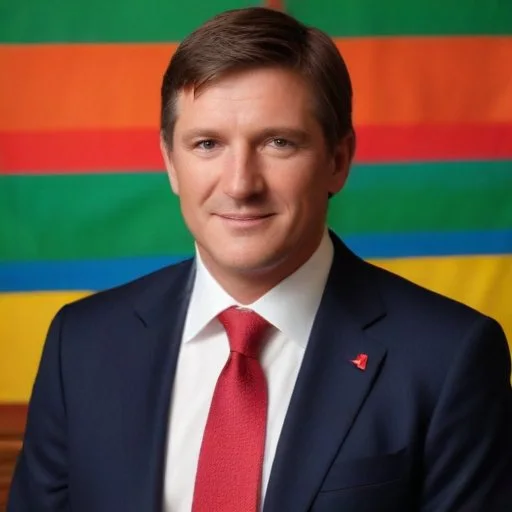
This groundbreaking announcement sent shockwaves across the nation, marking a pivotal milestone in the fight for LGBTQ+ rights in Canada. With unwavering conviction, Robinson defied the societal norms of the time, paving the way for a more inclusive and accepting society.
Long before his historic declaration, Svend Robinson was a well-known activist and advocate for social justice. Born on March 4, 1952, in Minneapolis, Minnesota, Robinson moved to Canada with his family at a young age. He grew up in Burnaby, British Columbia, where he developed a strong sense of social responsibility and activism.
Raised in a family of modest means, Robinson's early life was marked by hardship and struggle. His mother, a nurse, and his father, a mechanic, instilled in him the importance of standing up for what was right, even in the face of adversity.
In the early 1980s, Robinson became increasingly involved in local politics, driven by his passion for social justice and human rights. He joined the New Democratic Party (NDP) and quickly rose through the ranks, becoming a prominent figure in the party.
In 1984, Robinson was elected to the House of Commons, representing the riding of Burnaby-Kingsway. As a rookie MP, he quickly made a name for himself as a fierce advocate for the rights of marginalized communities, including the LGBTQ+ community.
On May 26, 1988, Robinson stood in the House of Commons and declared, "I am gay. I am proud of who I am. I am proud to be a part of this community, and I am proud to be an MP."
This historic declaration was met with a mix of shock, awe, and admiration. While some hailed Robinson as a hero, others condemned him, citing religious and moral objections.
In the aftermath of Robinson's declaration, the LGBTQ+ community in Canada experienced a surge in visibility and solidarity. The event marked a turning point in the struggle for LGBTQ+ rights, paving the way for future generations of activists and advocates.
Robinson's courage inspired countless individuals to come out and live their truths, sparking a wave of activism that continues to this day. His declaration also prompted a national conversation about LGBTQ+ rights, forcing Canadians to confront their biases and prejudices.
Svend Robinson's historic declaration has left an indelible mark on Canadian history. His courage and conviction have inspired generations of LGBTQ+ individuals and allies, paving the way for a more inclusive and accepting society.
Today, Canada is recognized as a leader in LGBTQ+ rights, with protections and freedoms enshrined in law. Robinson's legacy serves as a beacon of hope, reminding us that even in the darkest of times, courage and conviction can spark a sea of change.
The political climate of the 1980s was a complex backdrop for Svend Robinson's historic declaration. The Progressive Conservative government, led by Prime Minister Brian Mulroney, was in power at the time, and social conservatism was on the rise. Despite this, the New Democratic Party (NDP), to which Robinson belonged, had a strong presence in Parliament and was known for its progressive stance on social issues.
Roadblocks to LGBTQ+ rights were plentiful, with many politicians and religious leaders actively working against the community. The Canadian Charter of Rights and Freedoms, enacted in 1982, did not explicitly protect sexual orientation, leaving LGBTQ+ individuals vulnerable to discrimination.
Robinson's declaration was a bold challenge to the status quo, and it put pressure on the government to address the lack of protections for LGBTQ+ individuals. The event marked a turning point in the political landscape, paving the way for future activism and legislative reforms.

The cultural impact of Svend Robinson's declaration was immediate and far-reaching. The event sparked a national conversation about LGBTQ+ rights, forcing Canadians to confront their biases and prejudices.
In the aftermath of Robinson's declaration, LGBTQ+ individuals and allies began to organize and advocate for change. The event inspired a new wave of activism, with protests, rallies, and lobbying efforts aimed at securing equal rights.
The cultural shift was also reflected in the media, with Robinson's declaration receiving widespread coverage. The event marked a turning point in the representation of LGBTQ+ individuals in the media, paving the way for more diverse and inclusive storytelling.
Historiographically, Svend Robinson's declaration is significant because it challenges the dominant narrative of Canadian history, which has often marginalized the experiences of LGBTQ+ individuals.
The event highlights the importance of grassroots activism in shaping social change and underscores the role of individual courage in challenging societal norms.
Rethinking the historical record, Robinson's declaration serves as a powerful symbol of resistance and a testament to the agency of marginalized communities.

Social change dynamics were at play in the years leading up to Svend Robinson's declaration. The LGBTQ+ community had been mobilizing for change, with grassroots activism and advocacy efforts gaining momentum.
The declaration itself was a catalyst for further social change, inspiring a new wave of activism and mobilization. The event marked a turning point in the struggle for LGBTQ+ rights, as individuals and organizations began to coalesce around a shared vision of equality and justice.
Ripple effects from the declaration can be seen in the decades that followed, as LGBTQ+ individuals and allies continued to push for legislative reforms and social justice.
Svend Robinson's early life and activism laid the groundwork for his historic declaration. Raised in a family of modest means, Robinson developed a strong sense of social responsibility and activism.
As a young man, Robinson was drawn to social justice causes, volunteering with organizations that supported marginalized communities. His early activism was shaped by his family's values and his own experiences of hardship.
Raised by a nurse and a mechanic, Robinson's parents instilled in him the importance of standing up for what was right, even in the face of adversity. This upbringing laid the foundation for his future activism and his courageous declaration.