


Raoul Wallenberg, a Swedish diplomat and humanitarian, is renowned for saving thousands of Hungarian Jews from the clutches of the Nazi regime during World War II. However, his own fate took a tragic turn on January 17, 1945, when he was taken into Soviet custody in Hungary, never to be seen or heard from again.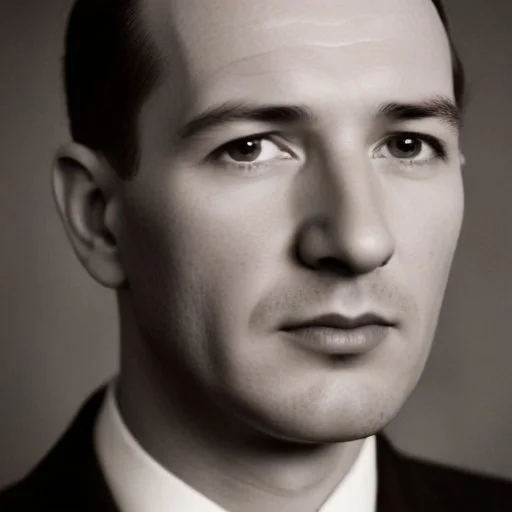
In the midst of World War II, Hungary, an Axis power, found itself on the brink of collapse as the Red Army advanced towards Budapest. As the war drew to a close, the Nazis and their Hungarian collaborators intensified their persecution of the Jewish population. It was against this backdrop that Raoul Wallenberg, a Swedish diplomat with a strong sense of morality, arrived in Budapest in July 1944.
Wallenberg, with the support of the Swedish government and the War Refugee Board, devised a bold plan to protect Hungary's Jewish population. He issued protective passports, established safe houses, and even confronted Nazi officials to rescue individuals from deportation. His fearless actions earned him the respect and admiration of the Hungarian people, and he became known as the "Angel of Budapest."
As the Soviet Red Army closed in on Budapest, Wallenberg, still working tirelessly to rescue Jews, was summoned to meet with the Soviet authorities. On January 17, 1945, he left his safe house, accompanied by his driver, Vilmos Langfelder, and never returned. The Soviet authorities claimed he was taken into custody to "protect" him from the Arrow Cross party, a Hungarian fascist group. However, all attempts to locate him or gain information about his whereabouts were met with silence.
The exact circumstances of Wallenberg's disappearance remain shrouded in mystery. The Soviet Union, and later Russia, consistently denied any knowledge of his fate, despite numerous investigations and appeals from the international community. Rumors abound, ranging from imprisonment in the Soviet gulag to assassination on the orders of Stalin himself. The truth, however, remains elusive.
Despite the uncertainty surrounding his fate, Raoul Wallenberg's heroism and humanitarian efforts have inspired generations. He was posthumously awarded the Congressional Gold Medal in 1981, and in 1989, the Raoul Wallenberg Medal was established to recognize individuals who have demonstrated courage and humanitarianism in the face of persecution.
"I will never be able to go back to Sweden without knowing that I'd done all a man could do to save as many Jews as possible."
Raoul Wallenberg's legacy extends beyond his bravery during World War II. His humanitarian efforts have inspired the establishment of organizations, such as the Raoul Wallenberg Committee of the United States, which promotes humanitarianism and tolerance. The Raoul Wallenberg Academy, founded in 2015, focuses on education and research in the fields of human rights and international humanitarian law.
As the world continues to grapple with the mystery of Wallenberg's disappearance, many speculate about his ultimate fate. Some believe he may have been imprisoned in the Soviet gulag, while others think he may have been assassinated. The truth, however, remains a closely guarded secret, leaving us to remember Raoul Wallenberg as a symbol of courage and selflessness in the face of unimaginable evil.
Historians have long debated the role of individual heroism in the face of genocide. Raoul Wallenberg's story serves as a powerful reminder of the impact one person can have in the midst of chaos. His bravery and selflessness have inspired subsequent generations of scholars to reexamine the complexities of human behavior during World War II.
Studies have shown that Wallenberg's actions were not isolated incidents of heroism, but rather part of a larger trend of Swedish humanitarian efforts during the war. This context has significant implications for our understanding of international diplomacy and humanitarian intervention.
Further research is needed to uncover the intricacies of Wallenberg's relationships with other diplomats and humanitarian organizations, which could provide valuable insights into the dynamics of international cooperation during times of crisis.
The geopolitical significance of Raoul Wallenberg's disappearance cannot be overstated. As the Soviet Union tightened its grip on Eastern Europe, the disappearance of a Swedish diplomat sent shockwaves throughout the international community.
The incident highlighted the precarious balance of power in post-war Europe, where the interests of the Soviet Union, the United States, and other Western powers clashed. Wallenberg's fate became a symbol of the Cold War's hidden battles, as nations vied for influence and control.
The incident also underscored the limitations of diplomatic immunity, as even a representative of a neutral country like Sweden was not immune to the whims of a superpower.
Raoul Wallenberg's heroism is often compared to that of Oskar Schindler, another famous rescuer of Jews during World War II. While both men risked their lives to save others, their approaches differed significantly.
Wallenberg, as a diplomat, worked within the system to issue protective passports and establish safe houses. Schindler, on the other hand, used his business connections to bribe Nazi officials and rescue Jews.
Despite these differences, both men demonstrated an unwavering commitment to humanity in the face of unimaginable evil. Their stories serve as a powerful reminder of the importance of individual action in the face of mass atrocities.

Raoul Wallenberg's legacy extends far beyond the realm of politics and diplomacy. His heroic actions have inspired a cultural movement, with numerous books, films, and plays dedicated to his story.
In Hungary, Wallenberg is celebrated as a national hero, with streets, schools, and monuments named in his honor. His image has become synonymous with bravery, selflessness, and humanitarianism.
The cultural impact of Wallenberg's story is particularly significant in the context of Holocaust education. His heroism serves as a powerful counter-narrative to the horrors of the Holocaust, providing a beacon of hope and inspiration for future generations.
Raoul Wallenberg's personality and character played a crucial role in his humanitarian efforts. His natural charm, resourcefulness, and fluency in multiple languages enabled him to navigate the complex web of Hungarian politics and Nazi bureaucracy.
Born into a prominent Swedish family, Wallenberg was instilled with a strong sense of social responsibility from an early age. His experiences as a young man, including his studies in architecture and his work in the business world, honed his skills as a problem-solver and strategist.
Wallenberg's life is a testament to the power of individual character in shaping the course of history. His bravery, combined with his diplomatic skills and humanitarian instincts, created a unique synergy that allowed him to achieve the impossible.