Turkish forces capture Afrin from Kurdish militia
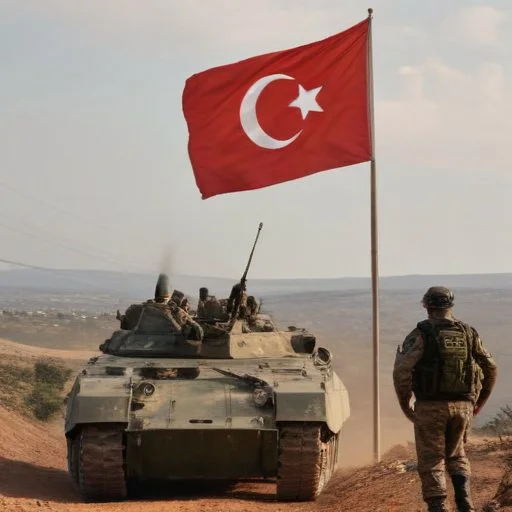
Turkish troops, backed by the Syrian National Army, scored a major victory by seizing control of Afrin District from the Kurdish People's Protection Units (YPG). This triumph marked the end of the Afrin offensive, a grueling 58-day operation that saw intense fighting and widespread displacements. The Turkish military's relentless push into the strategic region was driven by concerns over Kurdish autonomy and security along its border. As Turkish flags fly high in Afrin, the stage is set for a new era of tensions in the war-torn region.
Victory in Afrin: A Turning Point in the Syrian Civil War
A Decisive Moment in the Conflict
The Turkish Armed Forces (TAF) and the Syrian National Army (SNA) achieved a significant milestone in the Syrian civil war by capturing the strategic Afrin District, effectively ending the 58-day Afrin offensive. This triumphant moment marked a crucial shift in the balance of power in the region, with far-reaching implications for the conflict and its stakeholders.
A Historical Backdrop of Complexity
The Afrin offensive was launched amidst the backdrop of the Syrian civil war, which began in 2011 as a popular uprising against the
Bashar al-Assad regime. The conflict quickly escalated into a full-blown war, involving multiple factions, regional powers, and international actors. The Kurdish Peoples Protection Units (YPG), a key player in the region, had established control over Afrin District, which borders Turkey. Ankara viewed the YPG as an extension of the Kurdistan Workers' Party (PKK), a group deemed a terrorist organization by Turkey.
Key Figures and Alliances
- Recep Tayyip Erdogan, President of Turkey: Erdogan played a crucial role in shaping Turkey's Syria policy, including the Afrin offensive.
- Salih Muslim, co-chair of the Democratic Union Party (PYD): Muslim was a key figure in the Syrian Kurdish movement, which Turkey viewed as a threat to its national security.
- Bashar al-Assad, President of Syria: Assad's regime was initially embattled against the Syrian opposition, but later found itself aligned with the YPG against Turkey's Afrin offensive.
A Timeline of Events
- January 20, 2018: Turkey launches Operation Olive Branch, a military operation aimed at capturing Afrin District from the YPG.
- March 18, 2018: Turkish forces and the SNA take control of Afrin city, marking a significant milestone in the offensive.
- March 25, 2018: The Afrin offensive officially concludes with the capture of the entire Afrin District by Turkish-backed forces.
Major Outcomes and Impacts
- Afrin District falls under Turkish control, altering the balance of power in the region.
- The YPG suffers significant losses, including territory and personnel.
- Turkey solidifies its influence in northern Syria, posing a challenge to Kurdish autonomy.
- The operation sparks widespread displacement, with estimates suggesting over 100,000 civilians fleeing the region.
Cultural and Social Influences
The Afrin offensive highlighted the complex cultural and social dynamics at play in the region. The conflict pitted Turkish and Kurdish forces against each other, with both sides invoking historical grievances and nationalist sentiments. The operation also underscored the deep-seated fears and mistrust between Ankara and the Syrian Kurdish movement.
Controversies and Public Perception
The Afrin offensive was met with widespread international criticism, with many condemning Turkey's military action as an invasion of Syrian territory. Human rights groups accused Turkish forces of committing war crimes, including targeting civilians and destroying infrastructure. The operation also sparked protests and unrest in Turkey, with opposition parties and critics accusing Erdogan's government of pursuing a reckless and costly adventure.
Personal Accounts and Anecdotes
"I remember the day Turkish forces entered Afrin city – it was like a nightmare come true. We had to flee our homes, leaving everything behind. I still have nightmares about the sound of artillery fire and the smell of smoke." – A displaced Afrin resident
Impact on Future Events
The Afrin offensive sets a precedent for further Turkish military interventions in Syria, potentially reshaping the region's balance of power. The operation also underscores the need for a comprehensive political settlement to the Syrian civil war, one that addresses the complex interests and rivalries at play.
Conclusion
The Turkish Armed Forces' capture of Afrin District marked a crucial turning point in the Syrian civil war, with far-reaching implications for the region and beyond. As the conflict continues to unfold, the legacy of the Afrin offensive will serve as a reminder of the complexities, rivalries, and humanitarian challenges that define this protracted and devastating conflict.
Rich Character Description
Salih Muslim: The Kurdish Leader Who Defied Turkey
Saliyh Muslim, the co-chair of the Democratic Union Party (PYD), was a prominent figure in the Syrian Kurdish movement. Born in 1951 in the city of Al-Malikiyah, Syria, Muslim became involved in Kurdish politics at a young age. He was a key organizer of the Kurdish uprising in the 1980s and was later forced into exile in Europe.
Upon his return to Syria in 2011, Muslim played a crucial role in uniting the Kurdish factions and establishing the PYD as a dominant force in northern Syria. He was known for his charisma and his ability to negotiate with rival factions, earning him the respect of Kurdish leaders across the region.
Turkey viewed Muslim as a threat to its national security, and his leadership of the PYD was seen as a challenge to Ankara's authority. Despite Turkey's opposition, Muslim remained a vocal advocate for Kurdish autonomy and self-determination, even in the face of overwhelming military force.
Geopolitical Dynamics Review
The Geopolitical Context of the Afrin Offensive
The Afrin offensive took place within the complex web of alliances and rivalries that define the Syrian civil war. Turkey's involvement was motivated by its desire to counter the growing influence of the Kurdish People's Protection Units (YPG), which Ankara viewed as an extension of the Kurdistan Workers' Party (PKK), a group deemed a terrorist organization by Turkey.
The operation was also driven by Turkey's concerns about the Syrian Democratic Forces (SDF), a US-backed coalition of Kurdish and Arab fighters that had proven successful in combating ISIS. Ankara feared that the SDF's control over large swaths of northern Syria would embolden Kurdish separatists within Turkey.
The Afrin offensive marked a significant shift in Turkey's Syria policy, as Ankara transitioned from a policy of supporting rebel groups to direct military intervention. The operation also underscored the increasingly complex nature of the Syrian conflict, with multiple actors vying for influence and control in the region.
Comprehensive Cultural Examination
The Cultural Significance of Afrin: A Region of Tensions
Afrin, a region nestled in the northwestern corner of Syria, has long been a flashpoint of tensions between Turkish and Kurdish forces. The region's cultural heritage reflects the complex history of the region, with ancient Byzantine ruins, Ottoman-era mosques, and Kurdish folk traditions blending together in a rich tapestry.
The Afrin offensive highlighted the deep-seated fears and mistrust between Ankara and the Syrian Kurdish movement, with both sides invoking historical grievances and nationalist sentiments. The operation also underscored the cultural significance of Afrin as a symbol of Kurdish identity and resistance, as thousands of civilians fled the region, leaving behind their homes and livelihoods.
Rich Historical Interpretations
The Historiographical Legacy of the Afrin Offensive
The Afrin offensive will be remembered as a turning point in the Syrian civil war, marking a significant shift in the balance of power in the region. Historians will likely view the operation as a key moment in the ongoing struggle for control and influence in the Middle East.
The operation raises important questions about the role of external powers in shaping the course of the conflict, as well as the agency of local actors in resisting or accommodating foreign intervention. The Afrin offensive will also be remembered for its humanitarian cost, with widespread displacement and suffering inflicted upon the civilian population.
Study of Political Dynamics
The Political Fallout of the Afrin Offensive
The Afrin offensive had significant political implications, both within Syria and beyond. The operation marked a major victory for Turkey, solidifying its influence in northern Syria and undermining Kurdish autonomy in the region.
The operation also underscored the increasing tensions between Ankara and Washington, as the US scrambled to respond to Turkey's military incursion into Syria. The Afrin offensive exposed the deep divisions within NATO over Syria policy, highlighting the challenges of balancing competing interests and alliances.


