


The Tangshan earthquake, measuring between 7.8 and 8.2 moment magnitude, is one of the deadliest natural disasters in recorded history, claiming the lives of 242,769 people and injuring 164,851 more in a matter of minutes.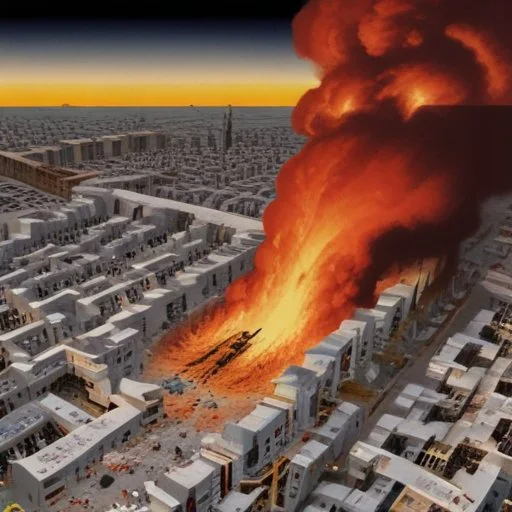
On July 28, 1976, the bustling city of Tangshan in the People's Republic of China was reduced to rubble, leaving its residents trapped beneath the wreckage. The sheer scale of destruction was unprecedented, with entire neighborhoods and buildings reduced to dust and debris.
Tangshan, located in the Hebei province of China, is situated in a region prone to seismic activity. The city lies near the intersection of the Eurasian and Pacific tectonic plates, making it a hotbed for earthquakes. In the years leading up to the disaster, the region had experienced several smaller quakes, but none had prepared the city for the magnitude of the 1976 disaster.
The earthquake struck at 3:42 pm local time, its impact felt within a 100-kilometer radius. The quake's epicenter was located approximately 12 kilometers north of Tangshan's city center, with the city's proximity to the epicenter contributing to the devastating consequences.
The Tangshan earthquake had far-reaching consequences, not only for the people of Tangshan but also for the global community. The disaster led to a significant overhaul of China's disaster response and emergency management systems.
In the years following the quake, the Chinese government invested heavily in seismic research, emergency preparedness, and disaster management. The disaster also spurred significant advances in earthquake engineering, leading to the development of more resilient infrastructure worldwide.
The Tangshan earthquake had a profound impact on Chinese society, with the disaster being etched into the nation's collective memory. The tragedy brought the country together, with widespread outpourings of grief and support for the victims and their families.
The disaster also led to a significant shift in the Chinese government's approach to disaster response, with a greater emphasis on transparency, accountability, and community engagement.
In the aftermath of the disaster, concerns were raised about the government's preparedness and response to the earthquake. Critics argued that the authorities had been slow to react, leading to unnecessary delays in rescue efforts and further exacerbating the humanitarian crisis.
Despite these criticisms, the Tangshan earthquake ultimately served as a catalyst for change, driving critical reforms in disaster management and emergency response.
The Tangshan earthquake may have occurred over four decades ago, but its impact continues to be felt today. The disaster serves as a poignant reminder of the importance of disaster preparedness, emergency response, and community resilience.
As we remember the victims of Tangshan, we honor their memories by continuing to push the boundaries of disaster management, ensuring that such a tragedy never happens again.
This article aims to provide a comprehensive overview of the Tangshan earthquake, exploring its historical context, timeline of events, and lasting impact on the world. By examining the disaster from multiple angles, we can gain a deeper understanding of this pivotal event and its ongoing significance.The Tangshan earthquake was a watershed moment in Chinese cultural history, symbolizing the fragility of human existence and the power of nature.
In the aftermath of the disaster, Chinese literature and art saw a surge in works inspired by the earthquake, with many creators drawing parallels between the catastrophe and the country's tumultuous political climate.
The disaster also led to a renewed focus on traditional Chinese values, such as community and resilience, as people came together to rebuild and recover.

The Tangshan earthquake exposed weaknesses in the Chinese government's disaster response mechanisms, leading to widespread criticism and dissent.
In the face of mounting pressure, the government was forced to re-evaluate its priorities, leading to significant reforms in disaster management and emergency preparedness.
The disaster also had far-reaching implications for China's international relationships, as the country's response to the crisis was closely watched by the global community.
The Tangshan earthquake was one of the costliest natural disasters in history, with estimated losses exceeding 10 billion yuan (approximately 1.5 billion USD).
The disaster had a devastating impact on the local economy, with many businesses destroyed or severely damaged.
In the years following the quake, the Chinese government invested heavily in rebuilding and reconstruction efforts, which helped to stimulate economic growth in the region.

Historians have reassessed the significance of the Tangshan earthquake, recognizing it as a pivotal moment in China's modern history.
The disaster has been reevaluated as a catalyst for change, driving reforms in disaster management, emergency response, and community preparedness.
The earthquake has also been framed as a symbol of China's resilience and adaptability in the face of adversity.
The Tangshan earthquake led to a significant shift in community values, as people came together to support each other in the face of tragedy.
The disaster highlighted the importance of community resilience, with many neighborhoods and villages relying on grassroots efforts to rebuild and recover.
The earthquake also accelerated changes in social dynamics, as traditional hierarchies and power structures were challenged in the face of collective trauma.