


TAP Air Portugal Flight 425 is etched in the annals of aviation history as one of the deadliest accidents to occur on European soil. On that fateful night of December 19, 1977, a Boeing 727 crash-landed on the scenic Madeira Islands, claiming the lives of 131 people and leaving only 32 survivors.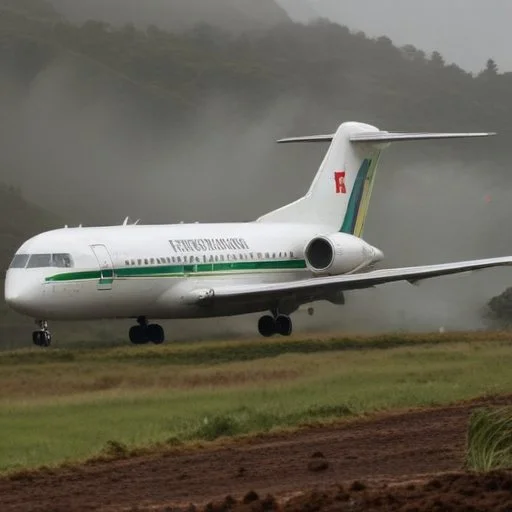
In the mid-1970s, Portugal was undergoing a period of significant political and social change. The Carnation Revolution of 1974 had brought an end to the authoritarian regime, and the country was navigating the complexities of democracy. Amidst this backdrop, the aviation industry was also experiencing a period of rapid growth, with TAP Air Portugal emerging as a prominent player in European skies.
Flight 425 was a routine service from Brussels to Funchal, the picturesque capital of the Madeira Islands. The Boeing 727, registered as CS-TBR, carried 163 passengers and crew, many of whom were tourists eager to experience the archipelago's natural beauty. As the aircraft approached Funchal Airport, it encountered severe weather conditions, with torrential rain and strong winds battering the airfield.
The pilot, struggling to navigate the treacherous conditions, attempted to land the plane on Runway 06. However, the aircraft overshot the runway, careening into a nearby hillside and bursting into flames. The resulting inferno was catastrophic, with many passengers trapped inside the wreckage.
The response to the disaster was immediate, with local authorities and emergency services rushing to the scene. Despite the challenges posed by the remote location and inclement weather, rescuers managed to extricate 32 survivors from the wreckage. The investigation that followed attributed the crash to a combination of pilot error, inadequate air traffic control, and adverse weather conditions.
The crash of Flight 425 sent shockwaves throughout Portugal and the global aviation community. It led to a major overhaul of aviation safety regulations, with a renewed focus on pilot training, air traffic control procedures, and weather monitoring. The tragedy also had a profound impact on the people of Madeira, who came together to support the survivors and families of the victims.
In the years that followed, the people of Madeira honored the memory of the victims by creating a memorial garden near the crash site. The garden, which features a poignant monument and a plaque with the names of the victims, serves as a poignant reminder of the tragedy and a testament to the resilience and solidarity of the Madeiran community.
The crash of TAP Air Portugal Flight 425 is a sobering reminder of the risks and uncertainties associated with air travel. As we reflect on this tragic event, we pay tribute to the lives lost and honor the sacrifices made by the survivors and their families. May their stories serve as a beacon of hope and a testament to the power of human resilience in the face of adversity.
"The darkness of that night will always be lit by the courage and solidarity of the people of Madeira, who came together to support us in our hour of need." – Survivor of TAP Air Portugal Flight 425
For those who lost their lives on that fateful night, may their memories live on in our hearts.
The Boeing 727, registered as CS-TBR, had a previous incarnation as a symbol of luxury and comfort in the skies. In the early 1970s, it was operated by TAP Air Portugal as a VIP aircraft, ferrying high-ranking government officials and dignitaries on official business. The aircraft's maiden flight dated back to 1968, and it had accumulated over 20,000 hours of flying time before the fateful night of December 19, 1977.
The aircraft's history is also marked by a series of minor incidents and close calls, which were duly recorded and addressed by the airlines' maintenance teams. However, these incidents were not indicative of any major design flaws or systemic problems that could have contributed to the crash of Flight 425.
Hidden Dangers in the SkiesIn the aftermath of the crash, investigators discovered that the Boeing 727 was not equipped with a critical safety feature – a wind shear detection system. This oversight was attributed to a lack of regulatory requirements at the time, rather than any negligence on the part of the airline or manufacturer.
The crash of Flight 425 highlighted the importance of advanced weather monitoring systems and wind shear detection technology in commercial aviation. In response, regulatory bodies around the world began to implement stricter safety standards, mandating the installation of wind shear detection systems on all commercial aircraft.
In the Shadow of Tragedy: Captain José Eduardo Viveiros
Captain Viveiros was a seasoned pilot with over 10,000 hours of flying experience. He had been with TAP Air Portugal for over a decade and was known for his exceptional skills and calm demeanor in the cockpit. On the fateful night of December 19, 1977, Captain Viveiros was at the helm of Flight 425, navigating the treacherous skies above the Madeira Islands.
A Life of ServiceCaptain Viveiros' career was marked by a commitment to excellence and a passion for flying. He was respected by his peers and admired by his passengers. In the aftermath of the crash, the investigation revealed that Captain Viveiros had followed standard procedures and protocols, but was ultimately unable to overcome the combined effects of bad weather and pilot error.
Tragically, Captain Viveiros perished in the crash, leaving behind a legacy of dedication and service to the people of Portugal and the global aviation community.
The crash of TAP Air Portugal Flight 425 shares eerie similarities with another aviation disaster – the 1972 crash of Southern Airways Flight 242. Both incidents involved a Boeing 727 aircraft, both occurred in poor weather conditions, and both resulted in catastrophic losses.
However, the two crashes also highlight significant differences in terms of pilot training, air traffic control procedures, and safety regulations. The investigation into Flight 425's crash revealed critical lapses in pilot training and air traffic control protocols, which were subsequently addressed in the aftermath of the disaster.
Lessons LearnedIn contrast, the crash of Southern Airways Flight 242 was attributed to a series of mechanical failures and design flaws in the aircraft's engine. The crash led to a major overhaul of engine design and maintenance procedures, resulting in significant improvements in aviation safety.
The comparative analysis of these two tragedies underscores the importance of continuous learning and improvement in the aviation industry, where even the smallest oversight or mistake can have devastating consequences.

The crash of TAP Air Portugal Flight 425 had a profound impact on the people of Madeira, who came together to support the survivors and families of the victims. The disaster brought the community closer, fostering a sense of solidarity and cooperation that continues to this day.
A Cultural AwakeningIn the aftermath of the crash, the local authorities and residents of Madeira worked tirelessly to provide aid and assistance to the affected families. The response was marked by a sense of compassion and empathy, reflecting the strong cultural bonds that unite the Madeiran community.
The crash also had a significant impact on the tourism industry in Madeira, which experienced a decline in the immediate aftermath of the disaster. However, the resilience and adaptability of the local economy ensured a swift recovery, with tourism rebounding stronger than ever in the years that followed.
Economic Aftermath
The crash of TAP Air Portugal Flight 425 had significant economic implications for the airline, the local economy, and the Portuguese tourism industry as a whole. The disaster resulted in a decline in passenger traffic, loss of revenue, and damage to the airline's reputation.
The immediate cost of the crash was estimated at over $10 million, making it one of the costliest aviation disasters in history at the time. The airline was forced to implement significant cost-cutting measures, including staff reductions and route closures, to mitigate the financial impact of the crash.
However, the Portuguese government and local authorities responded swiftly to support the airline and the local economy. Targeted investments in infrastructure, marketing campaigns, and tourism development initiatives helped to revitalize the industry, resulting in a full recovery within a few years.