


In the heart of Tbilisi, the picturesque capital of Georgia, a remarkable display of national unity unfolded in 1978. Thousands of Georgians from all walks of life took to the streets, protesting the Soviet government's attempt to alter the constitutional status of the Georgian language, sparking a movement that would become a defining moment in the country's struggle for cultural identity.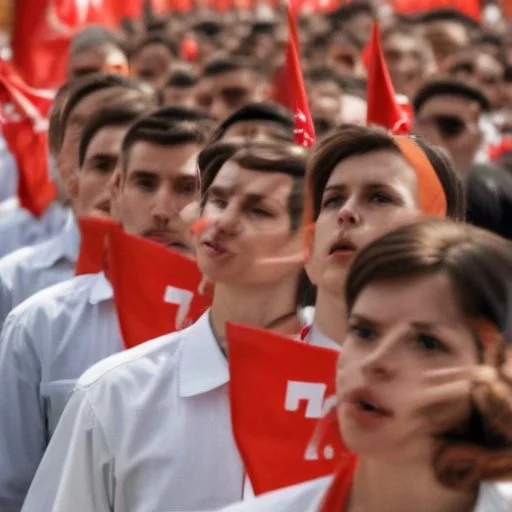
The Soviet government's proposal aimed to elevate Russian to equal status with Georgian, stripping the latter of its unique cultural significance. For the Georgians, this was an unacceptable affront to their heritage, sparking fears of cultural assimilation and linguistic erasure.
On April 14, 1978, the streets of Tbilisi were awash with protesters, waving Georgian flags and brandishing signs that read "ქართული ენა უნდა დარჩეს" ("Let the Georgian language remain"). Students, workers, intellectuals, and clergy alike joined forces, demanding the government respect their linguistic heritage. The demonstrations were peaceful, yet resolute, with chants of "Georgia for Georgians!" echoing through the streets.
The protests began on April 14, 1978, with thousands gathering in Tbilisi's central square. Over the next few days, the demonstrations grew in size and intensity, prompting the Soviet authorities to deploy riot police and impose curfews. Despite the crackdown, the protesters remained resolute, eventually forcing the government to withdraw its proposal.
The Tbilisi demonstrations of 1978 marked a significant turning point in Georgia's struggle for independence and cultural preservation. The protests:
"Our language is our blood, and we will not let it be changed!" - Zviad Gamsakhurdia
The Tbilisi demonstrations of 1978 draw parallels with other linguistic and cultural preservation movements, such as the Quebec nationalist movement in Canada and the Catalan language movement in Spain.
One protester, a young woman named Nana, recalled the electrifying atmosphere of the demonstrations: "We felt like we were fighting for our very identity. It was a sense of pride and purpose I've never felt before or since."
The Tbilisi demonstrations of 1978 set a powerful precedent for future independence movements in Georgia, culminating in the country's eventual independence from the Soviet Union in 1991.
During the protests, Georgians used homemade signs and banners, which often featured quotations from famous Georgian poets and writers.
The Tbilisi demonstrations of 1978 serve as a testament to the power of grassroots activism and the importance of preserving cultural heritage in the face of oppressive regimes.
Zviad Gamsakhurdia, a young and charismatic activist, played a pivotal role in mobilizing the protests. Born in 1939, Gamsakhurdia came from a family of intellectuals and was heavily influenced by his father, a renowned Georgian poet. He studied philosophy at Tbilisi State University and later became a prominent dissident, advocating for Georgian independence and cultural preservation.
Gamsakhurdia's passion and oratory skills made him a natural leader, and he quickly emerged as the face of the protests. His unwavering dedication to the cause inspired thousands to join the movement, and his leadership helped to galvanize the Georgian people.
Quote: "Our language is our blood, and we will not let it be changed!" - Zviad Gamsakhurdia
The Georgian language is a unique and vital part of the country's cultural heritage. With its own distinct alphabet and script, Georgian has a rich literary tradition that spans centuries. The language has been a cornerstone of Georgian identity, and its preservation is essential to the country's cultural survival.
The Soviet government's attempt to elevate Russian to equal status with Georgian was seen as a threat to this cultural heritage. The protests were not just about language rights but also about preserving the country's cultural sovereignty.
The Georgian language has been recognized by UNESCO as an intangible cultural heritage of humanity, highlighting its importance to global cultural diversity.The Soviet Union's language policy was designed to promote Russian as the lingua franca of the Soviet republics. The government's intention was to create a unified, Russian-speaking population, which would facilitate communication and control across the vast territory.
However, this policy was met with resistance from many of the Soviet republics, including Georgia, which saw it as an attempt to erase their cultural identities. The protests in Tbilisi were a direct response to this policy and marked a significant turning point in the struggle for Georgian independence.
The Soviet government's language policy was a key factor in the rise of nationalist movements across the Soviet republics.
The Tbilisi demonstrations of 1978 took place against the backdrop of growing nationalism across the Soviet republics. The Soviet Union's policy of Russification had sparked protests and unrest in many regions, including Ukraine, Belarus, and the Baltic states.
The Georgian protests were part of a larger movement that was sweeping across the Soviet Union, as people demanded greater autonomy and recognition of their cultural identities. The demonstrations in Tbilisi were a catalyst for further protests and movements across the region.
The rise of nationalism in the Soviet republics was a significant factor in the eventual collapse of the Soviet Union.The Tbilisi demonstrations of 1978 have been interpreted by historians as a pivotal moment in the struggle for Georgian independence. The protests marked a shift from cultural preservation to national self-determination, setting a precedent for future independence movements.
Historians have also noted the significance of the protests in the broader context of Soviet history, highlighting the role of nationalist movements in the eventual collapse of the Soviet Union.
The Tbilisi demonstrations serve as a powerful example of the importance of grassroots activism in shaping historical outcomes.