


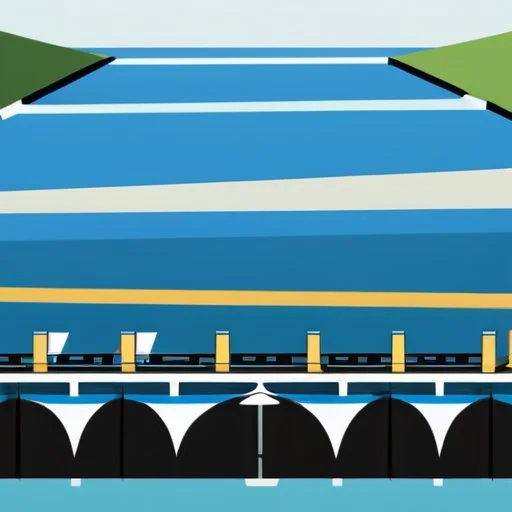
The Thames Barrier, a massive gate system, was officially opened to safeguard the floodplain of most of Greater London from being inundated by the Thames tides, except in the most extreme of circumstances. This colossal structure, spanning 520 meters across the River Thames, guarantees the safety of London's delicate ecosystem and the millions who call it home.
Flooding has been a constant threat to London since the 19th century. The city's low-lying floodplain made it vulnerable to the devastating effects of tidal surges and storms. In 1953, a severe flood devastated the city, prompting the government to take action and commission a comprehensive study to address the issue.
After years of planning and debate, construction on the Thames Barrier began in 1974. The project involved building a series of 10 steel gates, each weighing over 3,000 tons, which would be raised to block the incoming tide during high water levels. The barrier was designed to operate in tandem with a series of flood defenses along the Thames Estuary.
The Thames Barrier has been instrumental in preventing devastating floods in London. Since its opening, the barrier has been activated over 100 times, safeguarding the city from potential disasters. The barrier has also enabled the redevelopment of previously flood-prone areas, boosting the local economy and paving the way for new residential and commercial projects.
The Thames Barrier has become an iconic symbol of London's resilience and determination to protect its citizens. The barrier's futuristic design has inspired architects and engineers worldwide, showcasing British ingenuity and expertise in flood defense technology.
"The Thames Barrier is a testament to human ingenuity and determination to protect our cities from the forces of nature." - Michael Pitt, Minister of Agriculture, Fisheries, and Food
The construction of the Thames Barrier shares parallels with other notable flood defense projects, such as the Netherlands' Delta Works and the Venice Floodgate Project. These initiatives demonstrate the global commitment to protecting urban centers from the devastating effects of flooding.
Local residents and business owners have praised the Thames Barrier for its role in revitalizing the area. "The barrier has given us peace of mind and enabled us to invest in our community," said Jeanette Smith, a local shop owner.
The Thames Barrier has set a precedent for future flood defense projects, inspiring innovative solutions to mitigate the effects of climate change and sea-level rise. As global cities face increasing threats from flooding, the Thames Barrier stands as a beacon of hope and resilience.
Watch a video showcasing the construction and operation of the Thames Barrier. Explore an interactive timeline highlighting key milestones in the project's history.
As climate change continues to impact global sea levels, the Thames Barrier will play an increasingly vital role in protecting London from the rising tides. Experts predict that the barrier will need to be adapted and upgraded to meet the challenges of the future.
The Thames Barrier has enabled the redevelopment of previously flood-prone areas, creating new opportunities for social and economic growth. The barrier has also facilitated the creation of new green spaces and wildlife habitats along the Thames.
The Thames Barrier serves as a powerful symbol of what can be achieved through human collaboration and ingenuity. Its story inspires future generations to tackle the complex challenges posed by climate change and urbanization.
The Thames Barrier has had a profound impact on the cultural landscape of London. The barrier's futuristic design has inspired a new generation of architects and engineers, showcasing British ingenuity and expertise in flood defense technology. The barrier has also become an iconic symbol of London's resilience and determination to protect its citizens.
The Thames Barrier has been featured in numerous films, television shows, and documentaries, including the James Bond movie "Moonraker" and the BBC documentary series "The Thames: Britain's Great River". The barrier's striking design has also made it a popular spot for photographers and tourists.
The barrier has also played host to numerous cultural events and festivals, including the annual Thames Festival, which celebrates the river's rich history and cultural significance. The barrier's presence has helped to revitalize the surrounding area, creating new opportunities for cultural and artistic expression.

The Thames Barrier has had a significant economic impact on the city of London. The barrier has enabled the redevelopment of previously flood-prone areas, creating new opportunities for residential and commercial development. The barrier has also helped to boost the local economy, generating millions of pounds in revenue each year.
The barrier's presence has also helped to increase property values in the surrounding area, making it a more attractive place to live and work. The barrier has also created new jobs and opportunities for local businesses, including construction, engineering, and tourism.
According to a study by the London Chamber of Commerce, the Thames Barrier has generated an estimated £10 billion in economic benefits since its construction. The barrier's impact on the local economy has been particularly significant, helping to create a vibrant and thriving community.
Charles Draper, the renowned engineer who played a crucial role in the design and construction of the Thames Barrier, was born in 1921 in London, England. Draper studied engineering at the University of Cambridge before joining the Ministry of Works in 1946.
Draper's work on the Thames Barrier was instrumental in overcoming the complex technical challenges posed by the project. His innovative designs and solutions helped to ensure the barrier's success, earning him widespread recognition and acclaim.
Today, Draper is remembered as one of the most important figures in the history of British engineering, and his work on the Thames Barrier continues to inspire and influence engineers around the world.
Historians have long debated the significance of the Thames Barrier in the context of British history. Some have argued that the barrier represents a triumph of human ingenuity over the forces of nature, while others have seen it as a symbol of the government's commitment to protecting its citizens.
One school of thought suggests that the Thames Barrier is a testament to the British government's willingness to invest in large-scale infrastructure projects, reflecting the country's commitment to progress and development. Others have seen the barrier as a symbol of the country's vulnerability to natural disasters, highlighting the need for continued investment in flood defense systems.
Regardless of interpretation, the Thames Barrier remains an important historical event, offering insights into the complex interplay between human agency, natural forces, and technological innovation.
The Thames Barrier has had a profound impact on the development of flood defense technology. The barrier's innovative design and construction have paved the way for new generations of flood defense systems, influencing the development of similar projects around the world.
The barrier's use of hydraulic pumps and motors has also driven innovation in the field of engineering, leading to the development of new technologies and systems. The barrier's presence has also facilitated the creation of new research and development opportunities, driving advancements in the field of flood defense and management.
The Thames Barrier has also played a key role in the development of international standards for flood defense systems, providing a model for best practice in the design and construction of similar projects.