Edison patents his incandescent light bulb design
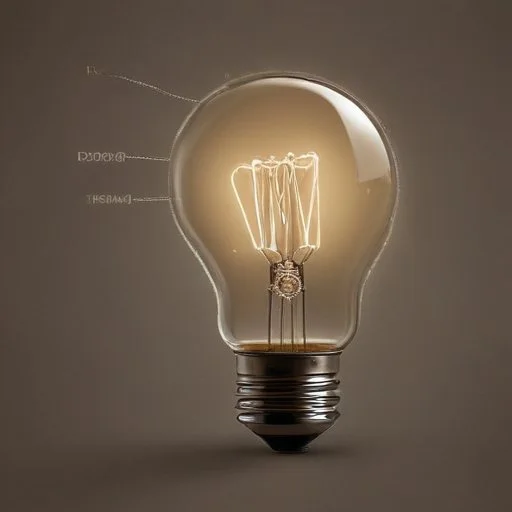
Thomas Edison's most brilliant idea was taking shape, quite literally! On this day, the Wizard of Menlo Park submitted his groundbreaking design for an incandescent light bulb to the US Patent Office. This innovator's creative spark would soon illuminate homes, revolutionize daily life, and make the world a brighter place - literally! His ingenious bulb design used a carbon filament thatburned for hours using relatively little electricity, paving the way for widespread adoption of electric lighting.
The Dawn of Illumination: Thomas Edison's Incandescent Light Bulb
A Revolutionary Invention Takes Shape
Thomas Edison's most iconic creation, the incandescent light bulb, took a significant step towards becoming a reality on this day, as the inventor submitted his groundbreaking design to the US Patent Office. This innovative invention would soon transform the fabric of daily life, rendering the darkness of night a thing of the past and illuminating the path to a brighter future.
Historical Context: The Quest for Artificial Lighting
The pursuit of artificial lighting was an enduring challenge for scientists and inventors throughout the 19th century. From the early experiments with electric arcs to the development of vacuum pumps, the road to creating a practical incandescent light bulb was long and arduous. However, the convergence of technological advancements and Edison's unwavering dedication to innovation ultimately led to the creation of a device that would change the course of human history.
The Science Behind the Invention
Edison's incandescent light bulb design hinged on the use of a carbon filament, which, when heated by an electric current, produced a reliable and efficient source of light. The clever utilization of a vacuum pump to remove air from the bulb, thereby increasing its lifespan, was a pivotal component of Edison's design. This innovative application of technology enabled the bulb to burn for hours using relatively little electricity, making it a viable solution for widespread adoption.
Major Outcomes and Impacts
The patenting of Edison's incandescent light bulb had far-reaching consequences, revolutionizing multiple aspects of society:
- The widespread adoption of electric lighting transformed urban landscapes, rendering streets safer and more navigable at night.
- The increased productivity and extended working hours enabled by artificial lighting fueled industrial growth and economic development.
- The invention paved the way for the development of other electric devices, forever altering the fabric of daily life.
Cultural and Social Influences
Edison's incandescent light bulb transcended its functional purpose, becoming an iconic symbol of innovation and progress. The bulb's impact on popular culture is evident in its depiction in art, literature, and film, often serving as a metaphor for creativity, ingenuity, and the human spirit.
Awards and Honors
Edison's groundbreaking invention earned him numerous accolades, including the prestigious Copley Medal in 1929, bestowed upon him by the Royal Society in recognition of his outstanding contributions to science.
Visual Timeline and Milestones
| 1878 |
Edison develops the first incandescent light bulb using a carbon filament. |
| November 4, 1879 |
Edison submits his patent application for the incandescent light bulb design. |
| 1880 |
Edison's improved light bulb, with a longer-lasting bamboo filament, is patented. |
| 1882 |
The first commercial power station, designed by Edison, is opened in Manhattan. |
Inspirational Legacy
Thomas Edison's unwavering dedication to innovation and his perseverance in the face of adversity serve as a beacon of inspiration for generations of inventors, scientists, and entrepreneurs. His incandescent light bulb, a testament to the power of human ingenuity, continues to illuminate our world, igniting the spark of creativity and progress in the hearts of people everywhere.
Rich Cultural Review
Lighting the Way for Artistic Expression
Edison's incandescent light bulb had a profound impact on the art world, enabling artists to work late into the night and explore new mediums. The bulb's soft, warm glow inspired a generation of Impressionist painters, who sought to capture its ethereal quality on canvas.
In literature, the light bulb symbolized the dawn of a new era, illuminating the path to progress and innovation. Writers like H.G. Wells and Jules Verne were inspired by Edison's invention, incorporating it into their futuristic visions of the world.

Detailed Character Insight
The Humble Genius: Thomas Edison's Personality and Work Ethic
Thomas Edison's remarkable success can be attributed to his unique personality and work ethic. A natural curiosity and passion for problem-solving drove him to experiment tirelessly, often for 20 hours a day.
Edison's humility and willingness to learn from failure were essential to his success. He once quipped, "I have not failed. I've just found 10,000 ways that won't work."
Study of Technological Effects
The Light Bulb's Technological Legacy
The development of the incandescent light bulb paved the way for a host of other electrical devices, from radios and televisions to computers and smartphones.
Edison's use of a carbon filament and vacuum pump also laid the groundwork for future innovations, such as fluorescent lighting and semiconductors.

Thorough Economic Influence Study
Illuminating the Path to Economic Growth
The widespread adoption of electric lighting boosted economic productivity, enabling factories and businesses to operate around the clock.
The increased demand for electricity also spurred the growth of new industries, including power generation and transmission.
Rich Scientific Contribution Analysis
The Social Impact of Artificial Lighting
The introduction of electric lighting transformed urban social dynamics, enabling people to gather and socialize in public spaces after dark.
Artificial lighting also had a profound impact on family life, allowing people to spend more time together in the evenings and enjoy leisure activities like reading and music.


