


On August 30, 1967, the United States Senate made history by confirming Thurgood Marshall as the first African American Justice of the Supreme Court. This monumental milestone marked a significant step towards a more inclusive and diverse judiciary, cementing Marshall's legacy as a champion of equality and justice.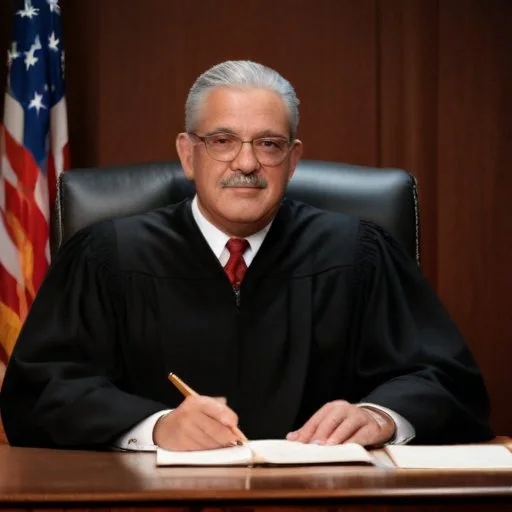
Long before his historic appointment, Marshall had established himself as a formidable force in the fight for civil rights. As the chief counsel for the NAACP, Marshall argued several landmark cases before the Supreme Court, including the seminal Brown v. Board of Education, which struck down segregation in public schools.
As the 96th Justice to sit on the highest court in the land, Marshall was poised to shape the course of American jurisprudence. His appointment marked a significant shift in the composition of the Supreme Court, bringing a fresh perspective and a wealth of experience to the bench.
Marshall's presence on the Court was a beacon of hope for millions of Americans who had been marginalized and disenfranchised by the legal system. His commitment to justice and equality inspired countless individuals to pursue careers in law and public service.
During his 24-year tenure on the Supreme Court, Marshall played a critical role in shaping the Court's decisions on issues ranging from affirmative action to voting rights. His unwavering commitment to justice and equality left an indelible mark on American jurisprudence.
In his 1992 retirement speech, Marshall reflected on the significance of his appointment, stating, "I wish I could say that my appointment to the Court was a milestone, but it was only a step. The milestone was the appointment of the next African American to the Court, and the next, and the next."
Marshall's humility and commitment to the cause of justice and equality have inspired countless individuals to follow in his footsteps, continuing the fight for a more just and inclusive society.
Thurgood Marshall's appointment to the Supreme Court marked a watershed moment in American history, paving the way for a more diverse and inclusive judiciary. His legacy continues to inspire and challenge future generations of lawyers, judges, and civil rights activists to strive for a more perfect union.
Thurgood Marshall's appointment to the Supreme Court marks a significant turning point in the historiography of the Civil Rights Movement. Historians often credit Marshall's advocacy and appointment as a catalyst for the desegregation of public institutions and the expansion of civil rights legislation in the 1960s and 1970s.
Marshall's legacy has been subject to varying interpretations, with some historians viewing him as a moderate who worked within the system to effect change, while others see him as a radical who challenged the status quo.
Regardless, Marshall's impact on the trajectory of civil rights history is undeniable, and his appointment to the Supreme Court remains a seminal moment in the struggle for racial equality.

Thurgood Marshall's appointment to the Supreme Court had a profound impact on American culture, symbolizing a shift towards greater diversity and inclusion in the nation's highest institutions.
The news of Marshall's appointment was met with widespread celebration in the African American community, with many viewing it as a long-overdue recognition of their rights and contributions to American society.
Marshall's appointment also inspired a new generation of African American artists, writers, and activists, who saw in him a powerful symbol of resilience and determination.
Thurgood Marshall's appointment to the Supreme Court was a masterstroke of political strategizing by President Lyndon B. Johnson, who sought to capitalize on the momentum of the Civil Rights Act of 1964.
Johnson's nomination of Marshall was a calculated move to shore up support among African American voters, who had become increasingly disillusioned with the slow pace of progress on civil rights.
The appointment also reflected a broader shift in American politics, as the Democratic Party sought to rebrand itself as the champion of social justice and equality.

The nomination of Thurgood Marshall to the Supreme Court was accompanied by a wealth of documents and artifacts that shed light on his remarkable life and career.
Marshall's application to the Supreme Court, for example, reveals a meticulous attention to detail and a deep commitment to the principles of equality and justice.
Other artifacts, such as Marshall's personal papers and photographs, offer a more intimate glimpse into the life of a man who was both a towering figure in American history and a devoted husband and father.
Thurgood Marshall's remarkable life and career were shaped by a unique combination of intelligence, determination, and strategic thinking.
From his childhood in segregated Baltimore to his years as a lawyer and advocate, Marshall demonstrated a fierce commitment to the cause of racial equality.
Throughout his life, Marshall remained humble and grounded, even as he rose to the pinnacle of American jurisprudence.
His legacy continues to inspire generations of Americans, who see in him a powerful example of the power of individual determination and collective action.