


The Treaty of Campo Formio, signed on October 18, 1797, marked a pivotal moment in European history, as France and Austria brought an end to the devastating War of the First Coalition. This landmark agreement not only solidified French dominance over Northern Italy but also paved the way for Napoleon Bonaparte's future conquests, cementing his position as a master strategist and leader.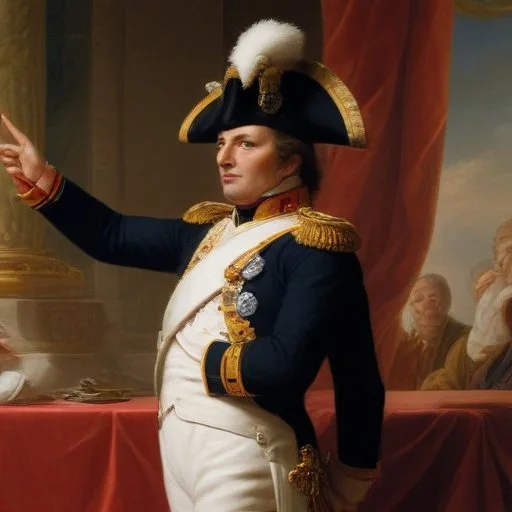
In the midst of the French Revolution, the War of the First Coalition erupted in 1792, pitting France against a coalition of European powers, including Austria, Prussia, and Great Britain. The war raged on for five years, with both sides suffering heavy losses. Napoleon Bonaparte, a rising star in the French military, capitalized on the chaos and seized control of the Italian campaign, winning a series of decisive victories that left the Austrian army reeling.
The Treaty of Campo Formio had far-reaching consequences for Europe and beyond. The treaty:
The Treaty of Campo Formio had significant cultural and social implications, as it:
The Treaty of Campo Formio was not without controversy, as critics argued that:
Napoleon Bonaparte, in a letter to the French Directory, wrote:
"The fate of Italy is now decided. The tranquility of Europe is secured. The French Republic has nothing more to fear from the house of Austria."
This quote captures the essence of the Treaty of Campo Formio, as Napoleon looked to secure France's position as a dominant power in Europe.
The Treaty of Campo Formio set the stage for Napoleon's future conquests and the reorganization of Europe. It:
In conclusion, the Treaty of Campo Formio marked a significant turning point in European history, solidifying French dominance and paving the way for Napoleon's future conquests. As a testament to the power of strategic diplomacy and military might, the treaty continues to inspire and educate historians and scholars to this day.
The Treaty of Campo Formio had a profound impact on European cultural dynamics. As French influence spread throughout the continent, artists, writers, and thinkers began to draw inspiration from Napoleon's military conquests. The treaty marked the beginning of a new era in cultural exchange, as French artists and intellectuals flocked to Italy to study the country's rich cultural heritage.
The treaty also facilitated the diffusion of Enlightenment ideas throughout Europe. French thinkers like Voltaire and Rousseau, who had shaped the intellectual landscape of the Revolution, now found a wider audience across the continent. As a result, the treaty contributed to the development of a more cosmopolitan and interconnected European cultural sphere.
The Rise of NeoclassicismThe Treaty of Campo Formio also had a significant impact on the visual arts. As French artists and architects became fascinated with ancient Roman and Greek culture, neoclassicism emerged as a dominant style in Europe. This aesthetic movement, characterized by its emphasis on classical forms and motifs, would go on to shape the development of art and architecture throughout the 19th century.
Count Philipp von Cobenzl, the Austrian diplomat who represented Austria in the treaty negotiations, was a complex figure with a multifaceted personality. On the one hand, he was a shrewd strategist who recognized the futility of continued resistance to French dominance. On the other hand, he was a proud Austrian patriot who felt deeply about the territorial losses suffered by his country.
A Diplomat's DilemmaVon Cobenzl's experiences during the negotiations reveal the difficulties faced by diplomats in times of war. As he struggled to balance Austria's interests with the harsh realities of French military power, he was forced to make painful concessions that would ultimately shape the course of European history.
A Legacy of CompromiseVon Cobenzl's legacy is a testament to the difficult choices faced by diplomats in times of crisis. While his compromises may have seemed defeatist to some, they ultimately paved the way for a temporary peace that allowed Austria to regroup and reassess its position in Europe.
The Treaty of Campo Formio must be understood within the broader context of European geopolitics in the late 18th century. The French Revolution had created a power vacuum that allowed Napoleon to consolidate his position in Europe. Meanwhile, the Austrian Empire, once a dominant force on the continent, was struggling to maintain its influence in the face of rising nationalism and revolutionary fervor.
The Decline of the HabsburgsThe treaty marked a significant turning point in the decline of the Habsburg Empire, which had once dominated Central and Eastern Europe. As Austria ceded territory to France, it became clear that the empire's days as a major power were numbered.
The Rise of the French EmpireIn contrast, the treaty cemented France's position as the dominant power in Europe. Napoleon's military conquests had created a vast empire that stretched from the Pyrenees to the Rhine, and the treaty provided a temporary respite from conflict that allowed him to consolidate his gains.

The Treaty of Campo Formio had significant economic implications for Europe. The cession of territory to France led to a shift in trade patterns, as the French Empire established itself as a major commercial power. The treaty also led to the introduction of new economic institutions, such as the Banque de France, which would play a key role in financing Napoleon's future conquests.
The Rise of ProtectionismThe treaty also marked a turning point in the development of economic nationalism in Europe. As countries sought to protect their industries from French competition, protectionist tariffs and trade policies became more widespread. This would ultimately contribute to the development of rival economic blocs in Europe, paving the way for future conflicts.
The Economic Legacy of NapoleonNapoleon's economic policies, shaped by the treaty, would have a lasting impact on European economic development. His emphasis on state-led economic development, infrastructure construction, and trade protectionism would influence economic policy-making for generations to come.
The Treaty of Campo Formio was a masterclass in political manipulation by Napoleon Bonaparte. By exploiting Austria's weakness and divisions, he was able to extract concessions that cemented his position as a dominant force in Europe. The treaty marked a turning point in Napoleon's rise to power, as he transitioned from a military commander to a shrewd politician and statesman.
A Diplomatic CoupThe treaty was a diplomatic coup for Napoleon, who outmaneuvered his Austrian counterparts at every turn. By playing on their fears and divisions, he was able to secure a favorable settlement that paved the way for his future conquests.
The Art of NegotiationNapoleon's negotiating tactics during the treaty negotiations provide valuable insights into the art of diplomacy. By combining charm, intimidation, and strategic concessions, he was able to achieve his goals while minimizing opposition from his adversaries.