


The Treaty of Lausanne, signed on July 24, 1923, is a pivotal milestone in modern history, marking the recognition of Turkey's sovereignty and borders by the international community. This monumental agreement, inked in Lausanne, Switzerland, brought an end to the Turkish War of Independence and paved the way for Turkey's transformation into a secular, democratic state.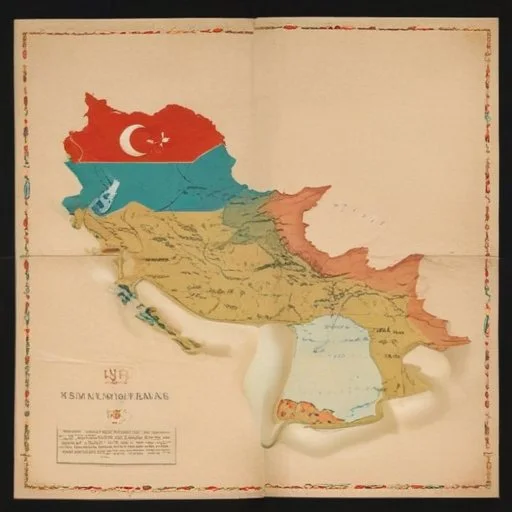
Mustafa Kemal Atatürk, the visionary leader of the Turkish War of Independence, played a crucial role in shaping the country's future. His government, recognized by the treaty, marked a significant shift from the Ottoman Empire's legacy. The treaty's signing not only ended the war but also signified the beginning of a new era for Turkey, built on the principles of secularism, democracy, and modernization.
The Treaty of Lausanne was signed by Greece, Bulgaria, and other countries that had fought in World War I, including the United Kingdom, France, Italy, and Japan. These nations recognized Turkey's sovereignty over its territory, with the exception of the city of Mosul, which was under British administration at the time. The treaty's terms also included the demilitarization of the Turkish Straits and the recognition of Turkey's borders with Greece, Bulgaria, and Syria.
The Treaty of Lausanne had far-reaching cultural and social implications for Turkey. The recognition of secularism and democracy paved the way for the country's modernization, including the adoption of a new alphabet, the Latin-based Turkish alphabet, and the emancipation of women. The treaty also led to the establishment of modern educational institutions and the promotion of arts and culture.
The Treaty of Lausanne was not without its controversies. The treaty's terms were seen as favorable to Turkey, leading to criticisms from Greece and other countries. The treaty's recognition of Turkey's sovereignty over Mosul was particularly contested, with the city eventually becoming part of Iraq in 1925. Despite these criticisms, the treaty remains a cornerstone of modern Turkish history, symbolizing the country's independence and sovereignty.
The Treaty of Lausanne had significant implications for the Middle East and beyond. The treaty's recognition of Turkey's sovereignty and borders set a precedent for modern nation-building in the region. The treaty also paved the way for Turkey's membership in the League of Nations, precursor to the United Nations, and its eventual integration into the international community.
The Treaty of Lausanne is a testament to the power of diplomacy and international cooperation. As Atatürk aptly put it, "Peace at home, peace in the world." This monumental agreement continues to shape Turkey's story, a nation built on the principles of democracy, secularism, and modernization.
The Treaty of Lausanne had a profound impact on Turkish culture, paving the way for a new era of modernization and secularization. One of the most significant cultural changes was the adoption of the Latin-based Turkish alphabet, replacing the Ottoman Turkish alphabet that had been in use for centuries. This change not only simplified the writing system but also facilitated the transition to a more modern, Westernized culture.
The treaty also led to the promotion of arts and culture, with the establishment of modern educational institutions and the encouragement of Turkish artists and intellectuals to study abroad. This cultural exchange had a profound impact on Turkish literature, art, and music, leading to a flourishing of creative expression in the years following the treaty.
Mustafa Kemal Atatürk: The Visionary Leader
Mustafa Kemal Atatürk was a visionary leader who played a crucial role in shaping Turkey's future. Born in 1881, Atatürk was a skilled military strategist who led the Turkish War of Independence against the Allied Powers. His leadership and charisma inspired a nation, and his commitment to secularism, democracy, and modernization paved the way for Turkey's transformation into a modern state.
Atatürk's leadership style was characterized by his strong convictions and his ability to inspire and motivate others. He was a skilled orator and writer, and his speeches and writings continue to inspire Turks to this day.
The Treaty of Lausanne was signed at a time of great turmoil in the Middle East. The Ottoman Empire had collapsed, and the region was plagued by conflict and instability. The treaty marked a significant shift in the balance of power in the region, with Turkey emerging as a strong, independent nation.
The treaty also had significant implications for the global community, marking a shift towards a more multipolar world order. The recognition of Turkey's sovereignty and borders set a precedent for modern nation-building in the region, and paved the way for Turkey's eventual integration into the international community.
The road to the Treaty of Lausanne was long and arduous, marked by conflict, negotiation, and compromise. The Turkish War of Independence, led by Mustafa Kemal Atatürk, was a brutal and bloody conflict that lasted from 1920 to 1923.
The war was marked by several key battles, including the Battle of Sakarya, which took place in August 1921. This battle was a turning point in the war, with the Turkish forces emerging victorious and the Greek army retreating in disarray.
The Ankara Conference, which took place in November 1922, set the stage for the Lausanne negotiations. The conference was attended by Turkish leaders, including Atatürk, and representatives from the Allied Powers.
The Treaty of Lausanne was a significant political achievement, marking the recognition of Turkey's sovereignty and borders by the international community. The treaty was the result of months of intense negotiation, with Turkey's leaders, including Atatürk, playing a crucial role in shaping the treaty's terms.
The treaty had significant implications for Turkish politics, marking a shift towards a more secular, democratic system of government. The treaty's recognition of Turkey's borders also paved the way for a more stable and secure political environment, allowing Turkey to focus on its internal development and modernization.