


The Treaty of Nanking, signed on August 29, 1842, marked the culmination of the First Opium War between China and Britain, a conflict that would have far-reaching consequences for both nations. This landmark treaty, imposed on China by the British, not only brought an end to the bloody conflict but also paved the way for the opening up of China to European trade and influence, cementing Britain's position as a dominant world power.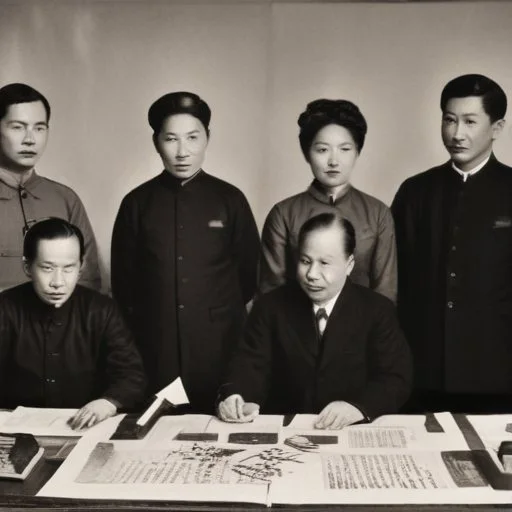
In the early 19th century, the British East India Company's dominance in the Indian opium trade led to a surge in the drug's sale in China. As the opium trade flourished, Chinese officials grew increasingly concerned about the devastating social and economic impact it was having on their country. This concern eventually led to a full-blown crisis when the Chinese government confiscated 20,000 chests of opium from British traders in Canton (now Guangzhou) in 1839.
The British, determined to protect their lucrative opium trade, responded to the seizure by launching a naval attack on China, sparking the First Opium War. The conflict lasted from 1839 to 1842, with British forces ultimately emerging victorious. The war was marked by a series of British military victories, including the capture of Hong Kong, which would eventually become a British colony.
The Treaty of Nanking, signed on board the HMS Cornwallis, imposed harsh terms on China, including:
The Treaty of Nanking marked the beginning of a tumultuous period in Chinese history, known as the "Century of Humiliation." During this time, foreign powers, including Britain, France, Germany, and Japan, carved up China, exploiting its resources and imposing unequal treaties. The treaty also had significant implications for China's sovereignty, as it was forced to acknowledge British dominance and accept foreign influence in its internal affairs.
The Treaty of Nanking's impact on China was profound and far-reaching. It led to the erosion of China's sovereignty, the exploitation of its resources, and the imposition of foreign dominance. The treaty also had significant implications for China's international relations, as it was forced to engage with Europe on unequal terms. Today, the Treaty of Nanking remains a powerful symbol of China's historical grievances and a reminder of the need for national rejuvenation.
"The British flag has been hoisted, and the Chinese flag has been hauled down... This is the first step towards the opening of China to the world." - Sir Henry Pottinger, British Plenipotentiary and Chief Commander of British Forces in China
As the ink dried on the Treaty of Nanking, the fate of China was forever altered. The treaty's signing marked the beginning of a new era in Sino-British relations, one that would be shaped by the forces of imperialism, nationalism, and global politics. As we reflect on this pivotal moment in history, we are reminded of the enduring legacy of the Treaty of Nanking and its continued relevance in the modern world.
The Treaty of Nanking has been the subject of intense historiographical debate, with some scholars viewing it as a symbol of Western imperialism and aggression, while others see it as a necessary step towards China's modernization. Marxist historians have argued that the treaty marked the beginning of a period of semi-colonialism, in which foreign powers exploited China's resources and undermined its sovereignty. More recently, some historians have challenged this narrative, suggesting that the treaty was a pragmatically necessary response to China's isolationist policies.
Despite these differing interpretations, most scholars agree that the Treaty of Nanking marked a turning point in Sino-British relations, one that would have far-reaching consequences for both nations. As such, it remains an important area of study for historians seeking to understand the complexities of imperialism, nationalism, and global politics.
Sir Henry Pottinger, the British Plenipotentiary and Chief Commander of British Forces in China, played a crucial role in the negotiation of the Treaty of Nanking. A seasoned diplomat and military strategist, Pottinger was determined to secure British interests in China, even if it meant resorting to force. Despite his tough negotiating stance, Pottinger was also a shrewd pragmatist, recognizing that the opium trade was a highly lucrative business that could benefit both British and Chinese merchants.
Throughout the negotiations, Pottinger was ably assisted by his interpreter, Charles Elliot, who would later become a prominent figure in Sino-British relations. Together, they formed a formidable team, capable of navigating the complexities of Chinese politics and diplomacy.
The Treaty of Nanking has often been compared to other unequal treaties imposed on Asian nations by Western powers during the 19th century. One notable example is the Treaty of Kanagawa, signed between the United States and Japan in 1854, which similarly opened up Japanese ports to American trade and influence. While both treaties share similarities in terms of their unequal terms and the pressure exerted by Western powers, they also differ in important ways.
The Treaty of Nanking, for instance, was more punitive in nature, with China forced to cede territory and pay heavy reparations to Britain. In contrast, the Treaty of Kanagawa was more focused on establishing trade relations and securing American access to Japanese markets. Despite these differences, both treaties highlight the unequal power dynamics at play during this period of imperialism.
The Treaty of Nanking must be seen within the broader context of European imperialism and the scramble for colonies in the 19th century. As European powers competed for influence and resources around the world, Asia became a key battleground, with China emerging as a prized target. The British, in particular, were keen to expand their empire, having already established a foothold in India and Southeast Asia.
The Treaty of Nanking marked a significant milestone in this process, as Britain consolidated its position as a dominant world power. The treaty also set a precedent for future imperial interventions, as other European powers, such as France and Germany, began to carve out their own spheres of influence in Asia.
The Treaty of Nanking had far-reaching economic implications for both Britain and China. For Britain, the treaty secured access to China's vast markets and resources, providing a significant boost to British trade and commerce. The opening up of Chinese ports to British trade also led to a surge in investment, as British merchants and entrepreneurs sought to capitalize on new opportunities.
For China, the treaty marked the beginning of a period of economic exploitation, as foreign powers extracted resources and imposed unequal trade agreements. The payment of reparations to Britain also placed a significant burden on China's economy, exacerbating existing social and economic problems.