


The Droppin Well pub in Ballykelly, Northern Ireland, will forever be remembered as the site of a devastating bombing that claimed the lives of 11 British soldiers and 6 civilians. This senseless act of terror, orchestrated by the Irish National Liberation Army (INLA), sent shockwaves throughout the region and reignited concerns about the ongoing violence of The Troubles.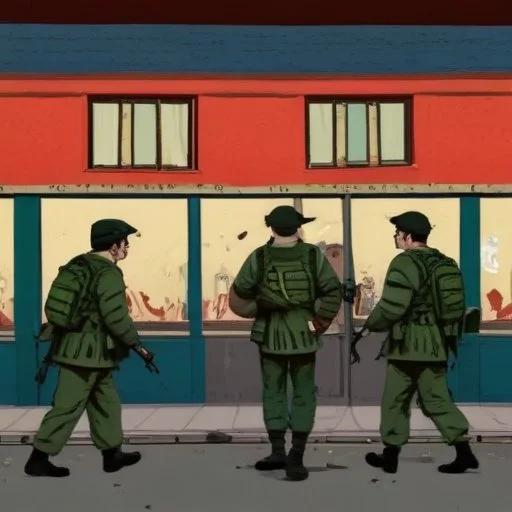
In the early 1980s, Northern Ireland was struggling to find peace amidst the sectarian violence and political unrest of The Troubles. The Droppin Well pub, a popular haunt for British soldiers, was seen as a symbol of normalcy in the small town of Ballykelly. However, on December 6, 1982, this fragile peace was shattered when the INLA bombed the pub, reducing it to rubble and claiming the lives of 17 innocent people.
The bombing of the Droppin Well pub sent shockwaves throughout Northern Ireland and the world. The senseless act of terror sparked widespread condemnation, with many calling for an end to the violence and political unrest. The British government, under the leadership of Prime Minister Margaret Thatcher, vowed to bring those responsible to justice and to maintain a strong military presence in the region.
The Irish National Liberation Army (INLA) was a Irish republican paramilitary group that emerged in the late 1970s. The group was known for its militant stance against the British government and its involvement in numerous bombings, shootings, and kidnappings throughout Northern Ireland. The INLA's actions were seen as part of a broader effort to end British rule in Northern Ireland and to unite the country under Irish rule.
The Troubles, a period of sectarian violence and political unrest, had its roots in the centuries-old conflict between the Protestant and Catholic communities in Northern Ireland. The conflict escalated in the late 1960s, with the emergence of paramilitary groups like the INLA, and continued until the signing of the Good Friday Agreement in 1998.
The bombing of the Droppin Well pub had a profound impact on the people of Northern Ireland and the world. It served as a grim reminder of the devastating consequences of political violence and the need for peaceful reconciliation. In the years that followed, efforts were made to rebuild and heal, but the memory of that fateful night would never be forgotten.
In the end, the Ballykelly bombing stood as a testament to the senseless destruction caused by The Troubles and the need for peaceful coexistence in Northern Ireland.
The Droppin Well pub bombing was not an isolated incident. In the months leading up to the attack, the INLA had carried out a series of bombings and shootings in Northern Ireland, targeting British military personnel and civilians alike. The group's campaign of violence was part of a broader strategy to weaken the British government's resolve to maintain its presence in the region.
In the aftermath of the bombing, British authorities launched a massive investigation, scouring the countryside for clues and interviewing witnesses. The probe led to the arrest and conviction of several INLA members, including the group's leader, Dominic McGlinchey.
Despite the promising leads, the case remained a source of controversy, with many questioning the British government's handling of the investigation. Some alleged that authorities had failed to act on intelligence that could have prevented the bombing, while others claimed that the police had used heavy-handed tactics to extract confessions from suspects.

One of the most tragic figures caught up in the Droppin Well pub bombing was Captain Richard蹹er, a 24-year-old British soldier who lost his life in the blast. A native of rural England,蹹er had joined the army to serve his country and see the world. He was stationed in Northern Ireland as part of the British military's efforts to quell the sectarian violence.
蹹er was more than just a soldier, however. He was a son, a brother, and a friend, beloved by all who knew him. His family and friends remember him as a kind and gentle soul, always willing to lend a helping hand.
In the months following the bombing,蹹er's family campaigned tirelessly for justice, calling on the British government to do more to prevent such atrocities from happening in the future. Their efforts helped to raise awareness about the human cost of the conflict in Northern Ireland.
The Droppin Well pub bombing bore eerie similarities to other terrorist attacks carried out during The Troubles. Like the La Mon House hotel bombing in 1978, which killed 12 people and injured 23, the Droppin Well attack targeted a civilian gathering place, maximizing the potential for casualties.
Both attacks were also characterized by their ruthlessness and willingness to inflict harm on innocent people. The INLA and other paramilitary groups operating in Northern Ireland during The Troubles showed a blatant disregard for human life, often using violence as a means to advance their political goals.
Despite these similarities, however, the Droppin Well pub bombing stands out for its senseless brutality, even by the standards of The Troubles. The attack was widely condemned by people across the political spectrum, and it marked a turning point in the conflict, as public opinion began to shift against the use of violence as a means of achieving political ends.

The Droppin Well pub bombing had a profound impact on the cultural landscape of Northern Ireland. The attack marked a turning point in the region's struggle to come to terms with the sectarian violence of The Troubles.
In the aftermath of the bombing, many artists, writers, and musicians in Northern Ireland responded to the tragedy by creating works that reflected on the senseless violence and the need for peace. The event inspired a wave of creative output, from poetry and novels to songs and films, that explored the human cost of the conflict.
Today, the Droppin Well pub bombing is remembered as a poignant reminder of the devastating consequences of political violence. It serves as a testament to the power of art to heal and bring people together, even in the darkest of times.
The Droppin Well pub bombing took place against the backdrop of a complex and highly polarized geopolitical landscape. The conflict in Northern Ireland was fueled by centuries-old sectarian tensions between Protestants and Catholics, but it was also influenced by global events and international relations.
During the 1980s, the British government was struggling to maintain its authority in Northern Ireland, while also navigating the complexities of the Cold War. The INLA and other paramilitary groups operating in the region saw the conflict as part of a broader struggle against British imperialism, and they drew support from anti-British forces around the world.
The Droppin Well pub bombing was, in many ways, a manifestation of these global tensions, as the INLA sought to exploit divisions within British society and undermine the government's resolve to maintain its presence in Northern Ireland.