


The Provisional IRA's bombing of Warrington, England, on March 20, 1993, was an act of unprecedented cruelty, claiming the lives of two innocent children, Johnathan Ball and Tim Parry. This senseless act of violence shook the foundations of humanity, igniting widespread outrage and protests in both Britain and Ireland.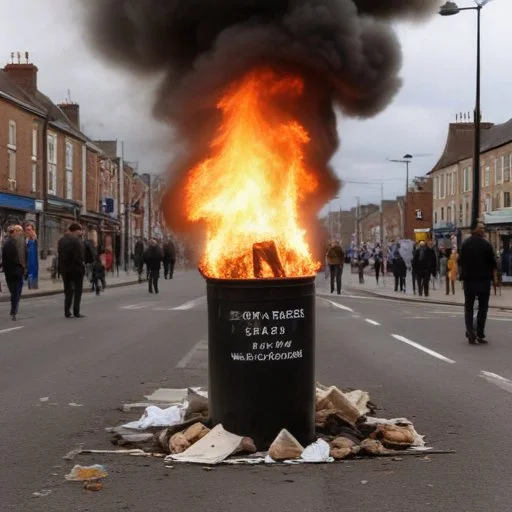
The Warrington bombing was a stark reminder of the ongoing conflict in Northern Ireland, known as the Troubles. This period of sectarian violence, which lasted from the late 1960s to the late 1990s, was marked by bombings, assassinations, and street violence. The IRA, an Irish republican paramilitary organization, was one of the primary forces behind the conflict, aiming to end British rule in Northern Ireland and unify the island.
On that fateful Saturday afternoon, a bomb was planted in a trash can on Bridge Street in Warrington. At 12:12 pm, the device exploded, sending shockwaves through the bustling town center. The blast claimed the lives of Johnathan Ball, a three-year-old toddler, and Tim Parry, a twelve-year-old boy, who were both innocent bystanders.
The Warrington bombing sparked massive protests in both Britain and Ireland, with thousands taking to the streets to condemn the atrocity. The event galvanized public opinion against the IRA's violent tactics, with many calling for an end to the conflict.
The Warrington bombing was a cultural watershed moment, highlighting the devastating consequences of sectarian violence. The event was widely covered in the media, with newspapers and television networks broadcasting the tragedy across the world. The bombing also inspired a wave of artistic responses, including songs, poems, and paintings, as artists sought to process the tragedy.
Colin and Wendy Parry, Tim's parents, became prominent figures in the aftermath of the bombing. Their courageous response to the tragedy, despite their unbearable loss, inspired a nation. The couple dedicated themselves to promoting peace and reconciliation, working tirelessly to bring about an end to the conflict.
The Warrington bombing led to a significant shift in public opinion, with many calling for an end to the conflict. The event also prompted a renewed effort towards peace negotiations, ultimately contributing to the Good Friday Agreement in 1998, which brought an end to the Troubles.
In the aftermath of the bombing, Wendy Parry spoke of the devastating impact of the tragedy on her family. "We were just ordinary people, living our lives, and suddenly, our world was turned upside down. Tim's death was senseless, and it left us with a pain that will never truly heal."
The Warrington bombing serve as a poignant reminder of the devastating consequences of violence and the importance of promoting peace and reconciliation. The tragedy inspired a generation of peacemakers, who continue to work towards a more harmonious future for Northern Ireland and beyond.
"The Warrington bombing was a stark reminder that, in the end, it's not the guns and bombs that will bring about change, but the courage and resilience of ordinary people." - Colin Parry
The Warrington bombing had a significant impact on popular culture, with many artists and musicians responding to the tragedy through their work. The bombing inspired songs, poems, and paintings that reflected the outrage and sadness felt by the public. One notable example is the song "Warrington" by Irish musician Christy Moore, which tells the story of the bombing and its aftermath.
The bombing also inspired a wave of charity singles, with proceeds going towards supporting the families of the victims. The event brought together people from different backgrounds and industries, united in their condemnation of the senseless violence.
Colin Parry, the father of Tim Parry, became a prominent figure in the aftermath of the Warrington bombing. Despite his unimaginable loss, Colin dedicated himself to promoting peace and reconciliation in Northern Ireland. He worked tirelessly to bring together people from different backgrounds, encouraging them to put aside their differences and work towards a common goal.
Colin's courageous response to tragedy earned him widespread recognition and respect. He was awarded the OBE for his services to peace and reconciliation, and continues to work towards a more harmonious future for Northern Ireland and beyond.
The Warrington bombing was part of a larger campaign of violence waged by the Provisional IRA during the Troubles. The IRA had been carrying out bombings, assassinations, and other attacks on British targets since the late 1960s, in an effort to end British rule in Northern Ireland and unify the island.
In the years leading up to the Warrington bombing, the IRA had increasingly targeted economic and commercial targets, in an effort to disrupt the British economy and weaken the government's resolve. The bombing of Warrington, however, marked a turning point in the conflict, as public opinion began to shift decisively against the IRA's violent tactics.
The Warrington bombing took place against the backdrop of a complex and volatile geopolitical landscape. The Troubles in Northern Ireland were part of a larger conflict that involved the UK, Ireland, and the United States. The conflict was fueled by historical grievances, political rivalries, and competing nationalist and unionist ideologies.
In the years leading up to the Warrington bombing, the British and Irish governments had been engaged in secret talks, aimed at finding a negotiated settlement to the conflict. The bombing, however, set back these efforts, highlighting the deep-seated divisions and entrenched positions that continued to bedevil the peace process.
The Warrington bombing had significant political implications, both in the UK and Ireland. The bombing galvanized public opinion against the IRA, with many calling for an end to the violence and a return to the negotiating table. The event also put pressure on the British and Irish governments to take decisive action to address the root causes of the conflict.
In the aftermath of the bombing, the British government introduced new security measures, aimed at preventing further attacks. The Irish government, meanwhile, faced criticism for its handling of the crisis, with many arguing that it had not done enough to rein in the IRA.