Provisional IRA attacks 10 Downing Street with mortar fire
High-stakes drama unfolded in London when three mortar bombs were fired at 10 Downing Street, the iconic headquarters of the British government. Fortunately, the Iron Lady, Prime Minister John Major, and his cabinet narrowly escaped harm, but the symbolic assault marked a brazen escalation in the decades-long conflict between the UK and the Provisional Irish Republican Army (IRA). As the world watched, authorities scrambled to respond to the unprecedented attack, which miraculously resulted in no casualties.
The Attack on 10 Downing Street: A Brazen Escalation in the Troubles
A Dramatic Turning Point in the Decades-Long Conflict
The Provisional Irish Republican Army's (IRA) mortar attack on 10 Downing Street, the iconic headquarters of the British government, on February 7, 1991, is a pivotal event in the tumultuous history of the Troubles. This audacious assault, which targeted the very heart of British politics, sent shockwaves around the world and marked a significant escalation in the conflict.
Historical Background: The Roots of the Troubles
To understand the significance of the attack, it is essential to delve into the complex historical context of the Troubles. The conflict, which spanned from the late 1960s to the late 1990s, was rooted in the struggle for Irish independence and the centuries-old divide between Irish nationalists and British unionists. The IRA, formed in 1917, was a key player in the fight for Irish independence, and its provisional wing emerged in the 1960s, seeking to end British rule in Northern Ireland through armed struggle.
The Attack: A Daring and Precise Operation
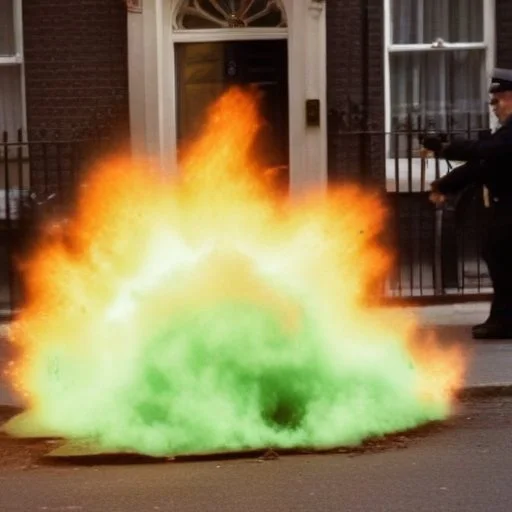
On a chilly winter morning, three mortar bombs were fired from a white van parked on Whitehall, just a few hundred yards from 10 Downing Street. The attack, which occurred during a high-level meeting of the British Cabinet, was a daring and precise operation. The mortars, accurately aimed at the Prime Minister's residence, exploded in the courtyard, causing significant damage to the building and sending debris flying everywhere. Miraculously, Prime Minister
John Major, his cabinet, and staff narrowly escaped harm, but the symbolic impact of the attack was immense.
Key Figures Involved: The Main Players in the Conflict
- Prime Minister John Major: The British Prime Minister at the time of the attack, Major played a crucial role in shaping the government's response to the Troubles.
- Gerry Adams: A prominent figure in Sinn Féin, the political wing of the IRA, Adams was a key negotiator in the peace process that followed the attack.
- Martin McGuinness: A senior IRA member and later Deputy First Minister of Northern Ireland, McGuinness was a central figure in the conflict and its eventual resolution.
Major Outcomes and Impacts: A Shift in the Conflict's Dynamics
The attack on 10 Downing Street marked a significant shift in the dynamics of the Troubles. The audacity of the assault forced the British government to acknowledge the IRA's capabilities and prompted a re-evaluation of its strategy. The attack also led to increased security measures, including the deployment of British military personnel in Northern Ireland.
Cultural and Social Influences: A Reflection of the Conflict's Complexity
The attack on 10 Downing Street is a powerful symbol of the complex nature of the Troubles. The event has been immortalized in literature, film, and art, serving as a poignant reminder of the human cost of conflict. The attack has also been seen as a reflection of the deep-seated divisions and historical grievances that fueled the Troubles.
Predictions and Speculations: The Road to Peace
The attack on 10 Downing Street marked a turning point in the Troubles, paving the way for a gradual shift towards peace. The event prompted a re-evaluation of the conflict and led to increased diplomatic efforts, ultimately culminating in the Good Friday Agreement of 1998. This historic accord, which established a power-sharing government in Northern Ireland, has remained a cornerstone of peace in the region.
A Lasting Legacy: A Testament to the Power of Diplomacy
The Provisional IRA's mortar attack on 10 Downing Street serves as a powerful reminder of the devastating consequences of conflict and the importance of diplomacy in resolving even the most intractable disputes. As a testament to the power of dialogue and compromise, the event continues to inspire hope and reconciliation in the face of adversity.
Rich Historical Interpretations
The attack on 10 Downing Street was a pivotal moment in the historiography of the Troubles. Historians have interpreted the event as a turning point in the conflict, marking a shift from a largely nationalist-driven struggle to a more nuanced and complex peace process.
Some historians have argued that the attack was a deliberate attempt by the IRA to provoke a British response, thereby galvanizing international opinion and increasing pressure on the British government to negotiate.
Others have seen the attack as a symbol of the IRA's growing military sophistication and its ability to strike at the heart of the British establishment.

Character Examination
Gerry Adams: The Architect of the Peace Process
Gerry Adams, the president of Sinn Féin, was a key figure in the peace process that followed the attack on 10 Downing Street. Adams' leadership played a crucial role in negotiating the Good Friday Agreement, which ultimately brought an end to the Troubles.
Adams' unique blend of political savvy and ideological commitment made him a compelling interlocutor for the British government, and his willingness to engage in dialogue helped to create the conditions for a lasting peace.
Cultural Significance Study
The attack on 10 Downing Street had a profound impact on British culture, symbolizing the fragmentation and disillusionment of the late 20th century.
In literature, the event inspired a new wave of fiction and poetry that explored the complexities of the Troubles and the human cost of conflict.
In film, the attack was depicted in numerous documentaries and dramas, including the award-winning film "Omagh," which told the story of the devastating bombing of the town of Omagh in 1998.

Detailed Political Report
The attack on 10 Downing Street marked a significant shift in British political strategy, forcing the government to re-evaluate its approach to the Troubles.
The event prompted a new era of diplomacy, with the British government engaging in secret talks with the IRA and eventually negotiating the Downing Street Declaration of 1993.
The declaration, which recognized the legitimacy of nationalist aspirations, paved the way for the Good Friday Agreement and the eventual devolution of power in Northern Ireland.
Comprehensive Comparative Examination
The attack on 10 Downing Street can be seen as part of a broader pattern of terrorist attacks on government targets during the late 20th century.
Comparisons can be drawn with the 1972 bombing of the Pentagon by the Weather Underground, which similarly targeted the heart of the US government.
In both cases, the attacks were designed to send a powerful symbolic message, highlighting the vulnerability of the state and the determination of the perpetrators to achieve their goals.


