


Tsar Nicholas II's decision to abdicate the Russian throne on March 15, 1917, marked the end of the 304-year Romanov dynasty, a ruling family that had shaped the course of Russian history since 1613.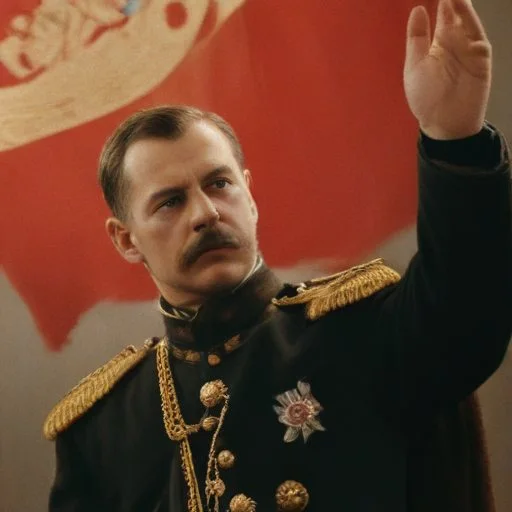
Russia's involvement in World War I had taken a devastating toll on the country's economy and morale. The war effort had drained resources, and military defeats had led to widespread discontent. The tsar's popularity had plummeted, and the Russian people were hungry for change.
As the war raged on, Russia's citizens faced severe food shortages, inflation, and poverty. The situation was exacerbated by the government's inability to provide effective leadership, leading to widespread protests and demonstrations. The Duma, Russia's parliament, had long been at odds with the tsar, and the situation was ripe for revolution.
The abdication of Tsar Nicholas II marked the end of the Romanov dynasty and the beginning of a new era in Russian politics. The provisional government, led by Alexander Kerensky, took power, but it would eventually be overthrown by the Bolsheviks in the October Revolution. The fall of the Romanovs also led to the rise of communism in Russia, which would have far-reaching consequences for the world.
The fall of the Romanovs had a profound impact on Russian culture and society. The revolution marked a shift away from the aristocracy and towards a more egalitarian society. The ideals of the revolution would inspire art, literature, and music, shaping the cultural landscape of Russia for generations to come.
"I, Nicholas II, Emperor of All the Russias, have decreed that I yield to the general upheaval of the people, and that I have decided to renounce the throne of the Russian State." - Tsar Nicholas II, in his abdication manifesto.
According to accounts, Tsar Nicholas II was devastated by the news of his abdication, and he reportedly broke down in tears when he received the news. He would later be exiled to Yekaterinburg, where he would eventually be executed, along with his family, by the Bolsheviks.
The abdication of Tsar Nicholas II paved the way for the Russian Revolution, which would have far-reaching consequences for world politics. The rise of communism in Russia would inspire similar movements around the world, shaping the course of global politics for decades to come.
The abdication of Tsar Nicholas II marked the end of an era, but it also paved the way for a new era of change and revolution in Russia. The fall of the Romanovs would have far-reaching consequences for world politics, shaping the course of history for generations to come.
Alexander Kerensky was a key figure in the Russian Revolution, serving as the Minister of War in the provisional government that replaced Tsar Nicholas II. Born in 1881, Kerensky was a lawyer and politician who was passionate about reforming Russia's political system.
Kerensky's leadership style was marked by his charisma and oratory skills, which earned him the admiration of many Russians. However, his inability to address the country's economic and social problems led to widespread discontent and ultimately, the rise of the Bolsheviks.
The abdication of Tsar Nicholas II had significant economic consequences for Russia. The provisional government, led by Alexander Kerensky, struggled to address the country's economic woes, including hyperinflation, food shortages, and industrial decline.
The lack of effective economic leadership led to a decline in investor confidence, and foreign investment in Russia dwindled. The country's economy was further weakened by the continued involvement in World War I, which drained resources and manpower.
The abdication of Tsar Nicholas II had a profound impact on Russian culture, marking a shift away from the aristocracy and towards a more egalitarian society. The revolution inspired a new wave of artists, writers, and musicians who sought to capture the spirit of change and rebellion.
The Bolsheviks, who eventually seized power, promoted a cultural revolution that emphasized the role of the working class and the importance of socialist ideals. This led to the development of a unique Soviet cultural identity that was distinct from the aristocratic culture of the Romanov era.
The Russian Revolution was characterized by a complex web of social dynamics that contributed to the downfall of the Romanov dynasty. The war effort had created a sense of discontent among the working class, who felt they were shouldering the burden of the war effort.
The rise of the Bolsheviks, who promised to address the economic and social grievances of the working class, capitalized on this sentiment. The provisional government, led by Alexander Kerensky, struggled to address the social and economic problems, paving the way for the Bolsheviks to seize power.
The abdication of Tsar Nicholas II took place in the midst of World War I, which had a profound impact on the global geopolitical landscape. The war had weakened the Russian economy and had created a sense of discontent among the Russian people.
The abdication marked a significant shift in the balance of power, as Russia's weakness created an opportunity for other European powers to gain an advantage. The eventual rise of the Bolsheviks would have far-reaching consequences for global politics, as they would go on to play a significant role in shaping the course of world events.