


On a fateful night in September 1814, the fate of a young nation hung in the balance as the British Navy unleashed a barrage of rockets and bombs upon Fort McHenry, a stalwart bastion of American defense in Baltimore Harbor. It was amidst this storm of fire and steel that Francis Scott Key, a Maryland lawyer and amateur poet, penned the immortal lines of "Defence of Fort McHenry," a poem that would soon become the United States national anthem, "The Star-Spangled Banner."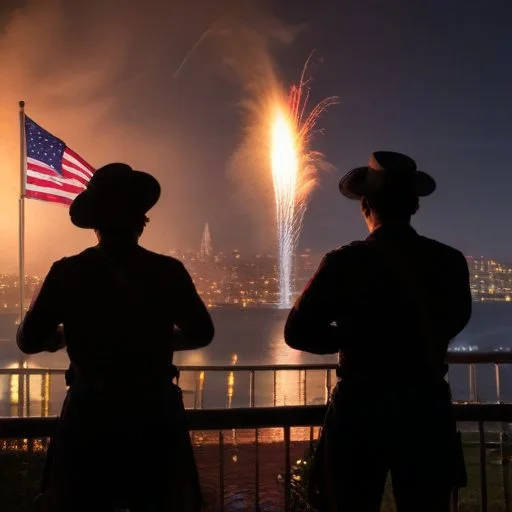
The War of 1812 had been raging for two years, and the British had been making steady gains against the fledgling American army. But the Americans were determined to hold their ground, and Baltimore, a key port city, was a crucial stronghold. The British, seeking to crush the American spirit, launched a massive assault on the city, hoping to capture it and deal a devastating blow to the American war effort.
On September 13, 1814, the British launched a bombardment of Fort McHenry, a pentagonal fortification built to protect the Baltimore Harbor. The British navy, comprising of 19 ships and over 1,000 soldiers, unleashed a torrent of rockets, bombs, and shells upon the fort, hoping to breach its defenses. But the Americans, led by Major George Armistead, held firm, refusing to yield to the relentless barrage.
Francis Scott Key, who had been aboard a British ship negotiating the release of American prisoners, was witnessing the battle from a unique vantage point. As the rockets lit up the night sky, and the bombs burst in the air, he was struck by the bravery and defiance of the American defenders. Inspired by the sight of the American flag still waving above the fort, he penned the poem "Defence of Fort McHenry," which would eventually become the national anthem of the United States.
The failure of the British to capture Baltimore was a significant turning point in the War of 1812. It marked a shift in momentum, as the Americans, buoyed by their victory, began to gain ground against the British. The British, on the other hand, suffered a blow to their morale, and their efforts to conquer the American mainland began to falter.
The Battle of Baltimore and the composition of "The Star-Spangled Banner" left an indelible mark on American history. The national anthem, with its stirring melody and patriotic lyrics, has become an integral part of American culture, evoking feelings of pride and patriotism in generations of Americans. The bravery and resilience of the defenders of Fort McHenry serve as a testament to the American spirit, inspiring countless Americans to fight for freedom and defend their nation.
"The rockets' red glare, the bombs bursting in air, Gave proof through the night that our flag was still there."
"O! long may it wave o'er the land of the free and the home of the brave."
— Francis Scott Key, "Defence of Fort McHenry"
Major George Armistead, the commander of Fort McHenry, played a pivotal role in the defense of the fort during the British bombardment. Born in 1777, Armistead was a seasoned military officer who had served in the War of 1812 from its outset. He was known for his bravery and tactical genius, which earned him the respect and admiration of his troops. Under his leadership, the defenders of Fort McHenry withstood the intense British bombardment, and their victory was a testament to Armistead's exceptional military skills.
Armistead's experience in the War of 1812 began in 1813, when he was stationed in New York. He later transferred to Baltimore, where he was tasked with fortifying the city's defenses. In September 1814, he took command of Fort McHenry, which became the focal point of the British attack.
After the battle, Armistead was hailed as a hero, and his leadership was credited with saving the city of Baltimore from British occupation. He continued to serve in the military until 1821, when he retired with the rank of colonel.

As the British naval fleet approached Baltimore Harbor, the defenders of Fort McHenry were busy preparing for battle. The fort's garrison, consisting of approximately 1,000 soldiers, was led by Major George Armistead, who had been tasked with defending the fort against the British onslaught.
The British attack on Fort McHenry was a pivotal moment in the War of 1812. The British had been making gains against the American army, and the capture of Baltimore was seen as a crucial step in their campaign to conquer the American mainland.
The bombardment of Fort McHenry lasted for 25 hours, during which time the British unleashed a torrent of rockets, bombs, and shells upon the fort. Despite the intense barrage, the defenders of the fort held firm, and their bravery and resilience inspired Francis Scott Key to write "Defence of Fort McHenry," which would later become the national anthem of the United States.
The Battle of Baltimore and the writing of "The Star-Spangled Banner" have been immortalized in American history, but how do they compare to other pivotal moments in the War of 1812?
Another key battle was the Battle of New Orleans, fought on January 8, 1815, in which American forces led by Andrew Jackson defeated a large British army, marking a decisive victory for the Americans.
The Battle of Baltimore and the writing of "The Star-Spangled Banner" had a profound impact on American culture, inspiring a sense of patriotism and national identity that continues to resonate today.
The poem "Defence of Fort McHenry," with its vivid imagery and stirring language, captured the imagination of the American people, and its adoption as the national anthem in 1931 cemented its place in American cultural heritage.
The flag that flew above Fort McHenry during the battle, with its 15 stars and 15 stripes, has become an iconic symbol of American patriotism, appearing in countless works of art, literature, and music.
The original manuscript of "Defence of Fort McHenry" is a significant historical artifact that provides valuable insights into Francis Scott Key's creative process.
The manuscript, housed at the Maryland Historical Society in Baltimore, features Key's handwritten notes and revisions, offering a unique glimpse into the poet's mind.
Another important artifact related to the Battle of Baltimore is the flag that flew above Fort McHenry during the battle, which is now on display at the Smithsonian National Museum of American History in Washington, D.C.