


The 2002 Grozny bombings are etched in history as one of the deadliest attacks on Chechnya, claiming 72 lives and leaving 200 people injured. On that fateful day, two truck bombs rammed into the pro-Moscow government headquarters in Grozny, unleashing a wave of destruction that shook the very foundations of the region.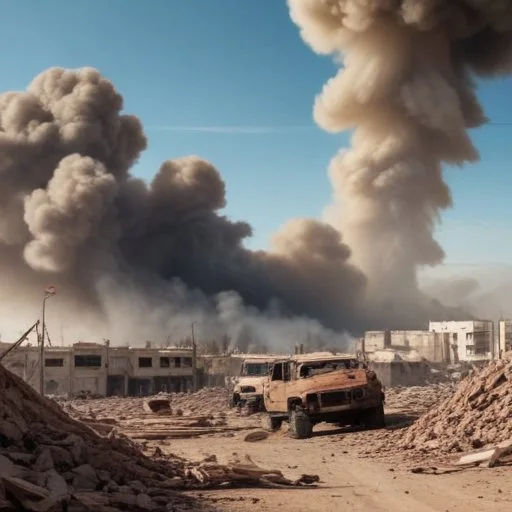
Chechnya, a region in southwestern Russia, has been mired in conflict and political unrest since the dissolution of the Soviet Union. The region's desire for independence from Russia has sparked two brutal wars, resulting in widespread devastation and human suffering. The 1994-1996 conflict saw the region gain de facto independence, but it was short-lived, as the Russian government reasserted control in 1999.
The bombings occurred on December 27, 2002, at the height of the Second Chechen War. Two truck bombs, laden with explosives, were driven into the government headquarters in Grozny, causing a massive explosion that ripped through the complex. The blast was so powerful that it damaged nearby buildings, leaving a trail of destruction and chaos in its wake.
The bombings were orchestrated by the Chechen separatist group, led by Shamil Basayev, a notorious warlord with a history of masterminding brutal attacks. Basayev, a longtime thorn in the side of the Russian government, claimed responsibility for the attack, citing it as a retaliation against the Russian occupation of Chechnya.
The 2002 Grozny bombings had far-reaching consequences for the region, including:
The bombings had a profound impact on the cultural and social fabric of Chechnya, with many civilians caught in the crossfire of the conflict. The attack reinforced the notion that the region was a hotbed of political unrest, perpetuating a cycle of violence and fear.
In conclusion, the 2002 Grozny bombings were a devastating reminder of the ongoing turmoil in Chechnya, a region torn apart by conflict and political instability. As the world grapples with the nuances of geopolitics and regional conflict, it is essential to remember the human cost of such violence, and the enduring impact it has on the people of Chechnya.
The roots of the 2002 Grozny bombings can be traced back to the dissolution of the Soviet Union in 1991, which led to a power vacuum in the Caucasus region. As the Soviet-era borders were redrawn, Chechnya, a region with a distinct cultural and linguistic identity, found itself caught in the midst of a turf war between rival clans and warlords. The subsequent Wars of Chechen Independence (1994-1996 and 1999-2009) further destabilized the region, creating an environment ripe for extremist ideologies to flourish.
In this context, the 2002 Grozny bombings can be seen as a violent manifestation of the region's quest for self-determination. The attack was a calculated move by the Chechen separatist movement to draw attention to their cause and to demonstrate their capacity for spectacular violence.
Understanding the Historical ContextThe bombings occurred against the backdrop of a region torn apart by ethnic and religious divisions, corruption, and political instability. The Russian government's heavy-handed approach to dealing with the Chechen separatist movement only served to radicalize the population, creating an environment in which extremist ideologies could gain traction.

Shamil Basayev, the mastermind behind the 2002 Grozny bombings, was a charismatic and ruthless warlord who led the Chechen separatist movement. Born in 1965, Basayev was a product of the Soviet-era education system, but he soon turned to a life of violence, fighting in the First Chechen War (1994-1996) and later becoming a key figure in the Second Chechen War (1999-2009).
Basayev's rise to prominence was marked by a series of daring raids and bombings, earning him the nickname "The Ogre of Chechnya." Despite his fearsome reputation, Basayev was a shrewd strategist who exploited the political divisions within the Russian government to further his own cause.
Basayev's LegacyThe 2002 Grozny bombings cemented Basayev's status as a global terrorist, and he remained a thorn in the side of the Russian government until his death in 2006.
The Russian government's response to the 2002 Grozny bombings was marked by a significant escalation of military operations in the region. The Kremlin viewed the attack as a direct challenge to its authority and responded with a heavy-handed approach, deploying additional troops and imposing martial law in the region.
The bombing also led to a deterioration in relations between Russia and the international community, with many countries condemning the Russian government's human rights record in Chechnya.
Political FalloutIn the aftermath of the bombing, the Russian government embarked on a policy of repression, arresting and torturing suspected separatists, and restricting the flow of humanitarian aid to the region.

The 2002 Grozny bombings had a profound impact on the cultural fabric of Chechnya, exacerbating the already fragile social cohesion in the region. The attack reinforced the notion that Chechnya was a hotbed of political unrest, perpetuating a cycle of violence and fear.
The bombing also led to a significant displacement of civilians, with many families forced to flee the region in search of safety and stability.
Cultural ConsequencesThe attack further eroded trust between the Russian government and the people of Chechnya, creating an environment of mutual distrust and hostility.
The 2002 Grozny bombings were not an isolated incident, but rather part of a broader pattern of violence and instability that has characterized the Caucasus region since the dissolution of the Soviet Union.
In this context, the bombing can be seen as a manifestation of the complex interplay between regional rivalries, ideological differences, and geopolitical interests.
Regional ImplicationsThe attack highlighted the need for a more nuanced understanding of the regional dynamics at play, and the importance of addressing the root causes of conflict in the Caucasus region.