


On a fateful day in 1991, two German hikers, Helmut and Erika Simon, chanced upon a preserved body deep in the Ötztal Alps, on the border between Italy and Austria. This remarkable find would later be known as Ötzi, a 5,300-year-old mummified individual, whose remarkably well-preserved remains would offer an unprecedented glimpse into the life of a Copper Age European.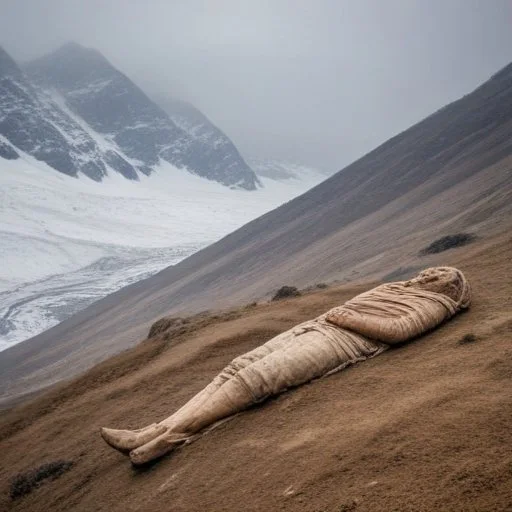
The Ötztal Alps, a verdant and rugged range, have long been a treasure trove of ancient artifacts and relics. The discovery of Ötzi shed new light on the lives of our ancient ancestors, providing a tangible link to the past. The Copper Age, a period marked by the transition from stone to metal tools, was a transformative era in human history. Ötzi's discovery has significantly expanded our understanding of this enigmatic period.
Hello, I'm Liam O'Sullivan, and I've had the privilege of delving into the fascinating tale of Ötzi's discovery. On September 19, 1991, Helmut and Erika Simon, seasoned hikers, were trekking through the Ötztal Alps when they stumbled upon a protruding human body. Initially, they suspected it was a recent victim of a mountaineering accident. However, as they drew closer, they noticed the body's remarkable preservation, with skin, hair, and clothing intact.
The Simons' discovery set off a chain of events that would captivate the world. The Austrian authorities were promptly notified, and a team of experts was dispatched to the site. The initial investigation, led by Dr. Konrad Spindler, a renowned Austrian archaeologist, revealed Ötzi's remarkable state of preservation, with his clothing, tools, and personal belongings still intact.
Ötzi's preservation is attributed to the unique conditions of the Ötztal Alps. The glacier's ice, which had encased the body for millennia, slowed down the decomposition process. The dry, cold air and lack of oxygen further contributed to the exceptional preservation. Scientists have since used advanced techniques, including radiocarbon dating, DNA analysis, and CT scans, to unravel the mysteries of Ötzi's life and death.
So, who was Ötzi? The prevailing theory is that he was a member of a pastoralist community, likely from the Neolithic period. His copper axe, delicately crafted and rich in symbolism, suggests a connection to the Copper Age. Ötzi's clothing, comprising a fur-lined cloak, leggings, and a hat, testifies to his resourcefulness and adaptability in the harsh alpine environment.
Ötzi's discovery has sparked intense debate and controversy, particularly regarding his preservation and display. Critics argue that the body should be returned to its natural state, buried beneath the glacier. Others contend that Ötzi's remains hold significant scientific and cultural value, and should be preserved for future generations. Today, Ötzi rests in a specially designed chamber in the South Tyrol Museum of Archaeology, where he continues to fascinate visitors from around the world.
Ötzi's discovery has far-reaching implications for our understanding of human history, archaeology, and anthropology. His remarkably preserved remains have inspired new research methodologies, illuminating the lives of our ancient ancestors. As a symbol of our shared human heritage, Ötzi reminds us of the importance of preserving our cultural legacy for future generations.
The discovery of Ötzi has rewritten the pages of history, offering a captivating glimpse into the life of a Copper Age European. As we continue to unravel the secrets of this enigmatic figure, we are reminded of the profound significance of preserving our cultural heritage for generations to come.
The Copper Age, during which Ötzi lived, was a time of significant transformation in Europe. The gradual shift from stone to metal tools had a profound impact on the daily lives of people, allowing for more efficient farming, harvesting, and trading. This period also saw the rise of settled agriculture, leading to the development of more complex societies.
The Ötztal Alps, where Ötzi was found, were likely a hub of activity during this time. The region's strategic location, connecting the Italian and Austrian Alps, made it an important thoroughfare for traders and travelers. The discovery of Ötzi's well-preserved remains has provided a unique window into the lives of the people who lived in this region during the Copper Age.
Archaeological evidence suggests that the Copper Age was a time of relative peace and stability in Europe. The lack of fortifications and defensive structures in many settlements from this period suggests that people felt relatively safe and secure. This sense of security would have allowed for the development of more complex societies, with specialized labor and trade networks.

Helmut and Erika Simon, the German hikers who discovered Ötzi, were seasoned mountaineers with a deep love for the Ötztal Alps. Their chance encounter with the 5,300-year-old mummified body would change their lives forever, thrusting them into the international spotlight.
The Simons were experienced hikers, familiar with the rugged terrain of the Ötztal Alps. On that fateful day in September 1991, they were trekking through the mountains, enjoying the scenic beauty of the region, when they stumbled upon Ötzi's body.
Their discovery would spark a chain reaction of events, drawing in experts from around the world. The Simons' discovery would ultimately contribute to a greater understanding of the Copper Age and its people, shedding new light on a previously unknown era in human history.
The discovery of Ötzi has been likened to other significant archaeological finds, such as the Tomb of Tutankhamun and the Terracotta Army. Each of these discoveries has provided a unique window into the past, offering insights into the lives and cultures of ancient civilizations.
Like Ötzi, these discoveries have sparked intense public interest, with each find captivating the imagination of people around the world. They have also contributed significantly to our understanding of human history, filling in gaps in our knowledge and challenging existing theories.
However, Ötzi's discovery stands out due to the exceptional preservation of his remains, allowing for a level of detail and analysis that is unmatched by other discoveries.

Ötzi's discovery has had a profound impact on popular culture, inspiring countless books, documentaries, and films. The enigmatic figure of the Iceman has captivated the imagination of people around the world, becoming an icon of ancient Europe.
The South Tyrol Museum of Archaeology, where Ötzi's remains are housed, has become a major tourist destination, attracting visitors from around the globe. The museum's exhibits and displays have been carefully designed to provide a unique and immersive experience, allowing visitors to step into Ötzi's world.
The discovery of Ötzi has also inspired a new generation of archaeologists, historians, and scientists, encouraging them to pursue careers in these fields.
Ötzi's clothing and personal belongings, including his copper axe, fur-lined cloak, and leather leggings, have provided valuable insights into the lives of Copper Age Europeans. Each artifact has been carefully analyzed, using advanced techniques such as radiocarbon dating and DNA analysis.
The copper axe, in particular, has been the subject of intense scrutiny, with scientists attempting to understand the techniques used to craft it. The axe's exceptional purity, with a copper content of 99.7%, has raised questions about the sophistication of Copper Age metalworking techniques.
The analysis of Ötzi's clothing has also yielded important information, revealing a high degree of craftsmanship and attention to detail. The discovery of his tattoos, including parallel lines on his lower back and a grid pattern on his knee, has shed light on the practice of tattooing in ancient Europe.