


The Barings Bank collapse of 1995 remains one of the most infamous financial scandals in history, a cautionary tale of unchecked greed and hubris. At the center of this maelstrom was Nick Leeson, a mid-level trader who would single-handedly bring down the UK's oldest investment banking institution, leaving a trail of devastation in his wake.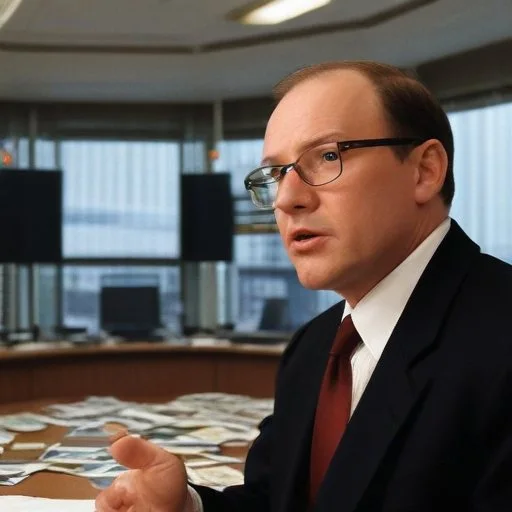
Leeson's modus operandi was simple yet reckless: he would speculate on the Singapore International Monetary Exchange using futures contracts, hiding losses and fabricating profits to feed his addiction. The trader's gambler's fervor would eventually lead to a staggering 1.4 billion loss, condemning the 233-year-old institution to bankruptcy.
| 1992 | Nick Leeson begins trading on the Singapore International Monetary Exchange (SIMEX) |
| 1994 | Leeson's losses start to mount, but he continues to hide them from Barings Bank management |
| February 1995 | The bank discovers Leeson's fraudulent activities, and he is arrested in Frankfurt, Germany |
| February 26, 1995 | Barings Bank is declared insolvent, with losses totaling 1.4 billion |
The collapse of Barings Bank sent shockwaves throughout the global financial community, raising questions about the effectiveness of risk management and internal controls. The scandal would lead to a major overhaul of the banking industry's regulatory framework. In the end, Leeson would serve four years in prison for his crimes, a grim reminder of the consequences of unchecked ambition.
The Barings Bank collapse serves as a stark reminder of the dangers of hubris and the importance of accountability in the financial sector. As the economist John Kenneth Galbraith once said, "The excesses of the powerful are a familiar story; the weakness of the weak is not."
In the end, the downfall of Barings Bank is a testament to the destructive power of unchecked greed and the importance of humility in the face of financial uncertainty.
Nick Leeson, the son of a plasterer, was born in 1967 in Watford, England. He lacked a formal education in finance, but his charisma and charm quickly propelled him up the ranks of Barings Bank. Leeson's ascendancy was marked by his ability to generate profits, which earned him the trust and admiration of his superiors.
However, Leeson's background and personality also contributed to his downfall. His lack of formal education made him more susceptible to reckless trading strategies, and his ego and arrogance blinded him to the risks of his actions.

The 1990s saw a period of rapid economic growth in Southeast Asia, fueled by foreign investment and speculation. However, beneath the surface, structural weaknesses and corruption plagued the region's economies. The collapse of the Thai baht in 1997 triggered a domino effect, exposing the vulnerabilities of neighboring countries.
In this tumultuous environment, Nick Leeson's high-risk trading strategies found fertile ground. The lack of effective regulations and oversight in the Asian markets enabled Leeson to operate with impunity, further fueling his reckless behavior.
The collapse of Barings Bank sent shockwaves throughout the global financial system, prompting a credit crisis and a loss of confidence in the banking sector. The bank's failure led to a significant increase in borrowing costs, affecting businesses and consumers alike.
The resulting bailout package, orchestrated by the Bank of England, totaled £1.5 billion, making it one of the largest in British history. The incident also prompted a major overhaul of the banking industry's regulatory framework, introducing stricter risk management guidelines and greater transparency.

The Barings Bank collapse marked a turning point in the public's perception of the financial industry. The scandal exposed the dark underbelly of high-stakes finance, revealing a culture of greed and recklessness that resonated with the public.
The incident inspired a string of books, films, and documentaries, cementing its place in popular culture. The phrase "rogue trader" became synonymous with Nick Leeson, symbolizing the dangers of unchecked ambition and the importance of accountability in finance.
The Barings Bank collapse led to a major overhaul of the banking industry's regulatory framework. The incident prompted the British government to establish the Financial Services Authority (FSA), a watchdog body tasked with monitoring and regulating financial institutions.
The scandal also had significant political implications, with many calling for greater transparency and accountability in the financial sector. The incident highlighted the need for stricter regulations and more effective risk management practices, prompting a global reevaluation of financial industry oversight.