


The UN Security Council's first session, held on January 17, 1946, marked a monumental milestone in global politics, as 11 nations came together to forge a new path towards international cooperation and conflict resolution. This inaugural gathering, led by Norman Brook, the UK's Permanent Representative, set the stage for a more united and peaceful world, still reeling from the devastation of World War II.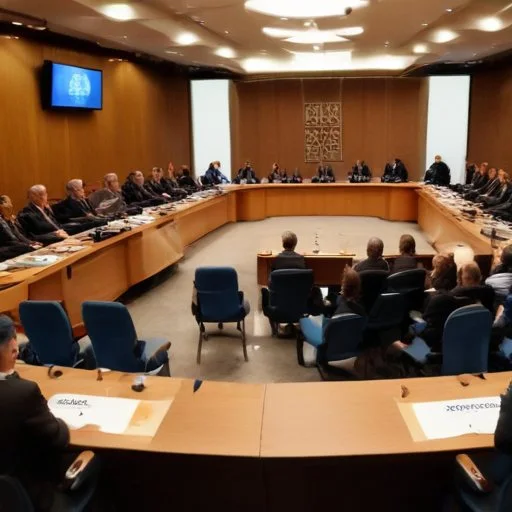
In the aftermath of World War II, the need for a collective security alliance became paramount. The United Nations, founded in 1945, was tasked with promoting peace, security, and cooperation among its member states. The Security Council, one of the UN's six principal organs, was designed to be the primary forum for addressing international threats to peace and security.
The initial Security Council comprised 11 members: five permanent members (China, France, Great Britain, the Soviet Union, and the United States) and six non-permanent members elected for two-year terms. The council faced early challenges, including the need to assert its authority, define its role in international affairs, and navigate the complexities of great power politics.
January 17, 1946: The Security Council holds its first session at Church House in London.
February 1946: The council begins discussing the Greek Civil War and the Spanish question.
April 1946: The council adopts its first resolution, calling for the withdrawal of foreign troops from Iran.
1947: The council approves the creation of the United Nations Truce Supervision Organization (UNTSO) to monitor the Arab-Israeli conflict.
The Security Council's first session set the tone for the UN's role in promoting international cooperation and preventing future conflicts. The council's early deliberations on the Greek Civil War, Spanish question, and Iranian crisis demonstrated its commitment to addressing regional and global security concerns.
The Security Council's inaugural session marked a significant shift in international relations, as nations began to recognize the importance of collective security and cooperation in addressing global challenges. This new approach to international relations paved the way for future collaborations and diplomacy, shaping the course of modern history.
Norman Brook, in his memoirs, recalled the sense of excitement and uncertainty that characterized the council's early days. "We were pioneers, charting a new course in international relations. It was a daunting task, but we were driven by a shared commitment to creating a more peaceful world."
The UN Security Council's first session laid the foundation for a more united and peaceful world, demonstrating the power of collective action in addressing global challenges. As the council continues to evolve and adapt to new threats and opportunities, its inaugural session remains a testament to the enduring spirit of international cooperation and diplomacy.

The UN Security Council's first session was not just a symbolic gathering; it was a culmination of years of diplomatic efforts to create a collective security alliance. The Council's establishment was a direct response to the failures of the League of Nations, which had proven ineffective in preventing the outbreak of World War II. The UN Charter, signed in June 1945, provided the legal framework for the Council's creation, and the subsequent meetings in London laid the groundwork for its operationalization.
In the months leading up to the first session, the Council's composition and voting procedures were intensely debated. The great powers, particularly the United States, Great Britain, and the Soviet Union, wanted to ensure that their interests were protected, while smaller nations sought to promote a more inclusive and democratic decision-making process. The compromise reached, with five permanent members holding veto power and six non-permanent members elected for two-year terms, reflected the complex power dynamics of the time.
Trygve Halvdan Lie: The Unassuming Leader
Trygve Halvdan Lie, the UN's first Secretary-General, played a crucial role in shaping the Council's early agenda and procedures. A Norwegian diplomat with a no-nonsense approach, Lie worked tirelessly behind the scenes to build consensus among the Council's members. His informal style and willingness to listen earned him the respect of even the most skeptical participants.
Lie's leadership was instrumental in navigating the Council's early challenges, from asserting its authority to addressing the Greek Civil War. His commitment to the principles of the UN Charter and his ability to find common ground among nations helped establish the Council as a credible and effective international institution.
The Security Council's first session marked a significant departure from the traditional great power politics of the pre-war era. Unlike the League of Nations, which had been dominated by European powers, the UN Security Council represented a more diverse and inclusive international community.
In contrast to the League's failure to prevent Japanese aggression in Manchuria, the Council's first resolution, calling for the withdrawal of foreign troops from Iran, demonstrated its commitment to addressing regional security concerns. This early success set the tone for the Council's subsequent interventions in the Greek Civil War and the Arab-Israeli conflict.
The UN Security Council's first session took place against the backdrop of a rapidly changing geopolitical landscape. The aftermath of World War II had left Europe in ruins, and the Soviet Union was consolidating its control over Eastern Europe.
In this context, the Council's establishment represented a crucial step towards creating a new international order. The attendance of the Soviet Union's Foreign Minister, Vyacheslav Molotov, was seen as a significant gesture of goodwill, marking a temporary détente in the emerging Cold War rivalry between the Soviet Union and the Western powers.
The UN Security Council's First Session: A Collection of Primary Documents
The archives of the UN Security Council contain a treasure trove of primary documents that provide valuable insights into the Council's early deliberations. The minutes of the first session, held on January 17, 1946, reveal the Council's concerns about the Greek Civil War and the Spanish question.
Other documents, such as the Council's first resolution on Iran and the speeches of prominent delegates, offer a unique window into the diplomatic maneuvering and rhetorical flourishes of the time. These primary sources not only shed light on the Council's decision-making processes but also provide a fascinating glimpse into the personalities and politics of the era.