


Giuseppe Garibaldi's triumphant entry into Naples on September 7, 1860, marked a pivotal moment in Italian history, as the charismatic leader and his army of Redshirts brought an end to the Bourbon dynasty's reign, paving the way for the unification of Italy.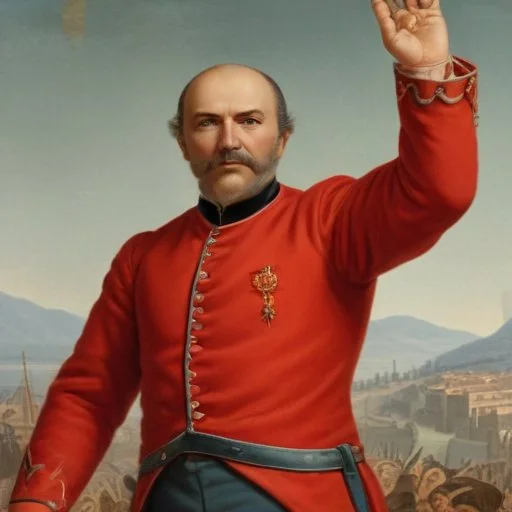
For centuries, Italy had been a fractured entity, comprising various kingdoms, city-states, and territories, each with its own distinct identity and governance. The desire for a unified Italy had long simmered, and Garibaldi's arrival in Naples ignited a spark that would eventually Ignite the flame of Italian nationalism.
 |
Giuseppe Garibaldi, a former sailor, revolutionary, and charismatic leader, had dedicated his life to the cause of Italian unification. His military prowess, unwavering dedication, and infectious enthusiasm had won him the admiration of the masses, earning him the title of "Hero of the Two Worlds." |
In May 1860, Garibaldi set sail from Genoa with his band of 1,000 Redshirts, landing in Sicily and beginning a campaign that would take him across the southern regions of Italy. With a series of decisive victories, Garibaldi's army swelled to over 20,000 strong, as volunteers flocked to join the fight for Italian independence.
As Garibaldi's forces approached Naples, the Bourbon king, Francis II, realizing the futility of resistance, fled the city, leaving it vulnerable to the revolutionary's army. On September 7, 1860, Garibaldi's Redshirts marched into Naples, liberating the city from centuries of Bourbon rule and sending shockwaves throughout Europe.
The liberation of Naples marked a turning point in Italian history, as the momentum towards unification gained unstoppable force. The event sparked a wave of national sentiment, as Italians across the peninsula began to see themselves as part of a single, unified nation. The road to a unified Italy was still long and arduous, but Garibaldi's triumph in Naples had set the wheels in motion.
Garibaldi's entry into Naples not only paved the way for Italian unification but also cemented his place in history as one of the most influential figures of the 19th century. His bravery, determination, and unwavering commitment to the cause of Italian independence continue to inspire generations, making him an enduring symbol of Italian national pride.
As the sun set on Naples that fateful day, a new chapter in Italian history had begun, one that would forever be etched in the annals of time, thanks to the unyielding spirit and vision of Giuseppe Garibaldi.
The idea of Italian unification had been simmering for centuries, with roots dating back to the Renaissance and the writings of figures like Niccolò Machiavelli and Girolamo Savonarola. However, it wasn't until the 19th century that the movement gained momentum, driven by the likes of Giuseppe Mazzini and his concept of "Young Italy."
In this context, Garibaldi's achievements were not just a product of his own vision and determination but also built upon the groundwork laid by earlier patriots and revolutionaries.
Born in 1836, Francis II was the last Bourbon king of Naples, ruling from 1859 to 1861. Despite his relatively short reign, Francis II's decisions had far-reaching consequences, including the eventual collapse of the Bourbon dynasty.
As Garibaldi's forces approached Naples, Francis II's hesitation and eventual flight marked the beginning of the end for the Bourbon rule in southern Italy.
The mid-19th century was a time of great change and upheaval in Europe, with the balance of power shifting between the major nations. The Crimean War had weakened the Ottoman Empire, while the unification of Germany and Italy was already underway.
In this context, Garibaldi's conquest of Naples and the subsequent unification of Italy was part of a broader trend towards nationalism and the redrawing of the European map.
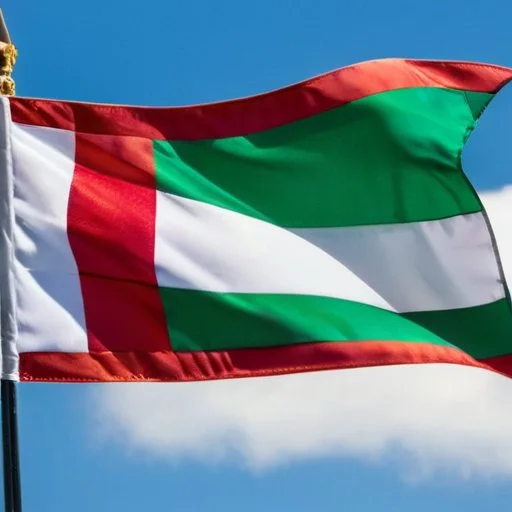
The iconic red shirts worn by Garibaldi's volunteers have become an enduring symbol of Italian nationalism and patriotism. The red shirts were not only a practical choice for the battlefield but also a powerful visual representation of the volunteers' commitment to the cause of Italian unification.
In the years following Garibaldi's triumph, the red shirts became a popular motif in art, literature, and music, cementing their place in Italian cultural heritage.
While Garibaldi's conquest of Naples marked a significant milestone in Italian unification, the Kingdom of Piedmont-Sardinia played a crucial role in the eventual unification of Italy. Under the leadership of Victor Emmanuel II and Camillo Benso di Cavour, Piedmont provided a stable and powerful base for the unification movement.
The alliance between Garibaldi and the Piedmontese government was instrumental in bringing about the eventual unification of Italy, with Piedmont's military and financial resources proving vital to the cause.