


Preceding the unification, Nepal was fragmented into numerous petty kingdoms, each vying for power and influence. The three prominent kingdoms of Kathmandu, Patan, and Bhadgaon, situated in the fertile Kathmandu Valley, were embroiled in a complex web of rivalries and alliances. This volatile political landscape provided the perfect backdrop for the emergence of a unifying force.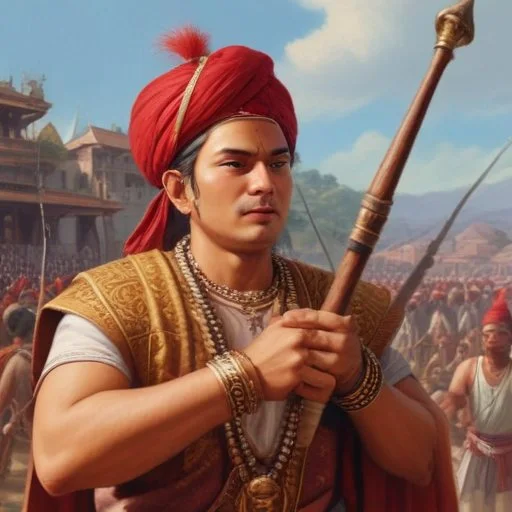
Prithvi Narayan Shah, the king of Gorkha, was an ambitious and astute leader who recognized the imperative of unification. He embarked on a mission to consolidate the disparate kingdoms, driven by his vision of a strong and unified Nepal. Shah's exceptional leadership qualities, diplomatic prowess, and strategic military planning enabled him to navigate the intricate landscape of alliances and rivalries.
The unification process unfolded over several decades, with Prithvi Narayan Shah's ascension to the throne of Gorkha in 1743 marking the beginning of this epochal journey. The subsequent years witnessed a series of military campaigns, diplomatic alliances, and strategic marriages, culminating in the conquest of the three kingdoms of Kathmandu, Patan, and Bhadgaon in 1769.
The unification of Nepal had a profound impact on the country's cultural and social fabric. The integration of diverse ethnic groups and traditions gave rise to a unique cultural identity, characterized by the blending of languages, customs, and beliefs. The unified nation also witnessed the growth of art, architecture, and literature, as the newly established capital, Kathmandu, became a hub of cultural and intellectual activity.
While the unification of Nepal is widely regarded as a commendable achievement, some historians have raised concerns about the treatment of vanquished rulers and the imposition of Gorkha dominance over other ethnic groups. However, Prithvi Narayan Shah's wise leadership and statesmanship have largely overshadowed these criticisms, earning him a revered place in Nepalese history.
Prithvi Narayan Shah's remarkable accomplishment serves as a beacon of inspiration for subsequent generations, demonstrating the power of vision, leadership, and diplomacy in shaping the course of history. The unification of Nepal stands as a testament to the enduring spirit of national unity and the indomitable will of its people.
The unification of Nepal was a gradual process that involved several military campaigns. One of the most significant campaigns was the Battle of Nuwakot, fought in 1744, where Prithvi Narayan Shah's forces defeated the Malla kingdom, giving him control over the strategic location of Nuwakot. This victory marked a turning point in the unification process, as it provided Shah with a strong foothold in the Kathmandu Valley.
The subsequent years saw a series of skirmishes and battles, as Shah expanded his kingdom, conquering the kingdoms of Makwanpur, Chaukot, and Bijayapur. The final push came in 1769, when Shah's forces captured the kingdoms of Kathmandu, Patan, and Bhadgaon, uniting the valley under a single rule.

Prithvi Narayan Shah: The Visionary Leader
Prithvi Narayan Shah was born in 1723 in the kingdom of Gorkha. From an early age, he exhibited exceptional leadership qualities, which earned him the respect and admiration of his people. Shah was a shrewd strategist, who understood the importance of building alliances and forging relationships with neighboring kingdoms.
He was a skilled diplomat, who knew when to negotiate and when to take bold action. This ability to balance diplomacy with military might was key to his success, and earned him the respect of his contemporaries.
The unification of Nepal had a profound impact on the country's cultural landscape. The integration of diverse ethnic groups led to a synthesis of cultures, resulting in the creation of a unique cultural identity. This blending of cultures can be seen in the country's architecture, art, and literature.
The unified kingdom became a hub of cultural and intellectual activity, with the capital city of Kathmandu emerging as a center of learning and culture. The patronage of the royal court encouraged the development of arts and crafts, leading to a flowering of cultural expression.

The unification of Nepal took place in a complex geopolitical context. The Indian subcontinent was divided into several kingdoms and empires, each vying for power and influence. The British East India Company was slowly expanding its influence in the region, posing a potential threat to the sovereignty of the newly unified Nepal.
In this context, Prithvi Narayan Shah's unification of Nepal was a masterstroke of strategic planning. By creating a strong, centralized state, he was able to counterbalance the influence of the British and other regional powers, ensuring the independence and sovereignty of Nepal.
The unification of Nepal had significant political implications. The creation of a centralized state enabled the establishment of a uniform administrative system, facilitating effective governance and taxation.
The unified kingdom also led to the emergence of Nepal as a significant player in regional politics. Prithvi Narayan Shah's diplomatic efforts ensured that Nepal maintained good relations with its neighbors, while also protecting its sovereignty and independence.