


The Bhopal disaster, one of the world's worst industrial catastrophes, is forever etched in the annals of history as a night of unspeakable horror. On a fateful December evening in 1984, a toxic gas leak from a Union Carbide pesticide plant in Bhopal, India, turned a sleepy town into a scene of utter devastation, claiming thousands of lives and leaving countless others with devastating injuries.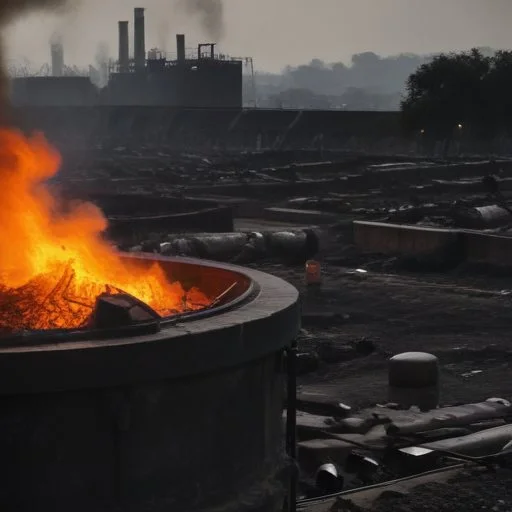
In the early 1960s, Union Carbide, an American multinational corporation, set up a pesticide plant in Bhopal to produce Sevin, a highly toxic insecticide. The plant was designed to cater to the growing demand for pesticides in India's agricultural sector. However, the company's cost-cutting measures and lax safety standards would eventually prove to be a recipe for disaster.
On December 2, 1984, a series of catastrophic events unfolded at the Union Carbide plant. A storage tank containing methyl isocyanate (MIC), a highly volatile and toxic gas, began to leak, releasing massive amounts of the deadly substance into the atmosphere. The gas quickly spread throughout the city, engulfing nearby residential areas and causing widespread panic.
1984: December 2 - The toxic gas leak occurs at the Union Carbide plant in Bhopal.
1985: February - The Indian government files a lawsuit against Union Carbide, seeking damages for the disaster.
1989: February - Union Carbide agrees to pay $470 million in damages to the Indian government, a fraction of the estimated $3 billion in losses.
The Bhopal disaster led to a significant overhaul of India's environmental and industrial safety regulations. The incident also sparked a global debate on corporate accountability and the need for stricter safety standards in the chemical industry.
The Bhopal disaster has been the subject of several films, documentaries, and literary works, including the award-winning film "Bhopal Express" (1999) and Dominique Lapierre's book "Five Past Midnight in Bhopal" (2001). The disaster has also inspired numerous songs, poems, and art pieces, cementing its place in popular culture.
The settlement between Union Carbide and the Indian government was widely criticized for being inadequate, with many arguing that the company had escaped accountability for its role in the disaster. The incident has also sparked controversy over corporate social responsibility and the ethics of doing business in developing countries.
"The Bhopal disaster is a grim reminder of the consequences of corporate greed and the need for accountability in the pursuit of profit." - Arundhati Roy, Indian author and activist
The Bhopal disaster bears striking similarities to the Chernobyl nuclear disaster (1986) and the Exxon Valdez oil spill (1989), all three being catastrophic industrial accidents that have had far-reaching environmental and human impacts.
The Bhopal disaster has served as a wake-up call for industries worldwide, prompting a re-examination of safety protocols and environmental regulations. It has also inspired a new generation of environmental activists and policymakers to prioritize corporate accountability and sustainability.
Warren Anderson, the former CEO of Union Carbide, was extradited to India in 2010 to face trial for his role in the disaster. However, he died in 2014 before he could be brought to justice.


The Bhopal disaster has inspired countless individuals and organizations to fight for environmental justice and corporate accountability. The incident has also motivated policymakers to implement stricter regulations and safety standards to prevent such disasters from occurring in the future.
In conclusion, the Bhopal disaster serves as a poignant reminder of the devastating consequences of corporate negligence and the importance of prioritizing human life and environmental sustainability over profit. As we reflect on this tragedy, we are reminded of the urgent need for accountability, justice, and redemption in the face of industrial catastrophe.
The Bhopal disaster had a profound impact on the environment, with long-term effects still felt today. The toxic gas leak released massive amounts of methyl isocyanate, a chemical known to be highly toxic to humans and wildlife. The surrounding soil and water were contaminated, leading to the deaths of thousands of animals and the destruction of lush vegetation.
The cleanup efforts were lacking, and the site remained contaminated for years, causing ongoing health problems for the local population. The disaster highlighted the need for stricter environmental regulations and accountability for corporate actions that harm the environment.
In the aftermath of the disaster, the Indian government established the Bhopal Gas Disaster Research Centre to study the effects of the leak and develop strategies for environmental remediation. However, the centre's efforts were hampered by lack of funding and resources, leaving much work to be done to restore the affected area.

Warren Anderson, the CEO of Union Carbide, was a key figure in the Bhopal disaster. His leadership and decisions were instrumental in creating an environment of cost-cutting and lax safety standards that ultimately led to the tragedy.
Anderson was charged with culpable homicide and fleeing the country, but he escaped prosecution by fleeing to the United States. He died in 2014, still evading justice for his role in the disaster.
Anderson's actions, or lack thereof, symbolize the corporate greed and negligence that led to the Bhopal disaster. His legacy serves as a warning to corporations of the importance of prioritizing human life and environmental sustainability over profit.
The Bhopal disaster shares striking similarities with other industrial catastrophes, such as the Seveso dioxin disaster (1976) and the Flixborough explosion (1974). All three incidents were caused by a combination of human error, design flaws, and corporate negligence.
These disasters highlight the need for a global approach to industrial safety, with measures to prevent such tragedies from occurring. The Bhopal disaster, in particular, led to a re-examination of safety protocols and environmental regulations, prompting changes to industry standards worldwide.
Comparing these disasters reveals a pattern of corporate recklessness and disregard for human life, emphasizing the need for stronger regulations and accountability.

The Bhopal disaster has inspired a wide range of cultural works, from literature to art and music. The tragedy has been the subject of numerous films, documentaries, and books, including Dominique Lapierre's award-winning book "Five Past Midnight in Bhopal" (2001).
The disaster has also inspired musical compositions, such as the song "Bhopal" by the Indian rock band, Indian Ocean. The song pays tribute to the victims of the tragedy and highlights the need for corporate accountability.
In popular culture, the Bhopal disaster has become a symbol of the devastating consequences of corporate greed and negligence, serving as a reminder of the importance of prioritizing human life and environmental sustainability.
The Bhopal disaster had significant political implications, with the Indian government facing criticism for its handling of the crisis. The government was accused of being too soft on Union Carbide and allowing the company to escape accountability.
The disaster led to a re-evaluation of the country's industrial policies and regulations, with a greater emphasis on safety and environmental sustainability. The Indian government also established the National Institute of Occupational Health to study and prevent industrial accidents.
The Bhopal disaster remains a sensitive political issue, with many still seeking justice and compensation for the victims and their families.