


In March 1939, as the drums of war beat louder, the United Kingdom and Poland embarked on a historic journey, forging a military alliance that would send a strong message to the Nazi regime. The pact, which promised British defense of Poland in the event of foreign invasion, marked a pivotal moment in the countdown to World War II, cementing the UK's position as a beacon of hope against the looming menace of Nazi Germany.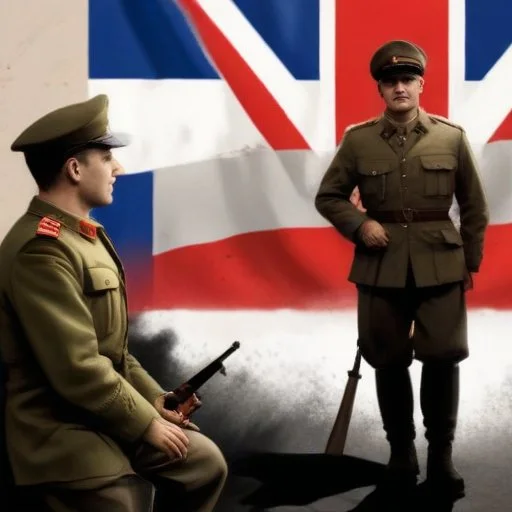
The interwar period was a complex web of alliances, with nations vying for power and security in a rapidly changing world. As Nazi Germany began to flex its military muscle, Poland found itself increasingly isolated, surrounded by hostile powers. It was against this backdrop that the UK, still reeling from the aftermath of World War I, decided to take a bold stand against the Nazi threat.
| Date | Event |
|---|---|
| March 1939 | UK-Poland military alliance signed, promising British defense of Poland in case of foreign invasion. |
| August 1939 | Nazi Germany and the Soviet Union sign the Molotov-Ribbentrop Pact, a non-aggression treaty that paved the way for the invasion of Poland. |
| September 1, 1939 | Nazi Germany invades Poland, prompting the UK to declare war on Germany. |
The UK-Poland military alliance sent a clear message to the Nazi regime: that aggression would not be tolerated, and that the Western powers would stand united against tyranny. Although the alliance ultimately failed to prevent the invasion of Poland, it marked a significant turning point in the lead-up to World War II, galvanizing opposition to Nazi Germany and paving the way for the eventual Allied victory.
The UK-Poland military alliance transcended mere diplomacy, symbolizing a beacon of hope in the face of overwhelming odds. It represented a commitment to democracy, freedom, and the rule of law, inspiring nations around the world to stand against the forces of oppression.
Today, the UK-Poland military alliance serves as a powerful reminder of the importance of standing together against aggression, and the need for nations to work together in the face of adversity. As a testament to the enduring spirit of resistance, it continues to inspire generations to come, a shining example of courage and determination in the face of overwhelming odds.
The UK-Poland military alliance was not the first time the two nations had cooperated on matters of national security. In the aftermath of World War I, both countries had worked together to contain the spread of Bolshevism in Eastern Europe. This earlier cooperation had laid the groundwork for the 1939 alliance, with many of the same diplomats and policymakers involved in both efforts.
In the months leading up to the signing of the alliance, secret negotiations took place between British and Polish officials. These talks were marked by a sense of urgency, as both sides recognized the growing threat posed by Nazi Germany. Despite these efforts, however, the alliance was not without its critics, with some in the UK questioning the wisdom of committing to the defense of a country as distant and vulnerable as Poland.
One of the most intriguing aspects of the alliance is the role played by secret intelligence agencies. Both the UK and Poland had well-developed intelligence networks, which provided critical information on German military plans and capabilities. This intelligence played a key role in shaping the alliance, as it helped to inform British and Polish decision-making in the face of an increasingly aggressive Nazi Germany.
Herbert Samuel, the British Foreign Secretary, was a key figure in the negotiations leading up to the signing of the UK-Poland military alliance. A seasoned diplomat with a deep understanding of European politics, Samuel was instrumental in brokering the agreement.
Samuel's commitment to the alliance was driven by a strong sense of moral obligation, as well as a recognition of the strategic importance of Poland to British national security. Throughout the negotiations, he worked tirelessly to overcome the objections of those who opposed the alliance, and his diplomatic skills played a critical role in securing the agreement.
Despite his crucial role in the formation of the alliance, Samuel's legacy has been somewhat overshadowed by other figures of the period. Nevertheless, his contributions to the cause of peace and security in Europe remain an important part of his enduring legacy.The UK-Poland military alliance of 1939 invites comparison with other alliances formed during the same period. One notable example is the Molotov-Ribbentrop Pact, a non-aggression treaty signed between Nazi Germany and the Soviet Union in August 1939.
Unlike the UK-Poland alliance, which was motivated by a desire to resist Nazi aggression, the Molotov-Ribbentrop Pact was a cynical agreement that paved the way for the invasion of Poland and the start of World War II. While the UK-Poland alliance represented a commitment to democracy and freedom, the Molotov-Ribbentrop Pact embodied the darkest aspects of fascist and communist ideology.
The contrast between these two alliances serves as a powerful reminder of the choices that nations face in times of crisis. While some choose to appease aggressors or pursue short-term gains, others stand up for their values and principles, even in the face of overwhelming odds.
The UK-Poland military alliance had a profound impact on the cultural landscape of both nations. In the UK, the alliance helped to galvanize opposition to Nazi Germany, with many artworks, films, and literary works reflecting the growing sense of unease and urgency.
In Poland, the alliance assumed an even greater cultural significance, symbolizing as it did a beacon of hope in the face of overwhelming odds. Polish artists, writers, and intellectuals responded to the alliance by creating works that celebrated the spirit of resistance and defiance.
The cultural legacy of the UK-Poland military alliance continues to be felt today, serving as a powerful reminder of the importance of artistic expression in times of crisis.The UK-Poland military alliance was shaped by a complex set of political factors, including the rise of Nazi Germany, the appeasement policies of the UK and France, and the growing sense of isolation and vulnerability felt by Poland.
At its heart, the alliance represented a commitment to democracy and freedom, as well as a recognition of the strategic importance of Poland to British national security. It was also driven by a sense of moral obligation, with many in the UK and Poland recognizing the need to stand up against the aggression and brutality of Nazi Germany.
The political significance of the UK-Poland military alliance lies in its bold rejection of appeasement policies, and its affirmation of the importance of standing up to aggression and tyranny.