


The United States Atomic Energy Commission's detonation of the Cannikin, the largest underground hydrogen bomb ever tested in the United States, left an indelible mark on the nuclear landscape. This monumental event, which took place on Amchitka Island in the Aleutians, was a groundbreaking moment in the history of nuclear testing.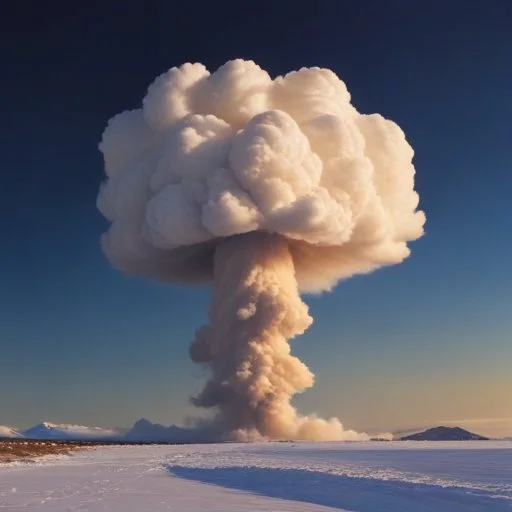
In the late 1960s, the United States was in the midst of a nuclear arms race with the Soviet Union. As part of its efforts to maintain nuclear superiority, the US government launched a series of underground nuclear tests, known as Operation Milrow, to develop new nuclear weapons and technologies. The Cannikin test was a culmination of these efforts, designed to gauge the bomb's potential for mining and seismic detection.
On November 6, 1971, the Cannikin test was conducted at a depth of 4,000 feet beneath Amchitka Island. The bomb, with a yield of approximately 5 megatons, was buried deep within the earth to minimize the risk of radioactive fallout. The test was a massive undertaking, involving a team of scientists, engineers, and technicians who worked tirelessly to ensure its success.
The Cannikin test had several significant outcomes and impacts. Firstly, it demonstrated the feasibility of underground nuclear testing, paving the way for future tests. Secondly, it provided valuable insights into the seismic detection of nuclear explosions, which was crucial for verifying nuclear disarmament agreements. Finally, the test sparked both national and international concern about the dangers of nuclear proliferation, leading to increased calls for disarmament and non-proliferation efforts.
The Cannikin test had a profound impact on popular culture, inspiring numerous films, books, and documentaries about nuclear testing and its consequences. The test also sparked widespread protests and activism against nuclear proliferation, with many people expressing concerns about the environmental and health risks associated with nuclear testing.
The Cannikin test was one of the largest underground nuclear tests conducted by the United States, but it was not the only one. Other notable tests include the Sedan test, conducted in 1962, and the Rio Blanco test, conducted in 1970. While these tests were smaller in scale, they shared similar goals and objectives with the Cannikin test.
The Cannikin test serves as a reminder of the importance of scientific inquiry and innovation. The scientists, engineers, and technicians involved in the test worked tirelessly to push the boundaries of human knowledge, driven by a desire to advance our understanding of nuclear physics. Their work has inspired countless others to pursue careers in science and technology, driving progress and innovation in these fields.
The Amchitka Island, where the Cannikin test took place, has a rich history dating back to the early 18th century when it was inhabited by the Aleut people. The island's strategic location made it an attractive location for the US military, which established a series of bases and testing facilities in the 1950s. The Cannikin test was a culmination of the US government's efforts to develop new nuclear weapons and technologies, and it marked a significant milestone in the history of nuclear testing.
The test site, located near the island's southern coast, was carefully selected to minimize the risk of radioactive fallout. A team of scientists and engineers worked tirelessly to design and build the test facility, which included a complex system of tunnels and shafts to contain the blast.
The Cannikin test was not only a significant scientific achievement but also a testament to the determination and expertise of the team involved. Despite the challenges and risks involved, the team was able to successfully detonate the bomb, paving the way for future nuclear testing and research.

One of the key figures involved in the Cannikin test was Dr. Edward Teller, a Hungarian-born physicist who played a crucial role in the development of the hydrogen bomb. Known as the "father of the hydrogen bomb," Teller was a strong advocate for nuclear testing and was instrumental in persuading the US government to pursue the development of more powerful nuclear weapons.
Dr. Teller's involvement in the Cannikin test was critical, as he brought his expertise in nuclear physics to the project. His work helped to ensure the success of the test, and his contributions to the development of nuclear weapons earned him a reputation as one of the leading scientists of his time.
The Cannikin test had a significant impact on popular culture, inspiring a range of films, books, and documentaries about nuclear testing and its consequences. One notable example is the 1983 film "The Day After," which depicted a fictional nuclear war and its devastating effects on a small town in Kansas.
The test also inspired a range of anti-nuclear protests and activism, as people became increasingly concerned about the risks and dangers associated with nuclear testing. The test helped to galvanize public opinion against nuclear proliferation, leading to increased calls for disarmament and non-proliferation efforts.

The Cannikin test had significant environmental implications, as the blast released large amounts of radioactive material into the air and water. The test site, which was located near a sensitive ecosystem, was contaminated with radioactive fallout, posing a risk to local wildlife and human populations.
The test also highlighted the need for more stringent environmental regulations and safety protocols to prevent future nuclear accidents. The US government was forced to re-examine its policies on nuclear testing and to take steps to mitigate the environmental impact of future tests.
The Cannikin test marked a significant milestone in the development of nuclear technology, demonstrating the feasibility of underground nuclear testing and paving the way for future research and development.
The test also provided valuable insights into the properties of nuclear explosions, which helped to advance our understanding of nuclear physics. The data collected from the test was used to develop new nuclear weapons and technologies, as well as to improve the detection and verification of nuclear explosions.