


In a historic move, the United States and the Soviet Union put aside their ideological differences to establish formal diplomatic relations on November 16, 1933, marking a significant shift in their foreign policies. This watershed moment marked the end of 16 years of diplomatic estrangement between the two nations, paving the way for increased cooperation and a new era of international relations.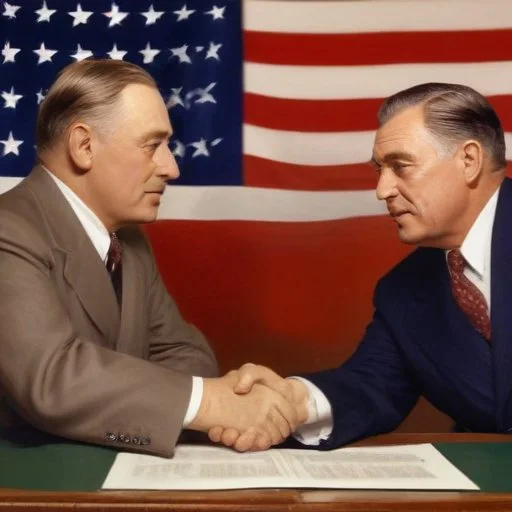
The seeds of this diplomatic breakthrough were sown in the aftermath of the Russian Revolution, when the Bolsheviks, led by Vladimir Lenin, seized power and established the world's first socialist state. The United States, wary of the Soviet Union's communist ideology, refused to recognize the new government, viewing it as a threat to its capitalist system.
The Great Depression, which ravaged the global economy in the 1930s, forced the United States to reevaluate its stance towards the Soviet Union. With millions of Americans struggling to make ends meet, the Roosevelt administration saw an opportunity to establish diplomatic relations as a means of opening up new markets and fostering economic cooperation.
The establishment of formal diplomatic relations between the United States and the Soviet Union marked a significant shift in their foreign policies, paving the way for increased cooperation in the fields of trade, science, and culture.
As diplomatic relations warmed, cultural exchange programs flourished, allowing Americans to glimpse the Soviet Union's vibrant artistic scene, while Soviet citizens were introduced to the works of American authors like Ernest Hemingway and F. Scott Fitzgerald.
The decision to recognize the Soviet Union sparked heated debates in the United States, with many Americans viewing the communist regime as a threat to American values and democracy.
"We cannot afford to let our relations with the Soviet Union be poisoned by ideological prejudices." - Franklin D. Roosevelt
As the United States and the Soviet Union looked towards a future of cooperation, they paved the way for a new era of international relations, one that would be characterized by a delicate balancing act between ideology and pragmatism.
The establishment of diplomatic relations between the United States and the Soviet Union in 1933 marked a significant turning point in the history of international relations. The decade preceding this event was marked by a series of diplomatic crises, including the Manchurian Incident, the Japanese invasion of China, and the European appeasement policy towards Nazi Germany. In this context, the recognition of the Soviet Union by the United States signified a shift towards a more pragmatic and realistic approach to foreign policy, acknowledging the changed global landscape and the need for cooperation to address common challenges.
The 1930s were also a time of great ideological polarization, with the rise of fascist and nationalist movements in Europe and Asia. The Soviet Union, under Stalin's leadership, was seen as a bulwark against fascism, and the United States, with its commitment to democracy and individual liberties, was viewed as a beacon of hope for those opposing authoritarian regimes. The establishment of diplomatic relations between the two nations reflected a willingness to put aside ideological differences and collaborate on issues of common concern, such as economic development and security.
Maxim Litvinov: The Architect of Soviet Diplomacy
Maxim Litvinov, the People's Commissar for Foreign Affairs of the Soviet Union, played a crucial role in negotiating the terms of recognition with the United States. A seasoned diplomat with extensive experience in international affairs, Litvinov was instrumental in convincing Stalin of the benefits of establishing diplomatic relations with the United States. His pragmatic approach to foreign policy and his ability to navigate the complexities of Soviet politics made him an effective negotiator, able to find common ground with his American counterparts.
Litvinov's diplomatic efforts went beyond the establishment of relations with the United States. He was a strong advocate for collective security and international cooperation, and he played a key role in shaping the Soviet Union's foreign policy during the 1930s. His leadership and vision helped to promote a more collaborative approach to international relations, paving the way for future diplomatic breakthroughs.
The Soviet Union's Cultural Ambassador: Sergei Eisenstein
The establishment of diplomatic relations between the United States and the Soviet Union in 1933 marked the beginning of a vibrant cultural exchange between the two nations. One of the key figures involved in this exchange was Sergei Eisenstein, the renowned Soviet filmmaker and cultural ambassador. Eisenstein's visits to the United States in the 1930s helped to promote a greater understanding of Soviet culture and arts, and his films, such as Battleship Potemkin, became iconic representations of Soviet cinematic innovation.
Eisenstein's influence extended beyond the realm of film. He was a passionate advocate for international cultural cooperation, and his work helped to foster a sense of artistic solidarity between Soviet and American artists. His legacy continues to inspire generations of filmmakers and artists, serving as a testament to the power of cultural exchange in promoting mutual understanding and respect.

Economic Cooperation: A Key Driver of Diplomatic Relations
The establishment of diplomatic relations between the United States and the Soviet Union in 1933 was driven, in large part, by economic considerations. The Great Depression had ravaged the global economy, and both nations were facing significant economic challenges. The recognition of the Soviet Union by the United States opened up new opportunities for trade and economic cooperation, including the potential for American investment in Soviet industry and infrastructure.
The economic benefits of diplomatic relations were substantial. The Soviet Union gained access to American technology and expertise, while the United States secured new markets and opportunities for trade. The exchange of goods and services between the two nations helped to stimulate economic growth and development, paving the way for future cooperation in areas such as agriculture, energy, and transportation.
Roosevelt's Pragmatic Diplomacy: A Shift towards Realism
The establishment of diplomatic relations between the United States and the Soviet Union in 1933 marked a significant shift in American foreign policy, away from ideological dogma and towards a more pragmatic and realistic approach. Franklin D. Roosevelt, the 32nd President of the United States, recognized the need for cooperation with the Soviet Union, despite its communist ideology, in order to address common challenges and promote American interests.
Roosevelt's pragmatic diplomacy was informed by a deep understanding of the complexities of international relations and the importance of cooperation in achieving national goals. His willingness to engage with the Soviet Union, despite the objections of many Americans, reflected a commitment to putting aside ideological differences and working towards a more stable and peaceful international order.