


On June 12, 1967, the United States Supreme Court made a landmark decision in Loving v. Virginia, declaring all state laws prohibiting interracial marriage unconstitutional. This pivotal moment in American history marked a significant milestone in the fight against racial segregation and discrimination, paving the way for a more inclusive and equal society.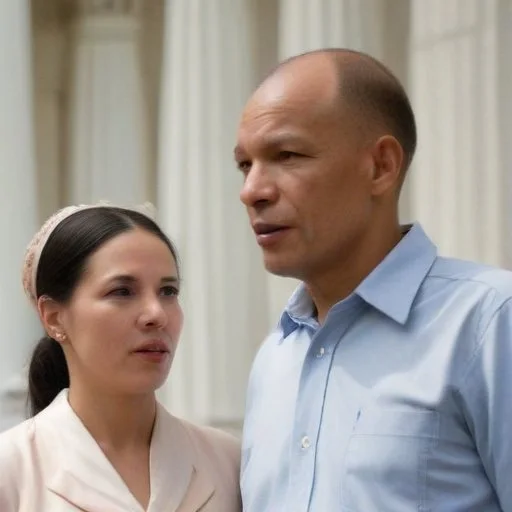
Richard Loving, a white man, and Mildred Jeter, a black woman, fell in love in the early 1950s in Virginia. Despite their love for each other, they knew that their relationship was illegal in the eyes of the law. In 1958, the couple decided to take a stand and challenge Virginia's antimiscegenation law, which banned interracial marriage.
In June 1958, Richard and Mildred traveled to Washington, D.C. to get married, returning to Virginia shortly after. However, their happiness was short-lived, as they were arrested and charged with violating the state's antimiscegenation law. The couple was convicted and sentenced to one year in prison, with the sentence suspended on the condition that they leave Virginia and not return together for 25 years.
The Lovings' conviction sparked a legal battle that would last nearly a decade. In 1963, the American Civil Liberties Union (ACLU) took on the case, arguing that the antimiscegenation law was unconstitutional. The case made its way to the Supreme Court, where, on June 12, 1967, the justices delivered a unanimous verdict in favor of the Lovings.
The Loving decision had far-reaching consequences, contributing to the dismantling of Jim Crow laws and paving the way for the civil rights movement. The ruling also marked a significant shift in public perception, with many Americans beginning to recognize the injustices of racial segregation and discrimination.
Today, Loving v. Virginia is celebrated as a beacon of hope and a testament to the power of love and determination. The story of Richard and Mildred Loving serves as a reminder that even in the darkest of times, courage and conviction can bring about lasting change.
"I want to tell the court that I am only a small ordinary woman, and I am not of any importance in the world, but I wish to be treated as an ordinary human being, just as other human beings are treated."
In 2007, the Virginia General Assembly officially apologized for its role in the Lovings' prosecution, and in 2017, the Supreme Court's decision was recognized as a milestone in the struggle for civil rights.
Richard and Mildred Loving's love story continues to inspire generations, a powerful reminder that love knows no bounds – not even those of race or ethnicity. Their courage and determination have left an indelible mark on American history, ensuring that the right to marry whomever one chooses remains a fundamental human right.
Richard Perry Loving, born on October 6, 1933, was a white American who grew up in a farming community in Caroline County, Virginia. He met Mildred Delores Jeter, a black American, in the early 1950s, and their love blossomed despite the societal norms and legal barriers that stood in their way. Mildred, born on July 22, 1939, was of African American and Rappahannock Native American descent.
The couple's strong bond and commitment to each other were evident in their willingness to challenge the unjust laws that prohibited their marriage. Their courage and determination paved the way for a more inclusive and equal society.
Richard and Mildred's legacy serves as a powerful reminder that love knows no bounds and that the fight for human rights and dignity is worth fighting for.
The 1950s and 1960s were a tumultuous time in American history, marked by the civil rights movement and growing discontent with racial segregation. The Lovings' case coincided with the peak of the movement, with activists like Martin Luther King Jr. and organizations like the NAACP (National Association for the Advancement of Colored People) pushing for equality and justice.
The political atmosphere was also influenced by the Cold War, with the United States competing with the Soviet Union for global influence. The civil rights movement and the Lovings' case were seen as key aspects of American democracy, with the government under pressure to address issues of racial inequality.
In this context, the Lovings' case became a symbol of the struggle for human rights and a test of the American system's ability to uphold its founding principles of equality and justice.The Loving v. Virginia case marked a significant shift in American cultural attitudes towards race, identity, and relationships. The ruling helped to dismantle the social norms that enforced segregation and strengthened the notion that love and marriage should not be restricted by race or ethnicity.
In the decades that followed, the case influenced popular culture, with films, books, and music exploring themes of interracial love, identity, and social justice. The Lovings' story has inspired countless artists, writers, and activists, cementing its place in American cultural heritage.
The cultural impact of Loving v. Virginia continues to be felt today, with many regarding it as a beacon of hope for a more inclusive and equitable society.
In 1963, the American Civil Liberties Union (ACLU) took on the Lovings' case, arguing that Virginia's antimiscegenation law was unconstitutional. The case made its way through the state courts, with the Virginia Supreme Court upholding the law in 1965.
In 1966, the ACLU appealed the case to the United States Supreme Court, which agreed to hear the case in December 1966. On June 12, 1967, the Court delivered a unanimous verdict in favor of the Lovings, declaring Virginia's antimiscegenation law unconstitutional.
This pivotal moment in American legal history marked a significant milestone in the fight against racial segregation and discrimination, paving the way for a more inclusive and equal society.The Lovings' case took place against the backdrop of the Cold War, with the United States competing with the Soviet Union for global influence. The civil rights movement and the Lovings' case were seen as key aspects of American democracy, with the government under pressure to address issues of racial inequality.
In the international arena, the Lovings' case was closely watched, with many countries viewing it as a test of American commitment to human rights and democracy. The ruling was seen as a significant victory for American democracy, strengthening its reputation as a beacon of freedom and justice.
The Lovings' case played a significant role in shaping America's image abroad, demonstrating its commitment to upholding human rights and promoting social justice.