


The United States and the Taliban, two entities once sworn enemies, made a groundbreaking achievement on February 29, 2020, by signing the Doha Agreement, a conditional peace deal aiming to put an end to the longest war in American history. This unprecedented accord marks a significant milestone in the quest for peace and stability in Afghanistan, a country ravaged by decades of conflict and turmoil.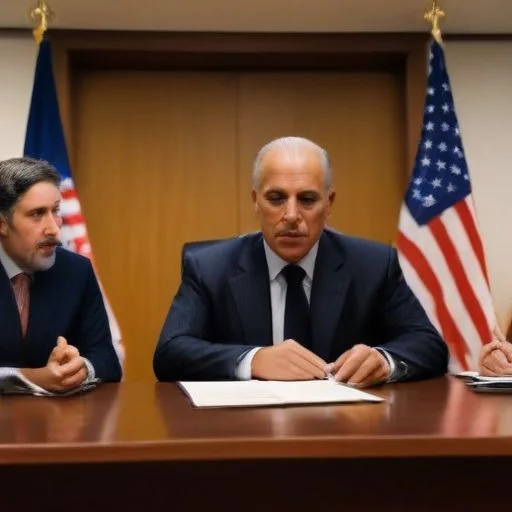
The seeds of this momentous occasion were sown in 2018, when the United States and the Taliban initiated secret talks in Qatar, facilitated by the country's government. The negotiations, led by US Special Representative for Afghanistan Reconciliation Zalmay Khalilzad, were a culmination of efforts to find a political solution to the protracted conflict in Afghanistan.
The Doha Agreement has several key provisions:
The Doha Agreement holds significant cultural and social implications for Afghanistan and the region. It marks a shift from a military-centric approach to a political solution, acknowledging the complexities of the conflict. The agreement also recognizes the importance of involving Afghan stakeholders in the negotiations, a crucial step towards reconciliation and peace.
The Doha Agreement has faced criticism from various quarters, with some expressing concerns about the Taliban's commitment to peace and the potential risks of a hasty US withdrawal. Others have raised questions about the exclusion of the Afghan government from the negotiations. Despite these concerns, the agreement remains a crucial step towards peace and stability in Afghanistan.
The Doha Agreement sets a precedent for future conflict resolution efforts in Afghanistan and beyond. Its success or failure will have far-reaching implications for regional and global peace, as well as the role of the United States in international affairs.
As the Doha Agreement unfolds, analysts predict a increased focus on intra-Afghan negotiations and reconciliation efforts. The agreement's success will depend on the Taliban's commitment to peace and the ability of Afghan stakeholders to find common ground. Its impact on the global war on terror and the role of the United States in international conflict resolution remains to be seen.
In conclusion, the Doha Agreement represents a historic opportunity for peace and reconciliation in Afghanistan. As the world watches, the success of this agreement will depend on the commitment of all parties involved to finding a lasting solution to one of the world's most intractable conflicts.
Zalmay Khalilzad, the chief American negotiator, has had a long and storied career in international diplomacy. Born in 1951 in Afghanistan, Khalilzad moved to the United States in the 1970s to pursue higher education. He earned a doctorate in political science from the University of Chicago and later worked as a professor at Columbia University.
Khalilzad's entry into politics began during the Reagan administration, where he served as a senior staffer on the State Department's Policy Planning Staff. He later held various positions in the Bush and Obama administrations, including serving as the US Ambassador to the United Nations and the US Ambassador to Afghanistan.
Throughout his career, Khalilzad has been known for his expertise in Afghanistan and his ability to navigate complex diplomatic situations. His involvement in the Doha Agreement marked a significant turning point in his career, as he played a crucial role in brokering the historic deal.

The Doha Agreement has significant cultural implications for Afghanistan and the region. The agreement recognizes the importance of cultural sensitivities and the need for Afghan stakeholders to take ownership of the peace process.
The agreement's emphasis on intra-Afghan negotiations marks a shift from a military-centric approach to a more culturally nuanced approach. This shift acknowledges the complexities of Afghan culture and the need for a more inclusive and participatory approach to conflict resolution.
Furthermore, the agreement's recognition of the Taliban's role in Afghan society highlights the complexities of cultural identity in Afghanistan. The Taliban, once reviled by the international community, is now seen as a legitimate stakeholder in the peace process, underscoring the need for cultural understanding and tolerance.
The Doha Agreement must be viewed within the context of the geopolitics of the region. The agreement is a significant development in the ongoing competition for influence between regional and global powers.
The agreement's emphasis on US troop withdrawal and the Taliban's commitment to cutting ties with terrorist groups marks a significant shift in the regional balance of power. The agreement is seen as a major victory for Pakistan, which has long been a key player in Afghan politics.
The agreement also has implications for the regional rivalry between India and Pakistan. The agreement's emphasis on a political solution marks a significant setback for India's efforts to isolate Pakistan and limit its influence in the region.

The Doha Agreement has significant economic implications for Afghanistan and the region. The agreement's emphasis on a conditional US troop withdrawal and the Taliban's commitment to cutting ties with terrorist groups marks a significant shift in the economic landscape of the region.
The agreement is expected to boost economic growth in Afghanistan, as the country begins to rebuild and reconstruct. The agreement's emphasis on intra-Afghan negotiations also marks a significant shift in the economic balance of power, as Afghan stakeholders take ownership of the country's economic development.
Furthermore, the agreement's recognition of the Taliban's role in Afghan society highlights the need for economic investment and development in areas controlled by the Taliban. This marks a significant shift in the economic dynamics of the region, as the international community begins to engage with the Taliban as a legitimate economic partner.
The Doha Agreement raises significant philosophical and ideological questions about the nature of conflict resolution and the role of the United States in international affairs.
The agreement's emphasis on a political solution marks a significant departure from the Bush administration's approach to conflict resolution, which emphasized military force and regime change. The agreement's recognition of the Taliban's role in Afghan society also raises questions about the nature of liberal democracy and its applicability in non-Western contexts.
Furthermore, the agreement's emphasis on conditional US troop withdrawal marks a significant shift in the ideological underpinnings of US foreign policy, as the United States begins to re-evaluate its role in international affairs.