


On a fateful day in September 1998, the United Nations International Criminal Tribunal for Rwanda (ICTR) delivered a historic verdict, convicting Jean-Paul Akayesu, the former mayor of Taba, Rwanda, of nine counts of genocide, crimes against humanity, and war crimes. This landmark ruling marked the first time an international court had held an individual accountable for the heinous crime of genocide.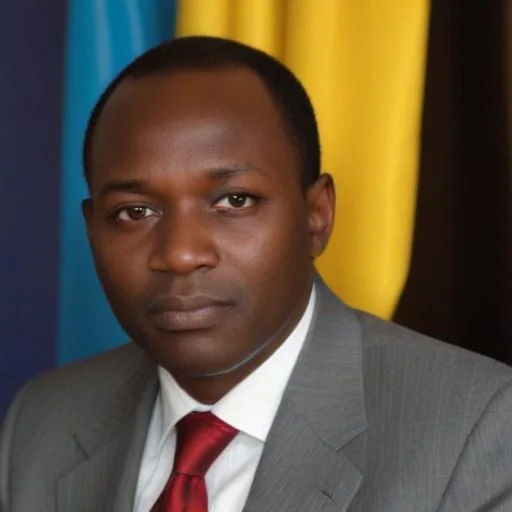
The ICTR was established in 1994 in response to the devastating Rwandan genocide, which claimed the lives of over 800,000 people, primarily from the Tutsi ethnic group. Akayesu, a Hutu, was indicted in 1996 and put on trial in 1997. The prosecution presented evidence of Akayesu's role in inciting and facilitating the massacre of Tutsi civilians in Taba, as well as his direct involvement in the murder of several individuals.
The ICTR's investigation uncovered chilling evidence of Akayesu's complicity in the genocide. Eyewitnesses testified to seeing Akayesu, dressed in his mayoral attire, directing and participating in the killings. The prosecution also presented physical evidence, including photographs and weapons, linking Akayesu to the crimes. Furthermore, the court heard testimony from experts on the historical and political context of the Rwandan genocide, highlighting the role of local authorities like Akayesu in perpetuating the violence.
Akayesu's conviction sent a powerful message to the international community: individuals, regardless of their position or authority, would be held accountable for their role in genocide and other international crimes. This precedent has since been reinforced in other international tribunals, including the International Criminal Court. The ICTR's groundbreaking work has paved the way for the prosecution of other high-ranking officials accused of genocide, war crimes, and crimes against humanity.
The Akayesu verdict has had far-reaching consequences, not only for Rwanda but also for the global fight against impunity. It has inspired victims of genocide and other international crimes to seek justice, and has given hope to those who have suffered at the hands of brutal regimes. The ICTR's work has also contributed to the development of international humanitarian law, shaping the way we understand and respond to mass atrocities.
"The conviction of Jean-Paul Akayesu is a significant milestone in the fight against impunity... It sends a strong message that those responsible for genocide and other international crimes will be held accountable." - Judge Laity Kama, ICTR President
The conviction of Jean-Paul Akayesu marks a crucial step towards justice and accountability for the victims of the Rwandan genocide. As we reflect on this landmark case, we are reminded of the importance of upholding human rights and combating impunity, and the critical role that international justice plays in shaping a more just and peaceful world.
The Rwandan genocide was not an isolated event, but rather the culmination of decades of ethnic tension and political instability. In the years leading up to the genocide, the Hutu majority, who had long held power in Rwanda, began to feel threatened by the growing influence of the Tutsi minority. This perception was fueled by the return of Tutsi refugees from neighboring countries, who were seeking to reclaim their ancestral lands. The resulting tensions finally boiled over in 1994, when the assassination of Rwandan President Juvénal Habyarimana sparked a wave of violence that would claim hundreds of thousands of lives.

Jean-Paul Akayesu's rise to power was marked by a complex web of allegiances and rivalries. As a Hutu, he was part of the majority ethnic group, but his moderate stance on ethnic issues had earned him the distrust of hardline Hutu nationalists. Despite this, Akayesu was able to capitalize on his connections within the ruling party to secure the position of mayor of Taba, a key stronghold in the Rwandan countryside.
The Akayesu conviction sent shockwaves through the international community, but it was not an isolated incident. In the years that followed, several other high-ranking officials would be brought to justice for their role in the Rwandan genocide. One notable example is the trial of Colonel Theoneste Bagosora, a key architect of the genocide who was convicted of genocide and crimes against humanity in 2008. The similarities between the two cases are striking, with both defendants being high-ranking officials who used their power and influence to facilitate the genocide.

The Rwandan genocide did not occur in a geopolitical vacuum. The country's location in the heart of the African Great Lakes region made it a flashpoint for regional tensions and rivalries. The neighboring Democratic Republic of Congo, in particular, played a significant role in the genocide, with several high-ranking officials providing military and financial support to the Hutu militias responsible for the violence.
The Akayesu conviction has had profound implications for our understanding of human rights and impunity. By holding individuals accountable for their actions, the ICTR has reinforced the principle that no one is above the law, regardless of their position or authority. This has profound implications for the way we think about justice and accountability, and has inspired a new generation of human rights advocates to seek justice for victims of mass atrocities.