


The USS Cole bombing is remembered as one of the most devastating terrorist attacks on a US naval vessel in peacetime, killing 17 American sailors and wounding 39 others. The attack, which took place on October 12, 2000, marked a somber turning point in the global war on terror, exposing the vulnerability of US military assets to asymmetric threats.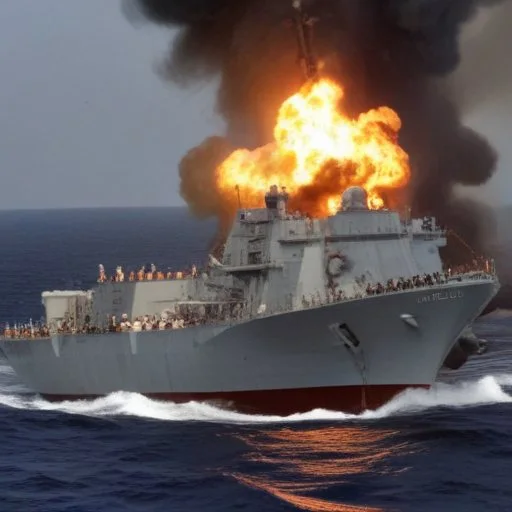
In the late 1990s, the US Navy's presence in the Middle East was increasing, with the USS Cole deployed to Aden, Yemen, as part of a multinational force. The destroyer was refueling at the time of the attack, and its crew was on high alert due to rising tensions in the region.
On the morning of October 12, two al-Qaeda suicide bombers, disguised as fishermen, approached the USS Cole in a small boat. The bombers, later identified as Hassan al-Khamri and Ibrahim al-Thawr, detonated their explosives, ripping a 40-foot hole in the ship's hull. The blast caused extensive damage, flooding the ship's engine room and killing or injuring nearly 60 crew members.
The USS Cole bombing had far-reaching consequences, both militarily and politically. The attack highlighted the need for increased security measures on US naval vessels and led to a major overhaul of the Navy's force protection policies. Additionally, the bombing intensified the US government's focus on counterterrorism efforts, paving the way for the invasions of Afghanistan and Iraq.
The USS Cole bombing had a profound impact on American society, evoking widespread outrage and calls for military action against al-Qaeda. The attack also sparked a renewed sense of patriotism and solidarity among Americans, with many rallying behind the US military and its efforts to combat terrorism.
One of the most poignant stories to emerge from the USS Cole bombing was that of Petty Officer 2nd Class Timothy Saunders, who was killed in the attack. Saunders, a father of two, was remembered by his crewmates as a dedicated and selfless sailor who had been planning to retire soon.
The USS Cole bombing served as a warning sign for the 9/11 attacks, which occurred just over a year later. The attack also led to a significant increase in US military presence in the Middle East, setting the stage for the wars in Afghanistan and Iraq.
The USS Cole bombing was recognized with the Purple Heart Medal, awarded to the crew members who were wounded or killed in the attack. The ship itself was also awarded the Navy Unit Commendation for its bravery and resilience in the face of tragedy.
The USS Cole bombing will forever be remembered as a testament to the bravery and sacrifice of American sailors. The attack serves as a stark reminder of the dangers faced by those who serve in the US military, and the importance of honoring their service and sacrifice.
The USS Cole bombing was not an isolated incident, but rather part of a larger pattern of terrorist attacks against US interests in the Middle East. In the years leading up to the attack, al-Qaeda had carried out several successful operations, including the 1998 United States embassy bombings in Kenya and Tanzania, which killed over 200 people. The bombing of the USS Cole was a strategic move by al-Qaeda to test the US military's defenses and demonstrate its ability to strike at American assets in the region.
In the aftermath of the attack, the US government launched an investigation into the bombing, led by the FBI. The investigation revealed that the bombers had used a small boat to approach the USS Cole, and that they had likely received support from al-Qaeda operatives in Yemen. The investigation also highlighted the need for improved security measures on US naval vessels, and led to a major overhaul of the Navy's force protection policies.
The USS Cole bombing also had significant implications for US foreign policy in the region. The attack led to a renewed focus on counterterrorism efforts, and paved the way for the US invasion of Afghanistan in 2001. The bombing also highlighted the importance of diplomacy and cooperation with regional partners, particularly Yemen, in combating terrorism.

Abu Ali al-Harithi, a senior al-Qaeda operative, played a crucial role in planning and executing the USS Cole bombing. A Yemeni national, al-Harithi had fought alongside Osama bin Laden in Afghanistan during the Soviet-Afghan War, and had later become a key lieutenant in al-Qaeda's operations.
Al-Harithi's involvement in the USS Cole bombing was first revealed in the aftermath of the attack, when investigators discovered that he had provided financial and logistical support to the bombers. Al-Harithi's role in the attack was later confirmed by Khalid Sheikh Mohammed, a senior al-Qaeda operative who was captured in 2003.
Al-Harithi's involvement in the USS Cole bombing made him a high-priority target for US counterterrorism efforts. In 2002, he was killed in a CIA-led drone strike in Yemen, marking one of the first successful uses of drones in a counterterrorism operation.
The USS Cole bombing had a profound impact on American society, evoking widespread outrage and calls for military action against al-Qaeda. The attack also sparked a renewed sense of patriotism and solidarity among Americans, with many rallying behind the US military and its efforts to combat terrorism.
In the aftermath of the attack, many Americans turned to music and art as a way of expressing their emotions and coping with the trauma of the event. The USS Cole bombing inspired a wave of patriotic songs, including "Where Were You (When the World Stopped Turning)" by Alan Jackson, which became a huge hit in 2001.
The bombing also had a significant impact on popular culture, with many films and television shows referencing the attack in the years that followed. The USS Cole bombing served as a symbol of American resilience and determination, and continues to be remembered as a pivotal moment in the global war on terror.
The USS Cole bombing shares several key characteristics with other major terrorist attacks, including the 1983 Beirut barracks bombing and the 2000 millennium plot. In each of these cases, terrorists used unconventional tactics to attack US military assets, exploiting weaknesses in security protocols and catching defenders off guard.
Like the USS Cole bombing, the 1983 Beirut barracks bombing was a major wake-up call for the US military, highlighting the need for improved security measures and more proactive counterterrorism efforts. The two attacks also share a common thread of Islamist extremism, with both being perpetrated by groups seeking to inflict harm on American interests.
Comparing the USS Cole bombing to other terrorist attacks can provide valuable insights into the tactics and motivations of extremist groups. By examining the similarities and differences between these events, policymakers and security experts can develop more effective strategies for preventing and responding to future attacks.
The USS Cole bombing was a major catalyst for the US invasion of Afghanistan in 2001, marking a significant escalation in the global war on terror. The attack provided a justification for military action, with the Bush administration arguing that the Taliban regime in Afghanistan was harboring al-Qaeda terrorists.
The bombing also had significant implications for US foreign policy, leading to a renewed focus on counterterrorism cooperation with regional partners. The attack highlighted the importance of diplomacy and engagement with countries like Yemen, which was seen as a key front in the war on terror.
In the aftermath of the USS Cole bombing, the US government also implemented a range of new security measures, including the Patriot Act, which expanded surveillance powers and increased funding for counterterrorism efforts. The bombing played a significant role in shaping the US response to terrorism, and continues to influence foreign policy and national security debates today.