


On November 9, 2000, the Indian government officially declared Uttarakhand the 27th state of India, marking a historic moment of autonomy and self-governance for the people of the region. This momentous occasion was the culmination of decades of struggle, protests, and negotiations, as Uttarakhand finally broke free from the shackles of Uttar Pradesh to forge its own identity.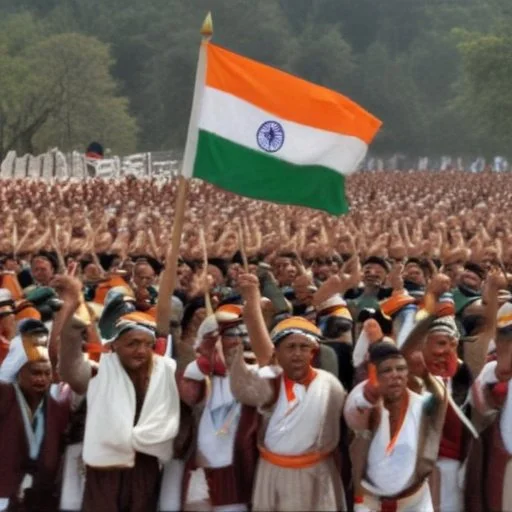
Uttarakhand, nestled in the Himalayas, is a region of breathtaking beauty, with towering mountains, lush green valleys, and sacred rivers. The region is home to some of India's most revered shrines, including the Char Dham pilgrimage sites of Badrinath, Kedarnath, Gangotri, and Yamunotri. Uttarakhand's rich cultural heritage is reflected in its vibrant festivals, traditional music, and delectable cuisine.
The journey to statehood was not an easy one for Uttarakhand. For decades, the region was merged with Uttar Pradesh, leading to feelings of neglect, underdevelopment, and cultural suppression. The people of Uttarakhand demanded a separate state, citing linguistic, cultural, and geographical differences with Uttar Pradesh. The agitation gained momentum in the 1990s, with mass protests, rallies, and hunger strikes.
The Uttarakhand statehood movement was led by several key figures, including:
The formation of Uttarakhand marked a new era of governance, development, and cultural preservation for the region. The state government focused on improving infrastructure, promoting tourism, and empowering local communities. The establishment of Uttarakhand also led to the creation of new institutions, such as the Uttarakhand High Court and the Uttarakhand University.
The formation of Uttarakhand has also led to a cultural revival in the region. The state government has taken steps to preserve the region's rich cultural heritage, including the establishment of museums, cultural centers, and festivals. The Uttarakhand government has also promoted the region's traditional crafts, music, and arts, providing a platform for local artists to showcase their talents.
The formation of Uttarakhand has been a beacon of hope for the people of the region, who finally have a sense of identity and autonomy. The struggle for statehood has inspired a new generation of leaders, entrepreneurs, and artists, who are working towards building a brighter future for Uttarakhand.
Narayan Dutt Tiwari, a veteran Congress leader, played a crucial role in negotiating with the central government to achieve statehood for Uttarakhand. Born on October 18, 1925, in Nainital, Tiwari was deeply rooted in the region's politics and culture. His political career spanned over five decades, during which he held various important positions, including Chief Minister of Uttar Pradesh and Union Minister of Finance.
Tiwari's experience and influence were instrumental in convincing the central government to concede to the demands of the Uttarakhand statehood movement. His diplomatic skills and ability to build consensus among different stakeholders helped to pave the way for the creation of the new state.
Early Life and CareerTiwari's early life was marked by poverty and hardship. Despite these challenges, he pursued his education and graduated from the University of Lucknow. He began his political career in the 1950s, joining the Indian National Congress and working closely with prominent leaders like Jawaharlal Nehru and Indira Gandhi.

The formation of Uttarakhand as a separate state has had a profound impact on the region's economy. With greater autonomy and control over its resources, the state government has been able to focus on developing its infrastructure, promoting tourism, and empowering local communities.
One of the significant economic benefits of statehood has been the allocation of separate funds for the development of Uttarakhand. The state government has received increased funding for various projects, including road construction, hydroelectric power generation, and tourism infrastructure.
The creation of Uttarakhand has also led to the growth of new industries, such as IT, biotechnology, and pharmaceuticals. The state's scenic beauty and natural resources have attracted investment in tourism, hospitality, and eco-tourism.
The formation of Uttarakhand as a separate state has led to a cultural renaissance in the region. The state government has taken steps to preserve and promote the region's rich cultural heritage, including its traditional music, dance, and handicrafts.
One of the key initiatives has been the establishment of the Uttarakhand Sanskriti Parishad, a cultural organization dedicated to promoting the region's cultural heritage. The Parishad has organized various cultural events, including music and dance festivals, theater performances, and art exhibitions.
Preserving Traditional CraftsThe Uttarakhand government has also taken steps to preserve the region's traditional crafts, including woodcarving, pottery, and weaving. The government has established various training centers and workshops to promote these crafts and provide a platform for local artisans to showcase their skills.

The demand for a separate state of Uttarakhand dates back to the 1950s, when the region was part of the United Provinces of British India. The movement gained momentum in the 1990s, with mass protests, rallies, and hunger strikes.
In 1994, the Uttar Pradesh government, led by Chief Minister Mulayam Singh Yadav, constituted a committee to look into the demands of the Uttarakhand statehood movement. The committee, headed by Justice K.C. Pant, submitted its report in 1996, recommending the creation of a separate state.
The Role of Student UnionsStudent unions, particularly the Uttarakhand Students' Union, played a crucial role in mobilizing public opinion in favor of statehood. The unions organized protests, rallies, and hunger strikes, which eventually forced the government to take notice of the demands of the people of Uttarakhand.
Uttarakhand's location in the Himalayas has strategic importance, making it a critical component of India's national security. The state shares borders with Nepal and Tibet, and its rugged terrain has made it a difficult region to access.
The state's proximity to the Indo-China border makes it an important location for military infrastructure and surveillance. The Indian Army has a significant presence in Uttarakhand, with several key bases and training facilities located in the region.
Uttarakhand's natural resources, including its vast forests, rivers, and minerals, have also made it an important region for India's economic development. The state has immense hydroelectric power generation potential, making it a critical component of India's energy security.