


The Battle of ng Xoi, fought in the dense jungles of Bnh Phc Province, is infamous for being one of the largest and most intense conflicts of the Vietnam War. It was a battle that would change the course of the war, dealing a crushing blow to the morale of the Army of the Republic of Vietnam (ARVN) and securing a vital victory for the Viet Cong guerrilla fighters.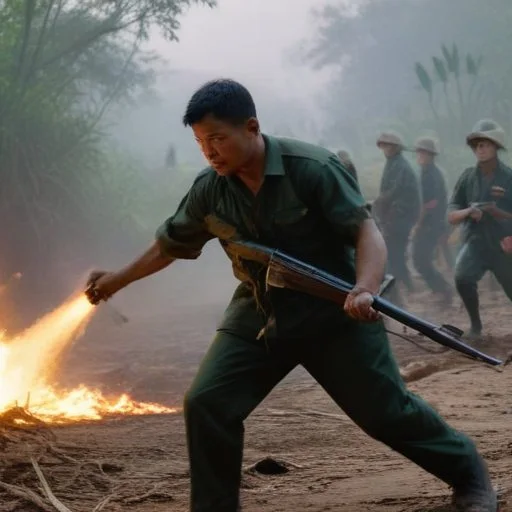
In the early 1960s, the Vietnam War was escalating, with the North Vietnamese Army (NVA) and the Viet Cong (VC) waging a guerrilla war against the South Vietnamese government and its primary ally, the United States. The VC, masters of ambush and sabotage, had been secretly gathering forces in the jungles of Bnh Phc Province, awaiting the perfect moment to strike.
The ARVN, determined to crush the VC insurgency, had established a network of outposts throughout the province. ng Xoi, a strategic location in the heart of the jungle, was one such outpost, manned by a battalion of ARVN soldiers.
On a fateful day in 1965, the VC launched a lightning-fast assault on the ng Xoi outpost, catching the ARVN off guard. The VC fighters, armed with AK-47s and RPGs, quickly overwhelmed the ARVN defenses, breaching the perimeter and pouring into the compound.
The battle raged on for days, with both sides suffering heavy losses. The ARVN, despite being outnumbered and outgunned, fought valiantly, but the VC's superior knowledge of the terrain and their mastery of guerrilla warfare tactics ultimately gave them the upper hand.
In the end, the VC emerged victorious, inflicting devastating losses on the ARVN. The defeat was a crushing blow to the ARVN's morale, and it marked a turning point in the war. The VC's victory at ng Xoi demonstrated their ability to take on and defeat the South Vietnamese army in a conventional battle, rather than simply relying on guerrilla warfare tactics.
The battle also exposed the weaknesses of the ARVN, revealing their inadequate training, poor leadership, and lack of coordination with American forces. The defeat at ng Xoi would haunt the ARVN for years to come, eroding their confidence and contributing to their eventual collapse.
The Battle of ng Xoi had far-reaching consequences, both on the battlefield and in the halls of power. The VC's victory emboldened the North Vietnamese government to escalate the war, knowing that their forces could take on and defeat the South Vietnamese army.
In the United States, the battle sparked a heated debate about the war, with many questioning the wisdom of continued American involvement. The defeat also led to increased scrutiny of the ARVN, with many calling for reforms and greater accountability.
In the end, the Battle of ng Xoi was a turning point in the Vietnam War, marking a shift in the balance of power in favor of the VC and the NVA. It was a brutal and devastating conflict that would leave its mark on the war, and on the soldiers who fought it.
The Battle of ng Xoi serves as a poignant reminder of the ferocity and complexity of the Vietnam War, a conflict that would leave deep scars on all those involved. Today, the battle is remembered as a testament to the bravery and sacrifice of the soldiers who fought on both sides, and as a stark reminder of the devastating consequences of war.
The Battle of ng Xoi was not an isolated incident, but rather part of a larger campaign by the Viet Cong to gain control of the rural areas of South Vietnam. In the months leading up to the battle, the VC had been secretly building up their forces in the jungle, gathering supplies and ammunition in preparation for a major offensive.
The ARVN, aware of the growing VC presence in the area, had established a series of outposts throughout the province to counter the insurgency. ng Xoi was one such outpost, strategically located in the heart of the jungle to provide a bulwark against VC infiltration.
Despite the ARVN's best efforts, the VC were able to launch a devastating surprise attack on the outpost, catching the defenders off guard and quickly overwhelming them. The battle that ensued was intense and brutal, with both sides suffering heavy losses.

Lieutenant Colonel Nguyen Van Nghi, the commander of the ARVN battalion at ng Xoi, was a seasoned veteran of the Vietnam War. Born in 1930 in Hanoi, Nghi had joined the Vietnamese military at the age of 18 and had quickly risen through the ranks, earning a reputation as a brave and skilled leader.
Despite his bravery, Nghi was also known for his hot temper and impulsiveness, traits that would ultimately prove disastrous for the ARVN at ng Xoi. As the VC launched their surprise attack, Nghi's impulsive decisions would cost his men dearly, leading to a series of costly mistakes that would handing the initiative to the enemy.
The Battle of ng Xoi had a profound impact on Vietnamese culture, particularly in the rural areas where the conflict was most intense. For many Vietnamese, the battle was a turning point in the war, marking a shift from a perceived guerrilla conflict to a full-scale conventional war.
The aftermath of the battle saw a surge in recruitment for the VC, as many young Vietnamese men were inspired to take up arms against the South Vietnamese government and its American allies. The battle also galvanized anti-war sentiment in Vietnam, with many civilians condemning the continued American involvement in the conflict.

The Battle of ng Xoi was a major embarrassment for the South Vietnamese government, highlighting the ineffectiveness of its military and the inefficacy of its counterinsurgency strategy. The defeat sparked a major crisis in confidence, with many questioning the ability of the government to protect its citizens from the Viet Cong.
In the United States, the battle sparked a heated debate about the war, with many critics calling for a re-evaluation of American involvement in the conflict. The battle also led to increased scrutiny of the South Vietnamese military, with many calling for reforms and greater accountability.
The Battle of ng Xoi took place against the backdrop of a rapidly changing geopolitical landscape. In the early 1960s, the Cold War was at its height, with the United States and the Soviet Union locked in a struggle for global dominance.
The Vietnam War was seen by many as a key battleground in this conflict, with the United States viewing the war as a vital front in the fight against communism. The Battle of ng Xoi, with its decisive VC victory, marked a major turning point in the war, exposing the weaknesses of the South Vietnamese government and its American allies.