


Violeta Chamorro's inauguration on April 25, 1990, marked a pivotal moment in Nicaraguan history, as she became the country's first female President, shattering the glass ceiling and paving the way for a new generation of women in politics.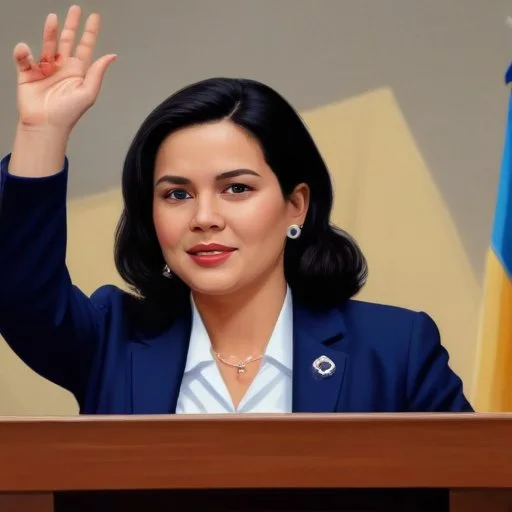
Violeta Chamorro's journey to the presidency was not an easy one. A widow and a mother of five, she was propelled into politics by the assassination of her husband, Pedro Joaquín Chamorro, a prominent journalist and opposition leader, in 1978.
With her husband's death, Chamorro became the voice of the opposition, speaking out against the authoritarian regime of Anastasio Somoza Debayle. Her bravery and determination earned her the respect and admiration of the Nicaraguan people, who saw her as a symbol of hope and resistance.
In 1990, Chamorro ran for president as the candidate of the National Opposition Union (UNO), a coalition of 14 anti-Sandinista parties. Her campaign was built on a platform of unity, reconciliation, and economic reform, resonating with a nation weary of war and economic hardship.
In a surprise upset, Chamorro defeated the incumbent President, Daniel Ortega, with 54.7% of the vote, becoming the first woman to be elected president of Nicaragua.
Chamorro's presidency was marked by a commitment to national reconciliation and rebuilding. She worked to heal the wounds of the past, promoting dialogue and cooperation between former enemies.
Her government implemented a series of reforms, including the demobilization of the Contras, the disarmament of the Sandinista army, and the establishment of a new constitution.
Violeta Chamorro's presidency was a watershed moment in Nicaraguan history, paving the way for future generations of women in politics. Her courage, determination, and commitment to democracy have inspired countless women across the region.
Today, Nicaragua continues to grapple with the challenges of poverty, inequality, and political instability, but Chamorro's legacy serves as a beacon of hope, reminding us that even in the darkest of times, courage and determination can lead to a brighter future.
The 1990 presidential election in Nicaragua was a complex and tumultuous period, marked by intense political polarization and social unrest. The ruling Sandinista National Liberation Front (FSLN), led by Daniel Ortega, had been in power since the 1979 revolution, and their authoritarian rule had led to widespread dissatisfaction among the population.
The opposition, led by Violeta Chamorro, was a disparate group of anti-Sandinista parties, including former Contras, business leaders, and intellectuals. Despite their differences, they were united in their desire to oust the FSLN from power and establish a more democratic government.
The election was marked by allegations of fraud and voter intimidation, but Chamorro's surprise victory was seen as a significant blow to the FSLN's grip on power.

Violeta Chamorro's presidency had a profound impact on Nicaraguan culture, symbolizing a shift towards greater gender equality and representation. Her inauguration marked a turning point in the country's history, as women began to take on more prominent roles in politics and society.
Chamorro's presidency also helped to revitalize Nicaraguan identity, promoting a sense of national unity and reconciliation after years of civil war and political polarization.
Today, Chamorro is celebrated as a feminist icon and a champion of democracy, inspiring generations of women to pursue careers in politics and public service.
Violeta Chamorro's election as the first female president of Nicaragua was a milestone in the country's history, but it also reflected a broader trend of women's increasing participation in politics.
In the 1970s and 1980s, women's movements across the region had been gaining momentum, demanding greater equality and representation in government and society.
Chamorro's presidency was a significant step forward for women's rights in Nicaragua, paving the way for future generations of female leaders and politicians.

The 1990 presidential election in Nicaragua took place against a backdrop of intense geopolitical tension, with the Cold War still casting a long shadow over Central America.
The United States, which had long been hostile to the Sandinista government, provided significant financial and political support to Chamorro's campaign, seeing her as a more reliable ally.
The election was also closely watched by other countries in the region, particularly El Salvador and Honduras, where similar conflicts were unfolding.
Violeta Chamorro's presidency was marked by a commitment to social change and reform, particularly in areas such as education, healthcare, and women's rights.
Her government implemented a range of initiatives aimed at promoting greater social equality and reducing poverty, including programs to improve access to education and healthcare.
Chamorro's presidency also helped to promote greater civil society engagement, encouraging ordinary citizens to participate in the democratic process and hold their leaders accountable.