


In the sweltering heat of August 1791, a mystical Vodou ceremony in the depths of the Haitian wilderness transformed into a violent uprising, marking the beginning of the Haitian Revolution. This pivotal event, led by the enigmatic Dutty Boukman, would go on to shatter the chains of slavery and forever alter the course of history.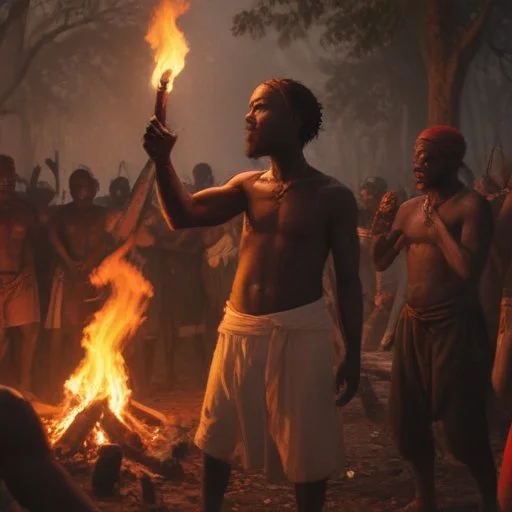
As the drums pulsed and the aroma of burning incense wafted through the air, Boukman, a charismatic slave leader, addressed the gathered masses with an impassioned plea. His words, infused with the power of African traditions and the longing for freedom, resonated deep within the hearts of his fellow bondspeople.
Zèklè pou délivré! Zèklè pou libète!
("Strike for freedom! Strike for liberty!") Boukman's rallying cry echoed through the night, igniting a fire of resistance that would soon engulf the entire island.
August 1791: The Vodou ceremony takes place in the woods of Bois-Caïman, marking the beginning of the Haitian Revolution.
August 22, 1791: The slave uprising begins, with Boukman and his followers attacking French plantations and killing their oppressors.
1793: Boukman is killed in battle, but the rebellion continues under the leadership of other prominent figures, including Toussaint Louverture.
1803: The Haitian Revolution ends with the defeat of the French, making Haiti the first independent black nation in the world.
Vodou, a spiritual practice born in West Africa and nurtured in the heart of the Haitian wilderness, played a profound role in the Haitian Revolution. This mystical tradition, often misconceived as dark magic, was in fact a powerful symbol of resistance and freedom.
Through Vodou, the enslaved Africans were able to preserve their cultural heritage, communicate in secret, and find solace in the face of brutal oppression. Boukman's ceremony was a testament to the unyielding spirit of the African diaspora, refusing to be silenced or subjugated.
The Haitian Revolution, sparked by Boukman's courageous cry for freedom, would go on to inspire countless liberation movements across the globe. From the abolition of slavery to the fight against colonialism, this pivotal event left an indelible mark on the course of human history.
As we remember the bravery of Dutty Boukman and the enslaved Africans who dared to challenge their oppressors, we honor the unwavering spirit of resistance that continues to pulse through the veins of humanity.
Zèklè pou délivré! Zèklè pou libète!
The words of Dutty Boukman continue to echo through the ages, a poignant reminder of the transformative power of courage, conviction, and the unrelenting pursuit of freedom.
May we, too, be inspired by the defiant spirit of Boukman and the brave men and women who fought for their liberty, striving to create a world where all humanity can live free from oppression and tyranny.
Boukman's life remains shrouded in mystery, with very little known about his early years or his rise to leadership. However, his role in igniting the Haitian Revolution is undisputed. Born in West Africa, Boukman was kidnapped and sold into slavery, eventually ending up on a plantation in Saint-Domingue. Despite the brutal conditions, he managed to maintain a strong connection to his African roots, which would later fuel his desire for freedom.
Boukman's charisma and natural leadership abilities earned him the respect of his fellow slaves, who looked up to him as a symbol of hope. His unwavering commitment to the cause of freedom made him a powerful force to be reckoned with, inspiring countless others to join the fight.
The Vodou Ceremony: Uncovering the Secrets of Bois-Caïman
The Vodou ceremony that took place in Bois-Caïman was a closely guarded secret, with few records of the event surviving to this day. However, historians have pieced together fragments of information to recreate the atmosphere of that fateful night.
The ceremony was likely held at a secluded location, deep in the woods, to avoid detection by French colonizers. The participants would have gathered around a large peristyle, adorned with sacred symbols and offerings to the loa. The air would have been thick with the smell of incense and the sound of drums would have pulsed through the night air.
Vodou: A Symbol of Resistance and Freedom
Vodou played a pivotal role in the Haitian Revolution, serving as a powerful symbol of resistance and freedom. The spiritual practice allowed enslaved Africans to maintain a connection to their cultural heritage, despite the brutal attempts of their oppressors to erase their identity.
Vodou ceremonies, like the one led by Boukman, became a secret means of communication, where plans for rebellion could be discussed and organized. The practice also provided a sense of solace and comfort, allowing the enslaved to find strength in their shared experiences and collective desire for freedom.
The Geopolitical Context of the Haitian Revolution
The Haitian Revolution did not occur in a vacuum. The late 18th century was marked by a seismic shift in the global balance of power, with the French Revolution sending shockwaves throughout Europe and the Americas.
The French colonies in the Caribbean, including Saint-Domingue, were particularly vulnerable to the winds of change. The Enlightenment ideals of liberty, equality, and fraternity, which inspired the French Revolution, resonated deeply with the enslaved Africans in the colonies, who saw an opportunity to fight for their own freedom.
Historiographical Perspectives on the Haitian Revolution
Historians have long debated the significance of the Haitian Revolution, with some viewing it as a singular event and others seeing it as part of a broader narrative of resistance and liberation.
Some have argued that the Haitian Revolution was a unique event, driven by the specific circumstances of the French colonial regime and the cultural traditions of the enslaved Africans. Others have seen it as part of a larger movement, connected to other slave uprisings and anti-colonial struggles across the Americas.