


On February 14, 1990, the Voyager 1 spacecraft turned its lens towards the inner solar system, capturing a snapshot of our planet that would become an iconic symbol of humanity's existence. From a staggering 3.7 billion miles away, the resulting photograph, dubbed the Pale Blue Dot, presents Earth as a tiny, suspended marble, suspended in the vastness of space.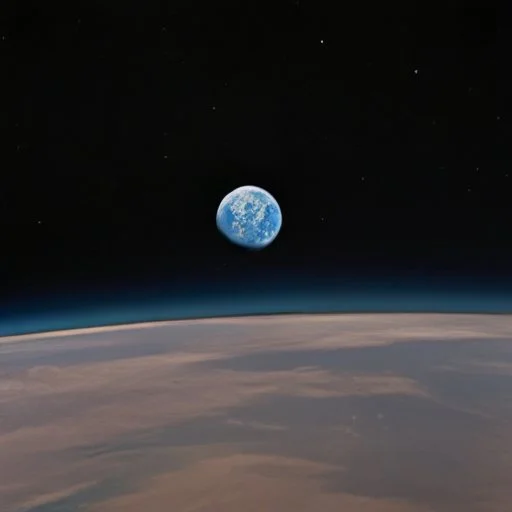
The idea to capture this photograph was conceived by the renowned astronomer and science communicator Carl Sagan. Sagan, a member of the Voyager 1 imaging team, had long been fascinated by the possibility of capturing an image of Earth from deep space. His vision was to provide a unique perspective on our planet, highlighting its fragility and beauty, and inspiring a sense of cosmic citizenship.
The Pale Blue Dot image was taken by the Voyager 1 spacecraft's narrow-angle camera, which was equipped with a 2000mm lens. The camera was designed to capture high-resolution images of the outer planets and their moons, but in this case, it was repurposed to gaze back at Earth. The resulting image is a 0.12-degree wide-angle view, with a resolution of 90 miles per pixel.
The Pale Blue Dot image has become a powerful symbol of humanity's existence, serving as a poignant reminder of our place in the universe. The photograph's striking beauty is accompanied by a profound sense of humility, as we are forced to confront the reality of our planet's fragility and vulnerability.
The Pale Blue Dot image has inspired a wide range of cultural and artistic works, including music, literature, and visual art. The photograph's themes of cosmic perspective and environmentalism have resonated with artists and audiences alike, sparking a new wave of creative expression.
The Pale Blue Dot image has played a significant role in shaping the public's perception of space exploration and environmentalism. The photograph's message of cosmic citizenship and planetary stewardship has inspired a new generation of scientists, policymakers, and activists, encouraging them to work towards a more sustainable future.
The Pale Blue Dot image has become an enduring symbol of humanity's existence, a powerful reminder of our place in the universe. As we continue to venture into the unknown, this iconic photograph serves as a beacon, inspiring us to explore, to discover, and to cherish our cosmic home.
Carl Sagan, a renowned astronomer and science communicator, was the mastermind behind the Pale Blue Dot image. His fascination with the possibility of capturing an image of Earth from deep space led to the conception of this iconic photograph. Sagan's vision was not only to provide a unique perspective on our planet but also to inspire a sense of cosmic citizenship and environmental awareness.
Sagan's work on the Voyager 1 imaging team was instrumental in making the Pale Blue Dot image a reality. His passion for science and his ability to communicate complex ideas in simple terms made him an ideal candidate to lead this project. Throughout his career, Sagan was driven by a desire to explore the mysteries of the universe and to share that sense of wonder with the world.
Did you know? Carl Sagan was a strong advocate for nuclear disarmament and critical of the US government's nuclear policies. He was also a passionate advocate for the exploration of space and the detection of extraterrestrial life.
The Pale Blue Dot image has had a profound impact on popular culture, inspiring countless works of art, literature, and music. The photograph's themes of cosmic perspective and environmentalism have resonated with artists and audiences alike, sparking a new wave of creative expression.
The image has been referenced in various forms of media, from literature to music, and has become a cultural icon of the 20th century. The Pale Blue Dot has inspired albums, songs, and even a musical composition, demonstrating its far-reaching influence on the artistic community.
The image's cultural significance can be seen in its ability to transcend boundaries, inspiring people from diverse backgrounds and disciplines to create something new and meaningful.The Pale Blue Dot image was captured using the Voyager 1 spacecraft's narrow-angle camera, which was equipped with a 2000mm lens. The camera was designed to capture high-resolution images of the outer planets and their moons, but in this case, it was repurposed to gaze back at Earth.
The resulting image is a 0.12-degree wide-angle view, with a resolution of 90 miles per pixel. The photograph was taken using a 32-second exposure, and the image is only 0.12 pixels in size.
The technical details of the Pale Blue Dot image highlight the incredible engineering and technological advancements that made this photograph possible.
The Pale Blue Dot image has sparked a profound philosophical debate about the nature of humanity's existence and our place in the universe. The photograph's striking beauty is accompanied by a profound sense of humility, as we are forced to confront the reality of our planet's fragility and vulnerability.
The image has led to a reevaluation of our values and priorities, encouraging us to adopt a more sustainable and environmentally conscious approach to living. The Pale Blue Dot has become a powerful symbol of the need for cosmic citizenship and global cooperation.
The philosophical implications of the Pale Blue Dot image are far-reaching, challenging us to rethink our relationship with the planet and our place in the universe.The Pale Blue Dot image has become a powerful symbol of the environmental movement, highlighting the fragility and beauty of our planet. The photograph's message of cosmic perspective and planetary stewardship has inspired a new generation of environmentalists and activists.
The image has been used to raise awareness about the importance of protecting our planet and its resources. The Pale Blue Dot has become a rallying cry for environmentalists, encouraging individuals and governments to adopt sustainable practices and reduce their carbon footprint.
The environmental impact of the Pale Blue Dot image is evident in its ability to inspire action and spark a sense of responsibility towards the planet.