


Voyager 2's closest approach to Uranus on January 24, 1986, marked a pivotal moment in the annals of space exploration, unveiling the veiled secrets of the seventh planet from the sun. This daring flyby brought the spacecraft within a mere 50,600 miles of Uranus' cloud tops, facilitating the transmission of a treasure trove of data and breathtaking images that would forever alter our understanding of the ice giant.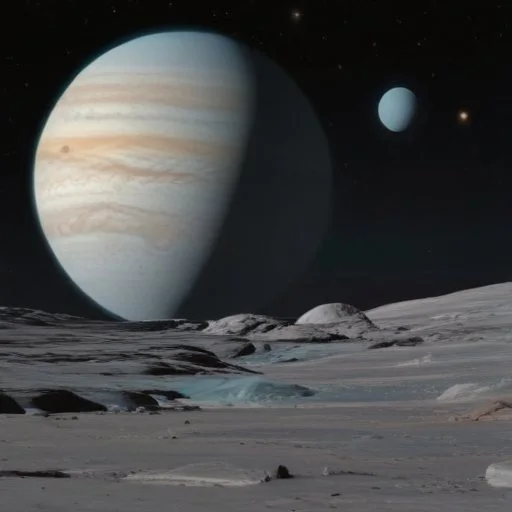
Launched on August 20, 1977, Voyager 2 embarked on an epic journey to explore the uncharted territories of our solar system, with Uranus being one of its primary targets. The spacecraft's ambitious itinerary was orchestrated by a team of NASA scientists and engineers, led by the visionary Edward C. Stone, who would later become the project scientist for the Voyager mission.
As Voyager 2 hurtled through the vast expanse of space, it began its approach to Uranus in November 1985. The spacecraft's instruments were meticulously calibrated to capture the planet's unique characteristics, from its tenuous rings to its magnetic field. The anticipation was palpable as scientists worldwide awaited the data that would soon shed light on the enigmatic Uranus.
The Voyager 2 flyby yielded a wealth of unprecedented discoveries, including the detection of a Uranian magnetic field, the presence of a system of rings, and the existence of a substantial moon, Miranda, with its bizarre, cliff-lined terrain. These findings not only expanded our understanding of Uranus but also provided valuable insights into the formation and evolution of our solar system.
Voyager 2's Uranus encounter had far-reaching implications, transcending the boundaries of scientific discovery. The mission inspired a new generation of scientists, engineers, and explorers, fostering a sense of wonder and curiosity about the cosmos. The stunning images of Uranus, beamed back to Earth, captivated the imagination of the global community, underscoring the boundless potential of human ingenuity and innovation.
The Voyager 2 mission's triumphant encounter with Uranus has left an indelible mark on the landscape of space exploration. As the spacecraft continues its interstellar journey, carrying a message about humanity to the farthest reaches of the universe, we are reminded of the profound significance of exploring the unknown. In the words of Carl Sagan, "The universe is not only much stranger than we think, it is stranger than we can think."
In the realm of space exploration, Voyager 2's rendezvous with Uranus stands as a testament to human ingenuity, curiosity, and our unwavering quest to unravel the mysteries of the cosmos.
Edward C. Stone: The Visionary Behind Voyager 2
As the project scientist for the Voyager mission, Edward C. Stone played a pivotal role in shaping the trajectory of space exploration. Born in 1936, Stone's fascination with space began at an early age, and he went on to earn his Ph.D. in physics from the University of Chicago. His leadership and expertise were instrumental in navigating the complexities of the Voyager 2 mission, which has left an indelible mark on the annals of space exploration.
Stone's tenure at NASA spanned over three decades, during which he oversaw numerous groundbreaking projects, including the Voyager, Galileo, and Cassini missions. His contributions to the field of space exploration have been recognized with numerous awards, including the NASA Distinguished Service Medal and the National Academy of Engineering's Draper Prize for Engineering.

The Cosmic Dancer's Cultural Reverberations
Voyager 2's historic encounter with Uranus not only expanded our understanding of the planet but also resonated with the global community on a cultural level. The mission's success ignited a sense of wonder and curiosity, capturing the imagination of people from diverse backgrounds and age groups.
The stunning images of Uranus, beamed back to Earth, inspired a new generation of artists, writers, and musicians, who drew upon the mission's themes of exploration and discovery. The Voyager 2 mission's cultural significance extends beyond the realm of science, embodying the essence of human ingenuity and our innate desire to push beyond the boundaries of the unknown.
Unveiling the Secrets of Uranus
Voyager 2's flyby of Uranus marked a significant milestone in the understanding of our solar system, providing valuable insights into the planet's composition, atmosphere, and magnetic field. The mission's discoveries have greatly enhanced our knowledge of the ice giant, shedding light on its unique characteristics and features.
The detection of a Uranian magnetic field, the presence of a system of rings, and the existence of Miranda, with its bizarre, cliff-lined terrain, have collectively expanded our understanding of Uranus, placing it at the forefront of scientific inquiry and exploration.

Voyager 2's Technological Legacy
The Voyager 2 mission has had a profound impact on the development of space exploration technology, pushing the boundaries of innovation and engineering. The spacecraft's instruments, designed to withstand the harsh conditions of space, have paved the way for future missions, such as the Cassini-Huygens mission to Saturn and its moons.
The mission's technological advancements have also trickled down to Earth, influencing the development of communication systems, imaging technologies, and radiation-hardened electronics. Voyager 2's contributions to the field of space exploration have been instrumental in shaping the course of technological progress.
Rewriting the History of Space Exploration
The Voyager 2 mission has rewritten the narrative of space exploration, offering a new perspective on the history of our solar system. By venturing into the uncharted territories of the outer planets, the mission has challenged our existing understanding of planetary formation and evolution.
The mission's findings have sparked a new wave of historiographical inquiry, prompting a reevaluation of the role of exploration in shaping our understanding of the cosmos. Voyager 2's legacy extends beyond the realm of science, influencing the way we perceive and interpret the history of space exploration.