


On August 25, 1981, the Voyager 2 spacecraft made history by executing its closest approach to Saturn, venturing a mere 77,000 miles above the planet's cloud tops. This daring flyby marked the first time a spacecraft had ever approached the stunning ringed giant at such an intimate distance, yielding a treasure trove of groundbreaking data and images that would rewrite the textbooks on Saturn.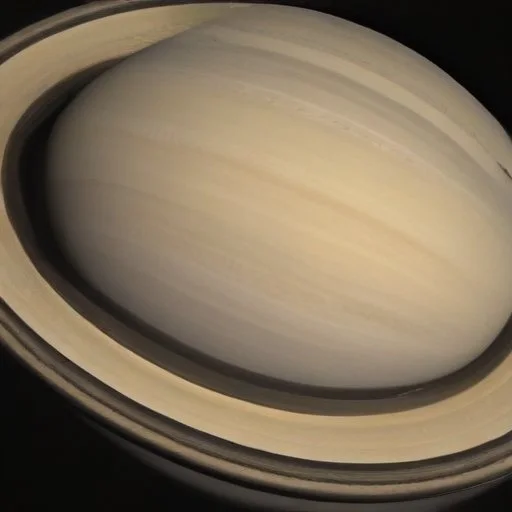
Voyager 2's encounter with Saturn was the culmination of a remarkable journey that began on August 20, 1977, when the spacecraft was launched from Cape Canaveral, Florida. Designed to explore the outer Solar System and beyond, Voyager 2 was equipped with an array of advanced instruments and cameras to study the Saturnian system in unprecedented detail.
The Voyager 2 spacecraft's trajectory was carefully choreographed to take advantage of Saturn's gravity, using the planet's massive bulk to accelerate its velocity and change course. As it approached Saturn, Voyager 2's instruments were primed to gather a wealth of information about the planet's atmosphere, magnetic field, and enigmatic rings.
The Voyager 2 flyby yielded a bounty of surprising discoveries that challenged our understanding of Saturn. The spacecraft's cameras captured stunning images of the planet's rings, revealing intricate structures and previously unknown features. The data collected during the flyby also provided valuable insights into Saturn's atmosphere, magnetic field, and moons.
Voyager 2's groundbreaking encounter with Saturn has had a lasting impact on our understanding of the Saturnian system. The mission has inspired generations of scientists and engineers, paving the way for future explorations of the outer Solar System. Today, Voyager 2 continues its journey into interstellar space, carrying a message about humanity and our place in the universe.
Voyager 2's historic flyby of Saturn serves as a testament to human ingenuity and our drive to explore the unknown. As we continue to push the boundaries of space exploration, we are reminded of the profound impact that this mission has had on our understanding of the universe and our place within it.
Voyager 2's path to Saturn was not a straightforward one. After launching in 1977, the spacecraft spent four years traversing the vast distances between Earth and Jupiter, using the gas giant's gravity to accelerate its velocity and change course. This gravitational slingshot maneuver allowed Voyager 2 to gain enough speed to reach Saturn, a feat that would have been impossible with the technology available at the time.
The journey was not without its challenges, however. Voyager 2 had to survive the harsh conditions of space, including extreme temperatures, radiation, and the darkness of the unknown. The spacecraft's instruments had to be designed to withstand these conditions, and its power source had to be capable of lasting for years.
'The Voyager 2 mission was a testament to human ingenuity and determination,' said Dr. Edward Stone, the mission's project scientist. 'It showed us that with enough creativity and perseverance, we could overcome even the most daunting challenges.'
Dr. Edward Stone, the project scientist for Voyager 2, played a crucial role in the mission's success. With a background in physics and astronomy, Stone was instrumental in designing the spacecraft's instruments and trajectory.
Stone's passion for space exploration began at a young age, and he was fascinated by the mysteries of the universe. He earned his Ph.D. in physics from the University of Chicago and went on to work at the California Institute of Technology, where he became involved in the Voyager mission.
'Dr. Stone's leadership and expertise were essential to the success of Voyager 2,' said a colleague. 'He was the driving force behind the mission, and his dedication inspired the entire team.'
Voyager 2's groundbreaking encounter with Saturn marked a significant milestone in the development of space exploration technology. The mission demonstrated the feasibility of using gravity assists to accelerate spacecraft and change their trajectory, paving the way for future deep space missions.
The spacecraft's instruments, including its cameras, spectrometers, and magnetometers, were designed to gather data in unprecedented detail. The mission's success showcased the power of advanced technology in unlocking the secrets of the universe.
Voyager 2's technological innovations have had a lasting impact on space exploration, influencing the design of subsequent missions and inspiring new generations of scientists and engineers.
Voyager 2's encounter with Saturn revealed a wealth of new information about the planet's atmosphere. The spacecraft's instruments detected strong winds, complex cloud formations, and a surprisingly dynamic atmosphere.
The mission's findings challenged existing theories about Saturn's atmosphere, forcing scientists to reevaluate their understanding of the planet's climatology. The data collected by Voyager 2 has contributed significantly to our understanding of atmospheric science and has far-reaching implications for the study of planetary atmospheres.
'Voyager 2's discoveries have revolutionized our understanding of Saturn's atmosphere,' said Dr. Carolyn Porco, a leading planetary scientist. 'The mission has opened up new avenues of research and has inspired new generations of scientists.'
Voyager 2's historic flyby of Saturn captured the imagination of the world, inspiring millions of people to gaze up at the stars and wonder about the mysteries of the universe. The mission's success sparked a renewed interest in space exploration, fueling a cultural fascination with the cosmos.
The mission's iconic images of Saturn's rings, with their stunning beauty and intricate detail, have become synonymous with space exploration. The Voyager 2 mission has been the subject of numerous documentaries, books, and films, cementing its place in popular culture.
Voyager 2's cultural impact extends far beyond the realm of science, inspiring artistic expression, fuelling imagination, and shaping our collective understanding of the universe.