


Voyager 2's closest approach to Neptune on August 25, 1989, marked a monumental milestone in space exploration, as it became the first spacecraft to visit the eighth planet from the sun. This groundbreaking achievement not only provided unparalleled insights into Neptune's composition, atmosphere, and magnetic field but also cemented Voyager 2's status as a trailblazing spacecraft.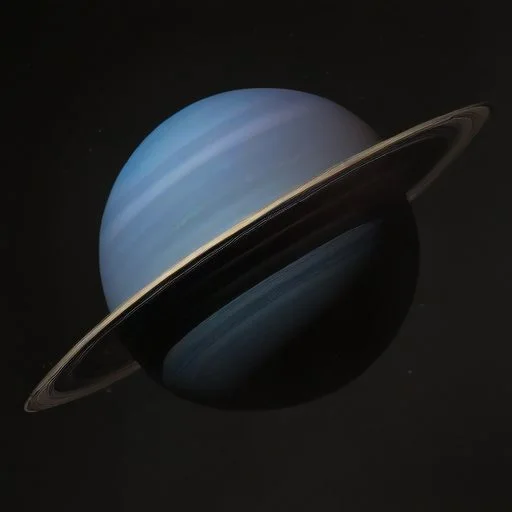
Launched in 1977, Voyager 2 embarked on a 12-year journey to reach Neptune's orbit. During this time, the spacecraft traversed the outer Solar System, sending back valuable data and images that greatly enhanced our understanding of the gas giants.
As Voyager 2 approached Neptune, it began to capture stunning images of the planet's icy cloud tops, revealing a planet unlike any other in our solar system. The spacecraft's instruments gathered a wealth of data, including:
Voyager 2's Neptune flyby marked the culmination of a remarkable journey, as it reached the outermost planet of our solar system (at the time). This achievement sparked a new era of space exploration, inspiring future generations of scientists and engineers to push the boundaries of human knowledge.
The data and images gathered during Voyager 2's Neptune flyby have had a profound impact on our understanding of the outer Solar System. The mission's success paved the way for future planetary exploration, including the Cassini-Huygens mission to Saturn and the New Horizons mission to Pluto.
Despite the monumental achievements of Voyager 2, the mission was not without controversy. Debates surrounding the spacecraft's nuclear power source and the potential risks associated with its launch sparked public concern. However, these concerns were largely alleviated as the mission's success and scientific contributions became apparent.
Today, Voyager 2 continues to venture into interstellar space, carrying a message about human civilization and our place in the universe. As it hurtles towards the unknown, it remains a testament to human ingenuity and our boundless curiosity about the cosmos.
Voyager 2's historic flyby of Neptune will forever be etched in the annals of space exploration, serving as a testament to human innovation and our relentless pursuit of knowledge about the universe.
Since the launch of Voyager 2 in 1977, the spacecraft had been on a long and arduous journey to the outer reaches of the solar system. The mission's success was dependent on years of meticulous planning, precise calculations, and innovative engineering. The team behind Voyager 2's Neptune flyby had to overcome numerous challenges, from navigating the spacecraft through the asteroid belt to ensuring its instruments could withstand the harsh conditions of deep space.
In the years leading up to the flyby, the mission team conducted extensive studies of Neptune's atmosphere, magnetic field, and composition. This research provided crucial insights into the planet's properties and allowed scientists to fine-tune Voyager 2's instruments for optimal data collection.
The culmination of these efforts was a triumph of human ingenuity, as Voyager 2 successfully executed its closest approach to Neptune on August 25, 1989.
As the project scientist for Voyager 2, Edward Stone played a pivotal role in the mission's success. Stone's vision and leadership guided the team through the complex planning and execution phases of the mission.
A renowned astrophysicist and planetary scientist, Stone's contributions to the field of space exploration extend far beyond Voyager 2. His work has spanned multiple missions, including the Voyager and Cassini programs, and has greatly advanced our understanding of the outer solar system.
Stone's dedication to the Voyager 2 mission was instrumental in pushing the boundaries of human knowledge and inspiring future generations of scientists and engineers.
The Voyager 2 mission has had a profound impact on the development of space exploration technology. The spacecraft's instruments and systems have paved the way for future missions, including the Cassini-Huygens and New Horizons projects.
Voyager 2's success has also driven advancements in areas such as power generation, communication, and navigation. The mission's innovative use of nuclear power sources, for example, has enabled subsequent missions to venture further into the solar system.
The technological innovations sparked by Voyager 2 have far-reaching implications, enabling humanity to explore and understand the cosmos like never before.
Voyager 2's historic flyby of Neptune has had a profound impact on popular culture, inspiring countless artistic, literary, and musical works. The mission's success has captivated the imagination of people around the world, fostering a sense of wonder and awe at the mysteries of the universe.
The Voyager 2 mission has also played a significant role in shaping our collective understanding of humanity's place in the universe. The mission's "Golden Record," containing sounds and images of Earth, serves as a powerful symbol of our species' capacity for curiosity and exploration.
Voyager 2's cultural legacy continues to inspire new generations of scientists, artists, and thinkers, ensuring that its impact will be felt for centuries to come.
The Voyager 2 mission has greatly expanded our knowledge of the outer solar system, providing unprecedented insights into the composition, atmosphere, and magnetic field of Neptune.
The mission's findings have challenged existing theories and spawned new areas of research, from the study of Neptune's icy cloud tops to the exploration of the planet's complex magnetic field.
Voyager 2's discoveries have revolutionized our understanding of the solar system, revealing new worlds and new wonders that continue to captivate scientists and the public alike.