


Voyager 1 is etched in the annals of space exploration history as the most distant human-made object in space, venturing into the uncharted territories of interstellar space. This pioneering spacecraft is renowned for carrying a golden record containing sounds and images of Earth, effectively becoming an ambassador of humanity to the cosmos.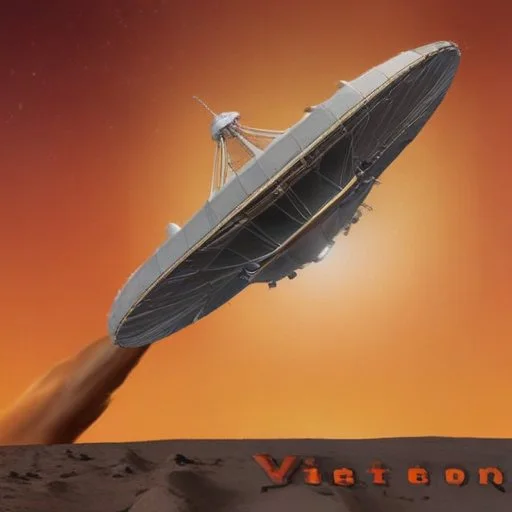
The Voyager 1 spacecraft was conceived by NASA's Jet Propulsion Laboratory (JPL) to study the outer Solar System and beyond. Launched on September 5, 1977, from Cape Canaveral's Launch Complex 41, Voyager 1 was part of the Voyager program, a twin spacecraft mission that included Voyager 2.
The golden record, a gold-plated copper record, contains a diverse selection of natural sounds, music, and greetings in 55 languages. This unique time capsule is a representation of humanity's diversity, creativity, and curiosity. The record includes works by renowned artists such as Bach, Beethoven, and Stravinsky, as well as sounds of rain, thunder, and even a human kiss.
Voyager 1 is equipped with a suite of instruments designed to gather data on cosmic rays, magnetic fields, and the solar wind. The spacecraft's cameras captured stunning images of Jupiter and Saturn, providing valuable insights into the gas giants' atmospheres and moons. Voyager 1's instruments have also detected the existence of the heliosheath, a region of space where the solar wind slows down.
In August 2012, Voyager 1 crossed the heliopause, the boundary between our solar system and interstellar space, becoming the first human-made object to enter the unknown expanse of interstellar space. This milestone marked the beginning of Voyager 1's journey into the cosmos, carrying humanity's message to the stars.
Voyager 1's remarkable journey has expanded our understanding of the solar system and beyond. The spacecraft's discoveries have inspired generations of scientists, engineers, and explorers. As a Cultural Ambassador of Humanity, Voyager 1 continues to travel through the cosmos, carrying our hopes, dreams, and aspirations to the unknown.
Voyager 1's journey has transcended the realm of science, inspiring works of art, literature, and music. The spacecraft's golden record has become a cultural icon, symbolizing humanity's desire to explore and connect with the universe.
As Voyager 1 continues its odyssey through the cosmos, it carries with it a message of hope, curiosity, and the human spirit's insatiable desire to explore the unknown.
Voyager 1's journey was not without its challenges. The spacecraft faced a series of technical issues in the early stages of its mission, including a malfunctioning instrument and a sudden loss of power. However, the mission team's quick thinking and problem-solving skills ensured that the spacecraft was able to overcome these hurdles and continue on its path.
One of the most significant decisions made during the mission was the choice to alter Voyager 1's trajectory in 1980. By flying closer to Saturn's moon, Titan, the spacecraft was able to use the moon's gravity to change its course and gain enough speed to reach interstellar space.
This bold move paid off, and Voyager 1 became the first human-made object to enter interstellar space in 2012. The mission team's innovative thinking and willingness to take risks played a crucial role in achieving this historic milestone.

Dr. Carl Sagan, a renowned astrobiologist and science communicator, played a pivotal role in the Voyager 1 mission. As a member of the committee that designed the golden record, Sagan was instrumental in selecting the sounds and images that would represent humanity to the universe.
Sagan's passion for space exploration and his ability to convey complex scientific concepts in simple terms made him a key figure in the Voyager 1 mission. His legacy continues to inspire new generations of scientists and explorers.
Voyager 1's golden record has become a cultural icon, symbolizing humanity's desire to explore and connect with the universe. The record's eclectic mix of sounds and images has inspired countless works of art, literature, and music.
From David Bowie's song "Space Oddity" to Stanley Kubrick's film "2001: A Space Odyssey," Voyager 1's influence can be seen in many aspects of popular culture. The spacecraft's journey has sparked the imagination of people around the world, inspiring them to think about their place in the universe.
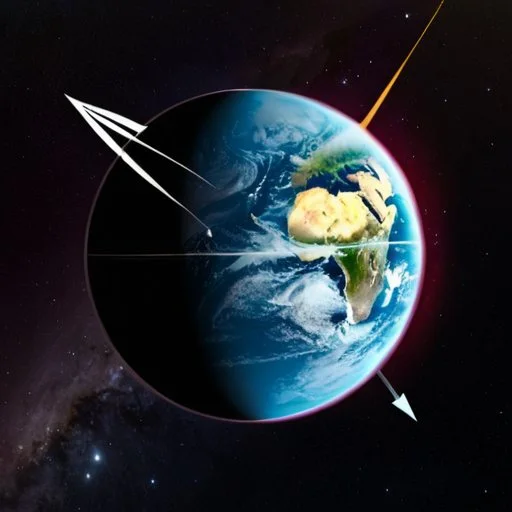
Voyager 1's mission has had a profound impact on our understanding of the universe and our place within it. The spacecraft's discovery of the heliosheath and its entry into interstellar space have raised important questions about the nature of space and time.
The mission has also sparked new areas of research, from the study of cosmic rays to the exploration of the outer reaches of the solar system. As a result, Voyager 1 has contributed significantly to the advancement of scientific knowledge and has paved the way for future space exploration.
Voyager 1's journey raises important philosophical and ideological questions about the nature of humanity's existence and our place in the universe. The spacecraft's golden record, with its diverse selection of sounds and images, asks us to consider what it means to be human.
The mission also prompt us to think about our responsibility to the universe and the potential consequences of our actions. As we venture further into space, we are forced to confront the implications of our existence and the impact we have on the cosmos.