


On August 12, 1944, the picturesque Italian village of Sant'Anna di Stazzema was ravaged by one of the most heinous war crimes of World War II. In a brutal display of Nazi ferocity, WaffenSS troops slaughtered 560 innocent civilians, earning this tragedy a dubious place in history as one of the worst massacres perpetrated by the German military in Italy.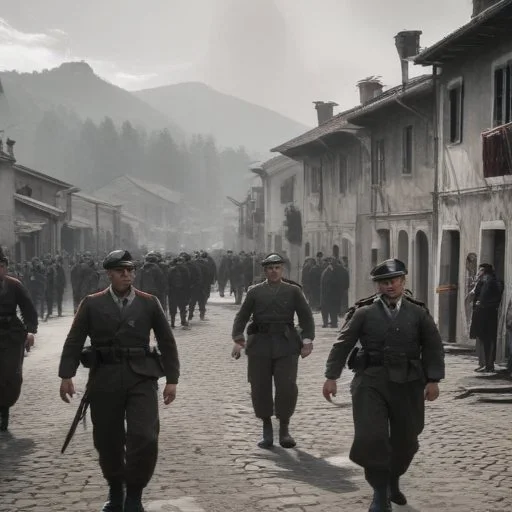
The summer of 1944 was a tumultuous time in Italy. The Allies had landed in Normandy just months prior, and the German army was desperately clinging to its foothold on the Italian peninsula. As the war effort began to unravel, Nazi troops became increasingly brutal in their treatment of civilians, viewing them as potential collaborators with the enemy.
On that fateful morning, SS-Sturmbannführer Walter Reder, a seasoned commander with a reputation for ruthlessness, led his WaffenSS troops into Sant'Anna di Stazzema. With utter disregard for human life, they unleashed a merciless assault on the village, targeting women, children, and the elderly. The massacre lasted for hours, with the SS troops showing no quarter to those who pleaded for mercy.
In the aftermath of the massacre, the village of Sant'Anna di Stazzema was left to pick up the pieces. The survivors were left to mourn the loss of their loved ones, and the trauma of that day would haunt them for generations to come. Today, the village serves as a poignant reminder of the horrors of war and the importance of preserving human dignity in the face of conflict.
The massacre at Sant'Anna di Stazzema has had a profound impact on Italian culture and society. The tragedy has been commemorated in various forms of art, literature, and film, ensuring that the memory of the victims is kept alive. The event also serves as a stark reminder of the dangers of ideological extremism and the importance of promoting tolerance and understanding.
One survivor, a young girl named Maria, recounted the horror of that day, recalling the sound of gunfire and screams that echoed through the village. She remembered hiding in a nearby woods, watching as her family and friends were dragged away by the SS troops. Maria's testimony serves as a poignant reminder of the human cost of war and the importance of preserving the stories of those who lived through it.
The massacre at Sant'Anna di Stazzema serves as a grim reminder of the devastating consequences of war. The event has influenced the development of international humanitarian law, emphasizing the importance of protecting civilians in times of conflict. It also serves as a warning to future generations, highlighting the dangers of ideological extremism and the importance of promoting tolerance and understanding.
In the years following the war, the Italian government was criticized for its handling of the massacre. Many felt that the perpetrators were not adequately punished, and that the tragedy was downplayed to avoid stirring up anti-German sentiment. Today, the massacre is widely recognized as one of the most heinous crimes of World War II, and efforts are being made to ensure that the victims are properly remembered and honored.
The survivors of the Sant'Anna di Stazzema massacre have shown remarkable resilience and strength in the face of unimaginable tragedy. Their stories serve as a testament to the human spirit, inspiring future generations to promote peace, tolerance, and understanding.
The village of Sant'Anna di Stazzema was awarded the Gold Medal of Military Valor in 1994 for its bravery during World War II. The award is Italy's highest honor for military valor.
The historiography of the Sant'Anna di Stazzema massacre is complex and multifaceted. While the event is widely recognized as one of the worst atrocities committed by the German military in Italy, its significance has been interpreted in various ways by historians. Some have viewed the massacre as a symbol of the brutal nature of the Nazi regime, while others have seen it as a tragic consequence of the war.
Italian historians, in particular, have grappled with the legacy of the massacre, debating its implications for the country's post-war identity and its role in shaping the nation's collective memory.

The Sant'Anna di Stazzema massacre has had a profound impact on Italian culture and society. The tragedy has been commemorated in various forms of art, literature, and film, ensuring that the memory of the victims is kept alive.
The massacre has also inspired a range of cultural works, including novels, poems, and songs, which have helped to keep the event in the public consciousness.
In addition, the massacre has influenced the development of Italian cinema, with several films, including "The Seventh Cross" (1944) and "Days of Glory" (1945), addressing the event and its aftermath.
The Sant'Anna di Stazzema massacre occurred at a critical juncture in World War II, as the Allies were pushing north through Italy and the German army was fighting to maintain its grip on the peninsula.
The massacre was part of a broader pattern of violence and intimidation employed by the German military to control the civilian population and suppress partisan activity.
However, the massacre also highlighted the growing desperation of the German military, which was increasingly resorting to brutal tactics in a futile effort to stem the tide of the war.

Carlo Resistenza was a local Italian partisan who fought against the Nazi occupation of Italy during World War II.
Little is known about Resistenza's early life, but it is believed that he was born in Sant'Anna di Stazzema and grew up in the surrounding region.
Resistenza's bravery and leadership played a significant role in the resistance movement, and his efforts may have contributed to the SS's decision to target Sant'Anna di Stazzema.
One of the most significant artifacts related to the Sant'Anna di Stazzema massacre is the "Diary of Sant'Anna," a collection of eyewitness accounts and testimonies gathered by the Italian resistance movement.
The diary provides a unique window into the events of August 12, 1944, and offers a harrowing account of the massacre and its aftermath.
Other important documents related to the massacre include the war diary of Walter Reder, which details the SS commander's role in the attack.