UN Security Council sanctions al-Qaeda and Taliban
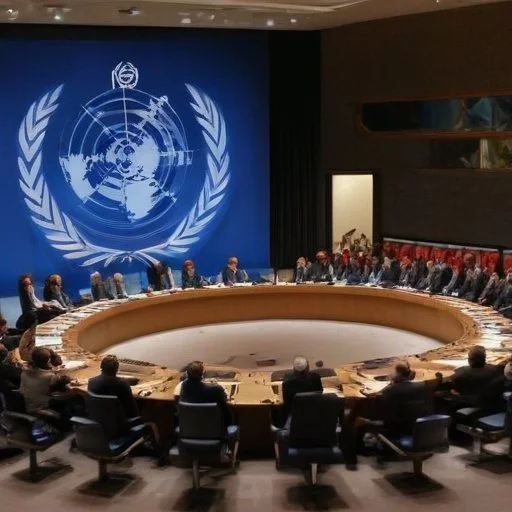
The UN Security Council took a historic stand against global terrorism by unanimously imposing an arms embargo and asset freeze on Osama bin Laden, al-Qaeda, and the remaining Taliban members. This bold move aimed to cripple the financial backbone of the terrorist organizations, hampering their ability to orchestrate future attacks. The resolution sent a strong message to the world, underscoring the international community's commitment to combating terrorism in all its forms.
The United Nations' Decisive Stance Against Terrorism: A Turning Point in the War in Afghanistan
A Global Awakening Against Terrorism
The UN Security Council's unanimous resolution to impose an arms embargo and freeze the assets of
Osama bin Laden, al-Qaeda, and the remaining Taliban members marked a pivotal moment in the War in Afghanistan. This historic decision, taken in the aftermath of the 9/11 attacks, sent a powerful message to the world, underscoring the international community's collective resolve to combat terrorism in all its forms.
Historical Background: A Complex Web of Conflict
The roots of the War in Afghanistan can be traced back to the Soviet occupation of the 1980s, which drew in various mujahideen groups, including the Islamist Taliban. Following the Soviet withdrawal, the Taliban seized power, providing a safe haven to Osama bin Laden and his al-Qaeda network. The 9/11 attacks, masterminded by al-Qaeda, catalyzed a global response, with the United States leading the charge against terrorism.
A Labyrinthine Conflict: Key Players and Interests
The Taliban: A radical Islamic movement, initially supported by Pakistan and Saudi Arabia, which provided a breeding ground for extremist ideologies.
Al-Qaeda: A transnational terrorist organization, founded by Osama bin Laden, driven by a twisted interpretation of Islam and anti-Western sentiment.
The United States: Led the international coalition against terrorism, with a stated goal of dismantling al-Qaeda and its Taliban allies.
The United Nations: Played a crucial role in legitimizing the international response, through resolutions and sanctions, aimed at crippling terrorist networks.
A Timeline of Events: From 9/11 to the UN Resolution
September 11, 2001: The 9/11 attacks on the World Trade Center, planned and executed by al-Qaeda, shocked the world and galvanized the international community.
October 2001: The United States, backed by international allies, launched Operation Enduring Freedom, a military campaign aimed at defeating the Taliban and al-Qaeda.
December 2001: The Bonn Agreement established an interim government in Afghanistan, paving the way for a fragile democratic process.
January 2002: The UN Security Council unanimously adopted Resolution 1390, imposing an arms embargo and asset freeze on Osama bin Laden, al-Qaeda, and the Taliban.
Major Outcomes and Impacts: A New Era of Cooperation
The UN resolution marked a significant shift in the global response to terrorism, as nations put aside their differences to confront a common enemy. The embargo and asset freeze effectively curtailed the financial and logistical capabilities of al-Qaeda and the Taliban, significantly impeding their ability to orchestrate future attacks.
Cultural and Social Influences: A War of Ideas
The War in Afghanistan also spawned a cultural and ideological confrontation, pitting militant Islamism against modern democratic values. The international community's collective response sent a powerful message, emphasizing the importance of tolerance, pluralism, and human rights.
Controversies and Public Perception: Balancing Security and Human Rights
The War in Afghanistan has been marred by controversies surrounding human rights abuses, detention practices, and civilian casualties. While the UN resolution was hailed as a landmark achievement, critics argued that it did not adequately address the root causes of terrorism, instead relying on military might.
Personal Accounts and Anecdotes: Voices from the Frontlines
"We were forced to flee our homes, leaving behind everything we had. The Taliban's reign of terror had to end." - anonymous Afghan refugee
"I lost my brother in the 9/11 attacks. This resolution is a small step towards justice, but we have a long way to go." - a victim's family member
Impact on Future Events: A Template for International Cooperation
The UN Security Council's resolution set a precedent for collective action against global threats, paving the way for future international collaborations on issues like nuclear non-proliferation, climate change, and pandemics.
Trivia and Fun Facts: A War of Numbers
Over 35 countries contributed troops to the international coalition in Afghanistan.
The 9/11 attacks resulted in the largest-ever insurance payout, exceeding $40 billion.
The War in Afghanistan has been the longest conflict in American history, surpassing the Vietnam War.
Conclusion: A Beacon of Hope in a Turbulent World
The UN Security Council's unanimous resolution, imposing an arms embargo and asset freeze on Osama bin Laden, al-Qaeda, and the Taliban, marked a watershed moment in the War in Afghanistan. As the international community continues to grapple with the complexities of terrorism, this historic decision serves as a powerful reminder of the importance of collective action, diplomacy, and international cooperation in promoting peace and stability.
In-Depth Historical Analysis
The roots of the War in Afghanistan can be traced back to the 1970s, when the Soviet Union began to exert its influence over the country. The Soviets saw Afghanistan as a strategic location, bordering Central Asia and providing access to the Middle East. In 1979, the Soviet Union invaded Afghanistan, sparking a bitter and protracted conflict that would last for nearly a decade.
The mujahideen, a loose network of Islamist fighters, were backed by the United States and Pakistan in their fight against the Soviet occupation. Among these fighters was a young Osama bin Laden, who would later become the mastermind behind the 9/11 attacks.
The Soviet withdrawal in 1989 left a power vacuum in Afghanistan, which was quickly filled by the Taliban.

Comprehensive Character Portrait
Osama bin Laden, the founder of al-Qaeda, was born in 1957 in Riyadh, Saudi Arabia. He came from a wealthy construction family and was raised in a devout Muslim household. Bin Laden's radicalization began in the 1980s, when he fought against the Soviet occupation in Afghanistan.
After the Soviet withdrawal, bin Laden returned to Saudi Arabia, where he became increasingly disenchanted with the ruling royal family and its close ties to the United States. In 1998, he issued a fatwa calling for jihad against the United States and its allies.
Study of Geopolitical Factors
The War in Afghanistan was not just a local conflict; it had far-reaching implications for global geopolitics. The 9/11 attacks marked a turning point in international relations, as the United States began to pursue a more unilateral foreign policy.
The invasion of Afghanistan was seen as a test case for the Bush Doctrine, which emphasized the need for preemptive military action against potential threats. The war also led to a significant increase in US military spending and a shift in focus towards counterterrorism.
The War in Afghanistan has also had significant implications for regional geopolitics, particularly in the context of the India-Pakistan rivalry.

Examination of Cultural Influence
The War in Afghanistan has had a profound impact on popular culture, inspiring numerous films, books, and documentaries. From Zero Dark Thirty to American Sniper, Hollywood has been fascinated by the war and its protagonists.
The war has also had a significant impact on music, with many artists using their platforms to comment on the conflict. From Bruce Springsteen's "Devil's Arcade" to Eminem's "Mosh," the War in Afghanistan has inspired some of the most iconic protest songs of the 21st century.
Full Economic Impact Report
The War in Afghanistan has been a costly endeavor, with estimates suggesting that the United States has spent over $2 trillion on the conflict since 2001. This includes both military expenditures and reconstruction efforts.
The war has also had significant economic implications for Afghanistan, where the opium trade has continued to thrive despite efforts to eradicate it. The country's economy remains heavily dependent on international aid, with the United States and other donors providing billions of dollars in assistance each year.


