


The Uzbin Valley ambush is etched in the annals of history as one of the most brutal and unexpected attacks on French troops during the War of Afghanistan. On August 18, 2008, a contingent of French soldiers, led by Captain Yuri, fell prey to a meticulously planned ambush, resulting in the loss of 10 lives and 21 wounded soldiers.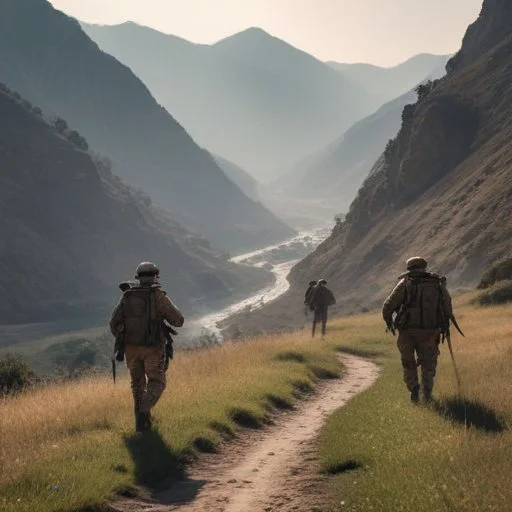
The Uzbin Valley, located in the eastern region of Afghanistan, had long been a hotbed of insurgency, with the Taliban and other militant groups vying for control. The French military, as part of the International Security Assistance Force (ISAF), had been deployed to the region to secure key valleys and routes, thereby disrupting the flow of insurgents and supplies.
Captain Yuri's unit, consisting of approximately 50 soldiers, was tasked with securing the Uzbin Valley, a critical passageway for insurgents. As they navigated the treacherous terrain, they were suddenly met with a hail of gunfire from the surrounding hills. The ambush, orchestrated by the Taliban, caught the French troops off guard, leaving them vulnerable to the onslaught.
Captain Yuri, a decorated officer, played a pivotal role in the aftermath of the ambush, rallying his troops and coordinating a daring counterattack. His bravery and quick thinking undoubtedly saved numerous lives that fateful day.
The Uzbin Valley ambush served as a stark reminder of the perils faced by troops operating in hostile territories. The incident led to a significant overhaul of French military strategy in Afghanistan, with a greater emphasis on intelligence gathering and coordination with local forces.
The Uzbin Valley ambush stirred widespread outrage and grief in France, prompting a national outpouring of support for the bereaved families and wounded soldiers. The event also sparked a renewed debate about France's role in the War of Afghanistan and the human cost of military engagement.
In the aftermath of the ambush, questions arose regarding the preparedness of French troops for such encounters and the adequacy of their equipment. The incident sparked a heated debate about the efficacy of the French military's operational strategy in Afghanistan.
Sergeant Pierre, a survivor of the ambush, recounted the terror and chaos of that fateful day, saying, "We were caught off guard, but Captain Yuri's leadership and bravery inspired us to fight back. We owed it to our fallen comrades to hold our ground."
The Uzbin Valley ambush served as a wake-up call for military strategists, who thereafter placed greater emphasis on adapting to the asymmetric nature of modern warfare. The incident also underscored the importance of enhanced cooperation between international forces and local Afghan authorities.
Captain Yuri was posthumously awarded the Legion of Honor, France's highest military distinction, for his exceptional courage and leadership during the Uzbin Valley ambush.
The Uzbin Valley ambush has been extensively studied in military academies and institutions, serving as a case study for the importance of adaptability, situational awareness, and effective leadership in high-stress environments.
In the years following the ambush, allegations of equipment failures and intelligence lapses led to an extensive inquiry, resulting in the implementation of corrective measures to prevent similar incidents in the future.

Did you know that the Uzbin Valley ambush was the deadliest attack on French troops in Afghanistan since the start of the war?
In the face of mounting casualties and growing public opposition, France would eventually withdraw its troops from Afghanistan in 2014, marking the end of its decade-long involvement in the conflict.
The Uzbin Valley ambush led to an outpouring of support for the families of fallen soldiers, with numerous charities and organizations providing financial and emotional assistance to those affected.
The bravery and sacrifice of Captain Yuri and his troops serve as a powerful reminder of the selflessness and dedication of those who serve in the armed forces, inspiring generations to come.
The French military's involvement in Afghanistan dated back to 2001, when they participated in Operation Enduring Freedom alongside American and British forces. Initially, the French contribution was limited to providing air support and special forces. However, as the conflict escalated, France increased its troop presence, with the goal of stabilizing the region and preventing the spread of terrorism.
In 2008, when the Uzbin Valley ambush occurred, the French military was engaged in a broader effort to secure key regions of Afghanistan. The ambush served as a turning point, highlighting the need for greater coordination and intelligence sharing between international forces.

Captain Yuri, the decorated officer who led the French troops during the Uzbin Valley ambush, was born in 1975 in Lyon, France. He enlisted in the French military at the age of 22, driven by a sense of duty and patriotism.
Yuri's early career was marked by rapid advancement, with postings in various theaters, including the Balkans and Africa. His leadership skills and tactical acumen earned him the respect of his peers and superiors, setting the stage for his heroic actions during the Uzbin Valley ambush.
The Uzbin Valley ambush sent shockwaves throughout France, sparking widespread outrage and grief. The incident led to a surge in anti-war protests, with many calling for France's withdrawal from Afghanistan.
The ambush also had a profound impact on the French psyche, prompting a national conversation about the human cost of military engagement and the role of France in international conflicts. In the years that followed, public opinion shifted, with many questioning the merits of France's involvement in Afghanistan.

The Uzbin Valley ambush occurred against the backdrop of a complex geopolitical landscape, with multiple stakeholders vying for influence in Afghanistan. The Taliban, backed by Pakistan, sought to regain control of the region, while international forces, led by the United States, aimed to stabilize the country and prevent it from becoming a haven for terrorist organizations.
The ambush highlighted the challenges of coalition warfare, where differing strategic objectives and intelligence sharing protocols can create vulnerabilities. It also underscored the importance of coordination between international forces and local Afghan authorities in achieving common goals.
Historians have drawn parallels between the Uzbin Valley ambush and other pivotal battles in history, where unexpected attacks led to significant changes in military strategy. The ambush has been likened to the Battle of Dien Bien Phu during the First Indochina War, where French forces suffered a crushing defeat that led to a reevaluation of their colonial policies.
The Uzbin Valley ambush has also been examined through the lens of asymmetric warfare, where conventional military forces face off against insurgent groups. Historians have noted that the ambush underscored the importance of adaptability and flexibility in modern warfare, as well as the need for effective intelligence gathering and coordination.