


Known for its deceit, corruption, and political intrigue, the Watergate scandal is one of the most infamous events in American history, marking the first time a U.S. President was forced to resign from office. It all began with a break-in at the Democratic National Committee headquarters at the Watergate complex in Washington D.C. and spiralled into a web of cover-ups, lies, and corruption that shook the nation.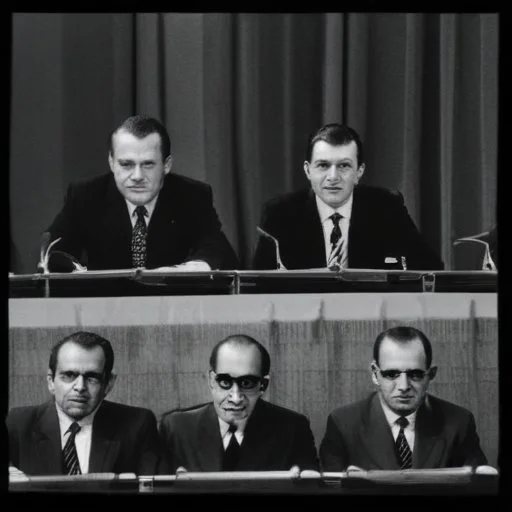
On July 27, 1974, the House of Representatives Judiciary Committee took a historic step towards accountability, voting 27 to 11 to recommend the first article of impeachment against President Richard Nixon for obstruction of justice. This move marked a major milestone in the Watergate scandal, as the committee's decision set the stage for a full House vote, and potentially, the President's removal from office.
On August 5, 1974, the Supreme Court ruled that Nixon must turn over the tapes to the special prosecutor, Archibald Cox. Three days later, Nixon released the tapes, which revealed his involvement in the cover-up. With impeachment looming, Nixon resigned from office on August 9, 1974, becoming the first U.S. President to do so.
The Watergate scandal led to a renewed focus on government accountability and transparency, with the reforms and legislation that followed aimed at preventing similar abuses of power. It also had a lasting impact on American politics, with many citing it as a turning point in the country's political consciousness.
Zephyr Teachout, a Fordham University law professor, noted, "Watergate was a moment of great crisis, but it was also a moment of great opportunity. It led to a whole range of reforms that changed the way we think about politics and the way we think about accountability."
The Watergate scandal was not an isolated incident, but rather the culmination of a series of dirty tricks and political espionage orchestrated by the Nixon administration. From 1971 to 1972, the administration engaged in a campaign of harassment and intimidation against political opponents, including wiretapping, break-ins, and smear campaigns.
One notable incident was the break-in at the office of Daniel Ellsberg's psychiatrist, in an attempt to discredit the whistleblower who had leaked the Pentagon Papers. The administration also created a special unit, known as the "Plumbers," to plug leaks and silence critics.
This culture of secrecy and paranoia ultimately led to the Watergate break-in and the subsequent cover-up, which would prove to be the administration's downfall.
H.R. Haldeman and John Ehrlichman, two of Nixon's most trusted advisors, played a crucial role in the Watergate scandal. As the President's chief of staff and domestic policy advisor, respectively, they were responsible for implementing Nixon's policies and carrying out his orders.
Both men were fiercely loyal to Nixon and were willing to take extreme measures to protect him and his administration. They were instrumental in orchestrating the cover-up, using their positions to intimidate and silence witnesses, and to destroy evidence.
In the end, their loyalty would prove to be their downfall, as they were both convicted of conspiracy, obstruction of justice, and perjury.
The Watergate scandal marked a significant shift in the relationship between the media and the government. For the first time, the media played a crucial role in uncovering a major political scandal, with journalists from The Washington Post and other outlets working tirelessly to expose the truth.
The scandal also led to a renewed focus on investigative journalism, with reporters like Bob Woodward and Carl Bernstein becoming household names. The Post's coverage of the scandal earned the paper a Pulitzer Prize and cemented its reputation as a bastion of journalistic integrity.
The Watergate scandal demonstrated the power of a free press in holding those in power accountable and paving the way for future journalistic exposés.
Richard Nixon's political career was built on a foundation of fear and paranoia. He exploited the anxieties of the American people, using the threat of communism and the specter of social unrest to justify his policies and consolidate power.
The Watergate scandal was a manifestation of this politics of fear, with Nixon and his aides using ruthless tactics to silence opponents and maintain control. The scandal ultimately revealed the dark underbelly of Nixon's politics, exposing the extent to which he was willing to go to preserve his power.
The Watergate scandal marked a turning point in American politics, highlighting the dangers of unchecked executive power and the importance of accountability.
The discovery of the Nixon tapes, which recorded conversations between the President and his aides, was a crucial turning point in the Watergate scandal. One tape, in particular, became known as the "smoking gun" – a conversation between Nixon and Haldeman on June 23, 1972, in which Nixon ordered the CIA to stop the FBI's investigation into the Watergate break-in.
The tape provided irrefutable evidence of Nixon's involvement in the cover-up and sealed his fate. The release of the tapes marked a significant shift in the balance of power, as Congress and the courts finally had the evidence they needed to hold the President accountable.
The "smoking gun" tape remains one of the most infamous recordings in American political history, a testament to the power of evidence and the importance of transparency.