


The Watergate scandal, a defining moment in American political history, is synonymous with the unprecedented resignation of U.S. President Richard Nixon in 1974. At the heart of the scandal lies the July 24, 1973, Supreme Court ruling that ordered Nixon to release the subpoenaed White House recordings, which would ultimately seal his fate.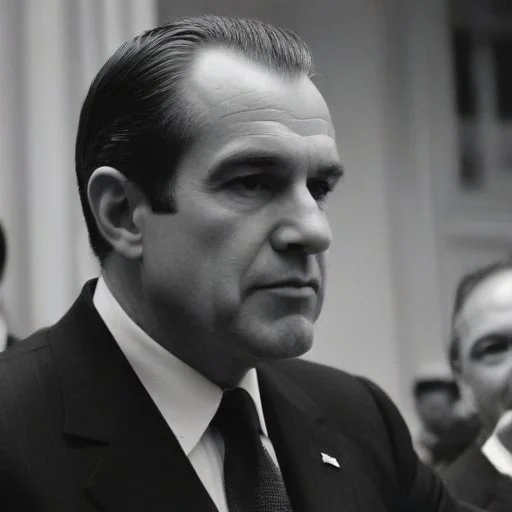
June 17, 1972, marked the beginning of the end for Nixon's presidency. Five men connected to the President's re-election campaign were caught breaking into the Democratic National Committee headquarters at the Watergate complex in Washington D.C. Initially, the White House denied any involvement, but as the investigation unfolded, the threads of a complex web of deceit began to unravel.
In an attempt to conceal his administration's involvement, Nixon invoked executive privilege, claiming that the recordings were confidential and protected by national security concerns. The President's stonewalling strategy was short-lived, as the Supreme Court unanimously ruled against him, ordering the release of the recordings. Nixon's reluctance to comply with the court's decision only fueled public suspicion and intensified the media scrutiny.
The June 23, 1972, conversation between Nixon and his aide, H.R. Haldeman, became known as the "smoking gun" tape. The recording revealed Nixon's explicit orders to halt the FBI's investigation into the Watergate break-in, providing conclusive evidence of his involvement in the cover-up. The release of this tape marked the final nail in Nixon's coffin, making his resignation inevitable.
The publication of the White House recordings led to a cascade of events that would change the course of American history. In August 1974, facing almost certain impeachment and conviction, Nixon became the first U.S. President to resign from office. The Watergate scandal not only tarnished Nixon's legacy but also eroded public trust in government, leading to a renewed emphasis on transparency and accountability.
| Date | Event |
|---|---|
| June 17, 1972 | Watergate break-in |
| July 24, 1973 | Supreme Court rules Nixon must release recordings |
| August 5, 1974 | Nixon releases recordings, including the "smoking gun" tape |
| August 9, 1974 | Nixon resigns from office |
The Watergate scandal serves as a stark reminder of the importance of checks and balances in a democratic system. Nixon's downfall exemplifies the consequences of unchecked power and the vital role of a free press in holding those in power accountable. As we reflect on this pivotal moment in American history, we are reminded that the pursuit of truth and transparency is essential to maintaining the integrity of our political institutions.
H.R. Haldeman, Nixon's chief of staff, played a crucial role in the Watergate scandal. As one of the President's most trusted advisors, Haldeman was privy to Nixon's innermost thoughts and desires. However, his involvement in the cover-up ultimately led to his own downfall, as he became a key witness against the President.
Haldeman's testimony before the grand jury and his subsequent trial revealed the extent of his knowledge about the break-in and the attempts to conceal it. His conversations with Nixon, including the infamous "smoking gun" tape, provided conclusive evidence of the President's involvement in the scandal.

The June 23, 1972, conversation between Nixon and Haldeman is arguably the most significant piece of evidence in the Watergate scandal. The tape reveals Nixon's explicit orders to halt the FBI's investigation into the break-in, demonstrating his direct involvement in the cover-up.
The "smoking gun" tape is a remarkable example of the importance of documentation in historical events. Without this recording, Nixon's denials and attempts to conceal his involvement might have been successful, altering the course of American history.
The Watergate scandal has had a lasting impact on popular culture, inspiring films, books, and even music. From All the President's Men to Nixon, the scandal has been reimagined and reinterpreted for the silver screen.
The term "Watergate" has become synonymous with political scandals, influencing the lexicon of American politics. The scandal's cultural significance extends beyond the realm of politics, symbolizing the power of investigative journalism and the importance of government transparency.

The Watergate scandal irreparably damaged Nixon's political legacy, transforming him from a celebrated champion of law and order to a cautionary tale of abuse of power.
However, Nixon's presidency was not without its achievements. His foreign policy initiatives, including the opening of relations with China, remain significant milestones in American diplomatic history.
The Watergate scandal serves as a reminder that even the most powerful individuals are not above the law, and that political leaders must be held accountable for their actions.
The Watergate scandal unfolded against the backdrop of a tumultuous global landscape. The early 1970s were marked by rising tensions between the United States and the Soviet Union, as well as growing unrest in the Middle East.
Nixon's administration was focused on containing the spread of communism and maintaining American dominance in international affairs. The Watergate scandal, however, diverted attention away from these pressing global issues, weakening the President's ability to effectively respond to emerging crises.