


On a chilly winter morning, January 23, 2003, a faint signal, barely perceptible, was detected from the vast expanse of space. This whisper, the last transmission from the trailblazing spacecraft Pioneer 10, marked the end of an era, a testament to human ingenuity and the allure of the unknown.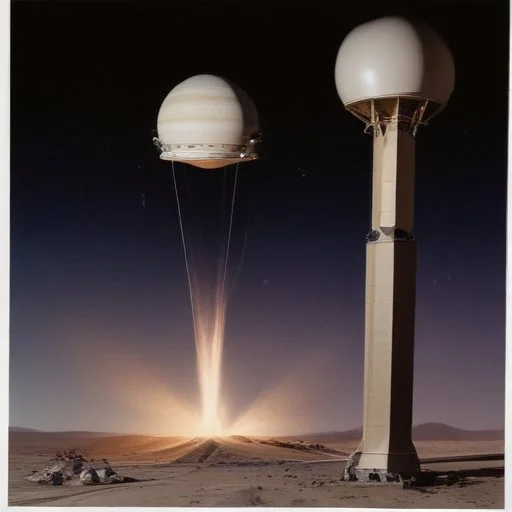
Launched on March 2, 1972, Pioneer 10 was designed to study Jupiter and its surroundings, venturing into the uncharted territory of our solar system. With a primary mission to explore the gas giant's magnetic field, radiation belts, and atmospheric composition, the spacecraft was equipped with a suite of instruments to collect valuable data.
During its remarkable journey, Pioneer 10 sent back a treasure trove of information, revolutionizing our understanding of Jupiter and its moons. The spacecraft's findings included the discovery of Jupiter's intense radiation belts, its strong magnetic field, and the presence of a ring system. These groundbreaking discoveries paved the way for future space missions, including the Voyager and Galileo programs.
As Pioneer 10's power source dwindled, its signal grew weaker, until it was barely detectable. On that fateful day in January 2003, the Deep Space Network's antennas in Goldstone, California, picked up the faint signal, a mere whisper from the void. Unfortunately, the signal was too weak to extract any usable data, marking the end of Pioneer 10's operational life.
The legacy of Pioneer 10 extends far beyond its primary mission. The spacecraft's journey has inspired generations of scientists, engineers, and explorers, fostering a deeper understanding of our solar system and the universe. Pioneer 10's findings have contributed to the development of more sophisticated spacecraft designs, more efficient power sources, and advanced communication systems.
As the signal from Pioneer 10 faded into the silence of space, it left behind a lasting tribute to human curiosity and the allure of the cosmos. The spacecraft's remarkable journey serves as a beacon, encouraging us to continue exploring, to push the boundaries of what is possible, and to venture into the unknown.
If you can't venture into the unknown, at least you can venture into the past, and Pioneer 10's story is a testament to the power of human ingenuity and the allure of the cosmos.
The story of Pioneer 10 is a testament to the power of human curiosity and the importance of space exploration. From a historiographical perspective, the mission represents a significant milestone in the development of space technology and our understanding of the cosmos. The spacecraft's legacy serves as a reminder of the importance of continued investment in space exploration and the potential discoveries that await us.
Moreover, the Pioneer 10 mission highlights the importance of international cooperation in space exploration. The mission was a collaborative effort between NASA and the German Aerospace Center, demonstrating the value of international partnerships in advancing our understanding of the universe.
In the context of the Cold War era, the Pioneer 10 mission also served as a symbol of American technological prowess and a demonstration of the country's commitment to peaceful space exploration. The mission's success helped to establish the United States as a leader in space exploration and paved the way for future missions.

The gold-anodized aluminum plaque carried by Pioneer 10 is a fascinating artifact that provides insight into the mission's objectives and the era in which it was launched. The plaque features a diagram of the solar system, a silhouette of a man and a woman, and a map of the spacecraft's trajectory.
The inclusion of the human silhouettes was a deliberate attempt to communicate with any extraterrestrial life form that may encounter the spacecraft. The designers of the plaque hoped that the image would provide a universal understanding of humanity's existence and our place in the universe.
The plaque also serves as a time capsule, capturing the essence of human society in the early 1970s. The diagram of the solar system, for example, reflects our understanding of the cosmos at that time, highlighting the limitations of our knowledge and the vast mysteries that remain to be uncovered.
Pioneer 10's technological innovations had a profound impact on the development of subsequent space missions. The spacecraft's design and instrumentation paved the way for more sophisticated spacecraft, such as the Voyager and Galileo missions, which built upon Pioneer 10's successes and pushed the boundaries of space exploration.
The mission's use of solar panels to generate power was a significant innovation, enabling the spacecraft to operate for far longer than its initial 21-month mission duration. This technology has since been adopted in numerous space missions, including the International Space Station.
Pioneer 10's communication systems also played a crucial role in the development of deep space communication. The mission's use of radioisotope thermoelectric generators (RTGs) to power its communication equipment enabled the spacecraft to transmit data back to Earth over vast distances, paving the way for future deep space missions.

Pioneer 10's discovery of Jupiter's intense radiation belts and strong magnetic field significantly advanced our understanding of the planet's atmospheric composition. The mission's findings have had a lasting impact on the field of planetary science, shaping our understanding of the gas giants and their role in the solar system.
The spacecraft's observations of Jupiter's moon Io revealed a geologically active world, with volcanoes and a surface shaped by tectonic activity. This discovery has had significant implications for our understanding of the Moon's evolution and the potential for life on other celestial bodies.
Pioneer 10's contributions to our understanding of the solar system have also had practical applications in the field of astrobiology. The mission's findings have informed the design of subsequent space missions, such as the Europa Clipper and the Jupiter Icy Moons Explorer, which seek to explore the habitability of the Jupiter system.
Pioneer 10's legacy extends beyond the scientific community, with the mission inspiring a new generation of scientists, engineers, and explorers. The spacecraft's journey has captivated the public imagination, symbolizing humanity's boundless curiosity and our innate desire to explore the unknown.
The mission's cultural significance is reflected in popular culture, with references to Pioneer 10 appearing in films, literature, and music. The spacecraft's iconic design has also inspired artists and designers, who have incorporated elements of the mission into their work.
Pioneer 10's impact on education has also been profound, with the mission serving as a catalyst for STEM education initiatives. The spacecraft's achievements have inspired students and teachers alike, demonstrating the power of human ingenuity and the importance of pursuing careers in science and technology.